Department of Pathology, Xinxiang Medical University, Xinxiang, Henan 453000, P.R. China.
The Third Affiliated Hospital of Xinxiang Medical University, Xinxiang, Henan 453000, P.R. China.
Oncol Rep. 2018 Jun;39(6):2563-2574. doi: 10.3892/or.2018.6385. Epub 2018 Apr 20.
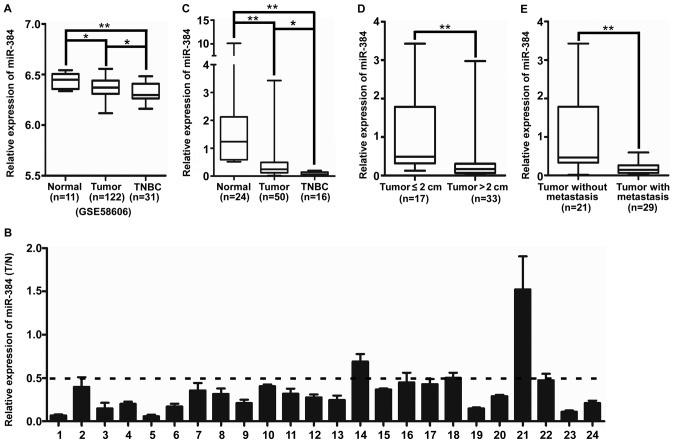
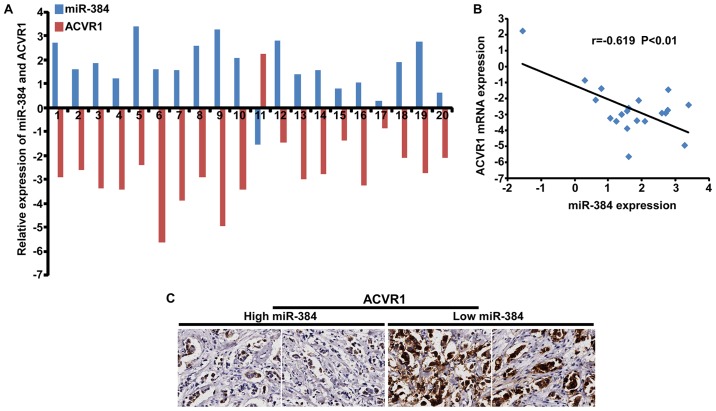
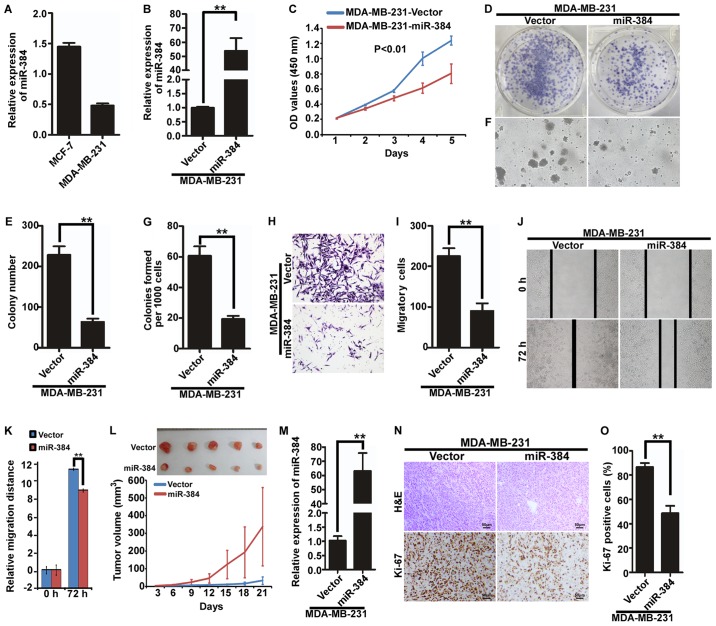
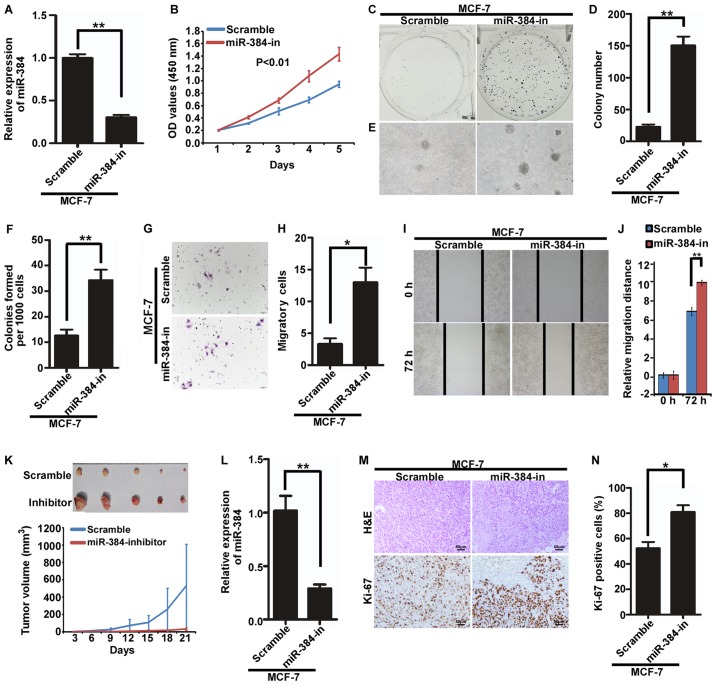
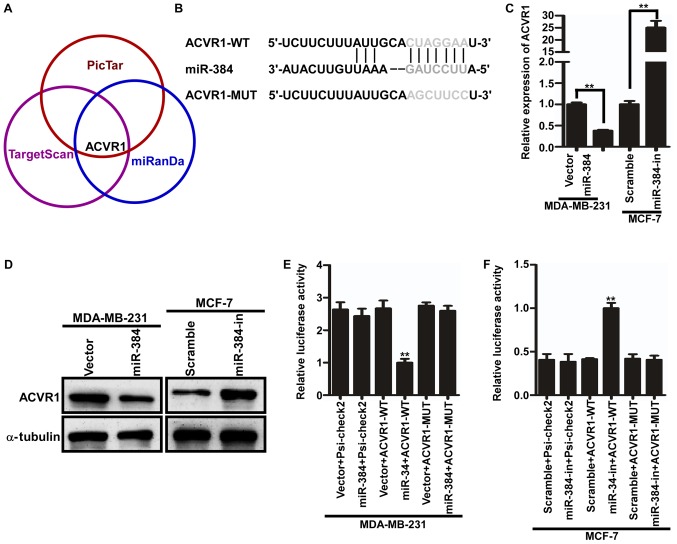
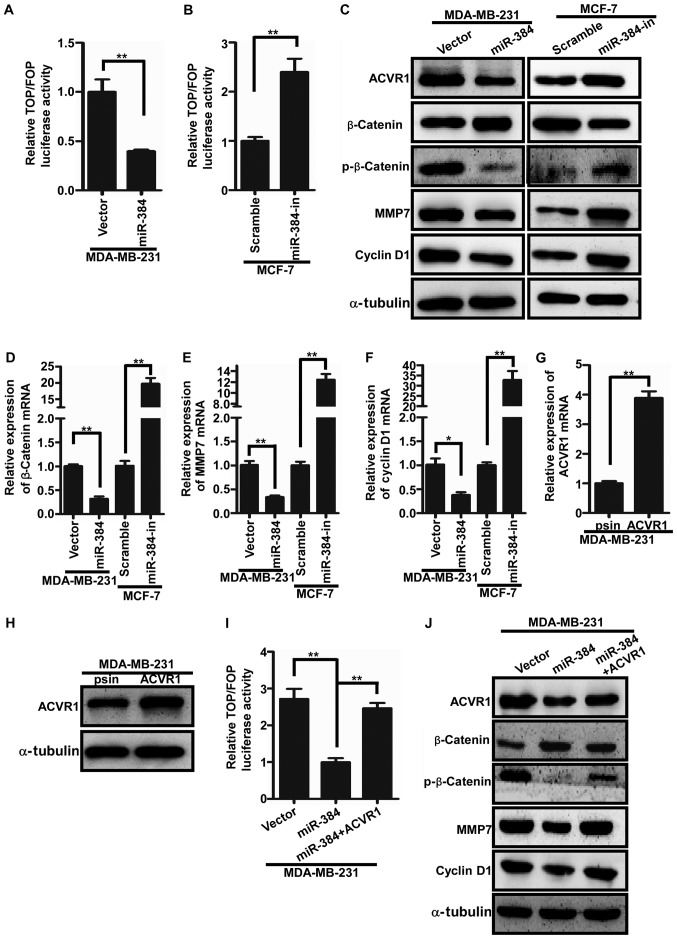
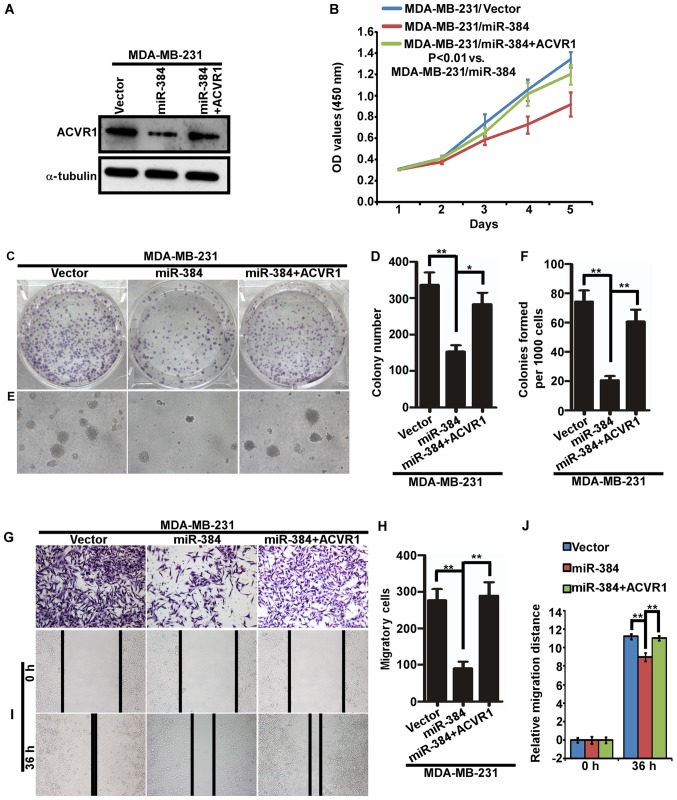
Breast cancer is the leading cause of cancer-related deaths in females worldwide. Triple-negative breast cancer (TNBC) accounts for 15% of all breast cancer cases and has a poorer prognosis than other subtypes. Moreover, the treatment for breast cancer, especially for TNBC, remains unsatisfactory. Therefore, novel therapies are urgently needed. Microribonucleic acids (miRNAs) are a class of biomarkers and therapeutic targets in many types of cancers. In the present study, the expression of miR-384 was explored in GSE58606 and in fresh breast cancer tissues by qPCR. The results showed that miR-384 was decreased in breast cancer, especially in TNBC. The results of MTT, colony formation, soft agar, Transwell migration, wound healing and the tumorigenesis assay demonstranted that overexpression of miR-384 inhibited the proliferation and migration of breast cancer in vitro and in vivo; knockdown of miR-384 enhanced the proliferation and migration of breast cancer. In addition, luciferase assay showed that Activin A receptor type 1 (ACVR1) was a direct target of miR-384 and is involved in the inhibitory effects of miR-384 on breast cancer progression. Furthermore, this study indicated that ACVR1 activated the Wnt/β-catenin signaling pathway in breast cancer. In conclusion, our findings revealed functional and mechanistic links between miR-384 and ACVR1 in the progression of breast cancer. miR-384 not only plays an important role in the progression of breast cancer, but has promise as a potential therapeutic target for breast cancer especially for TNBC.
乳腺癌是全球女性癌症相关死亡的主要原因。三阴性乳腺癌(TNBC)占所有乳腺癌病例的 15%,其预后比其他亚型差。此外,乳腺癌的治疗方法,尤其是 TNBC 的治疗方法,仍然不尽如人意。因此,迫切需要新的治疗方法。微小 RNA(miRNAs)是许多类型癌症的生物标志物和治疗靶点。本研究通过 qPCR 探讨了 miR-384 在 GSE58606 和新鲜乳腺癌组织中的表达。结果表明,miR-384 在乳腺癌中,尤其是在 TNBC 中表达降低。MTT、集落形成、软琼脂、Transwell 迁移、划痕愈合和肿瘤发生实验结果表明,miR-384 的过表达抑制了乳腺癌在体外和体内的增殖和迁移;miR-384 的下调增强了乳腺癌的增殖和迁移。此外,荧光素酶报告基因实验表明,激活素 A 受体 1(ACVR1)是 miR-384 的直接靶基因,并参与 miR-384 对乳腺癌进展的抑制作用。此外,本研究表明,ACVR1 在乳腺癌中激活了 Wnt/β-catenin 信号通路。总之,本研究揭示了 miR-384 和 ACVR1 在乳腺癌进展中的功能和机制联系。miR-384 不仅在乳腺癌的进展中发挥重要作用,而且作为乳腺癌的潜在治疗靶点具有很大的潜力,特别是对于 TNBC。