Department of Orthodontics and Craniofacial Developmental Biology, Hiroshima University Graduate School of Biomedical Sciences, 1-2-3 Kasumi, Minami-ku, Hiroshima, Japan.
PLoS One. 2018 Apr 25;13(4):e0194453. doi: 10.1371/journal.pone.0194453. eCollection 2018.
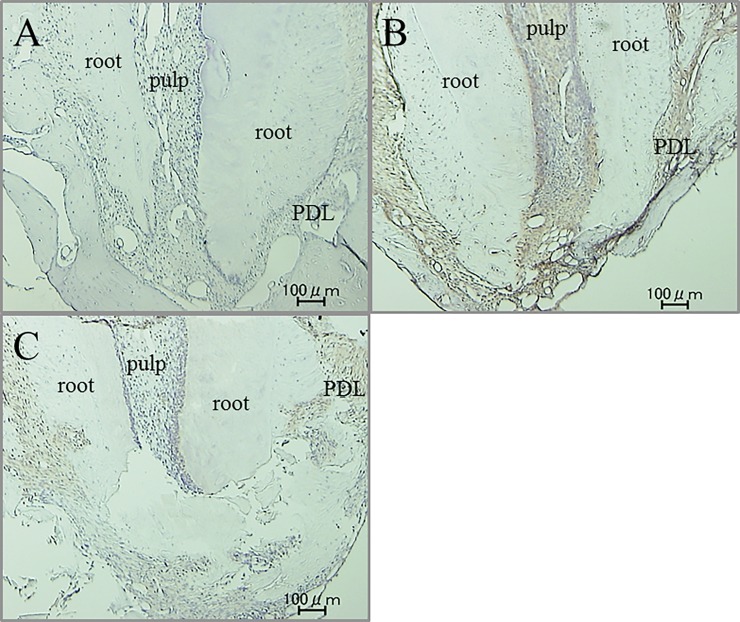
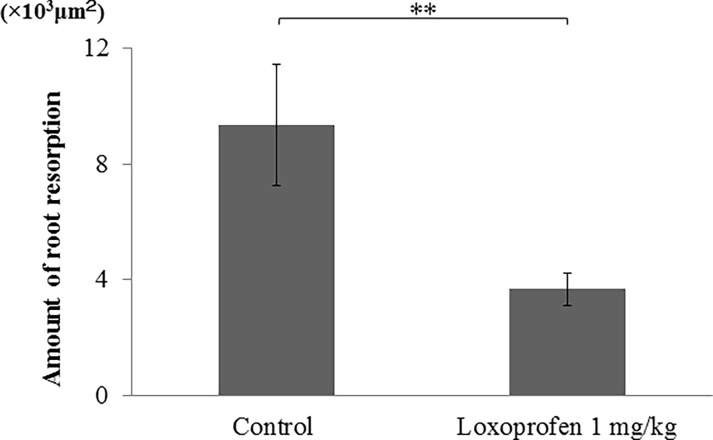
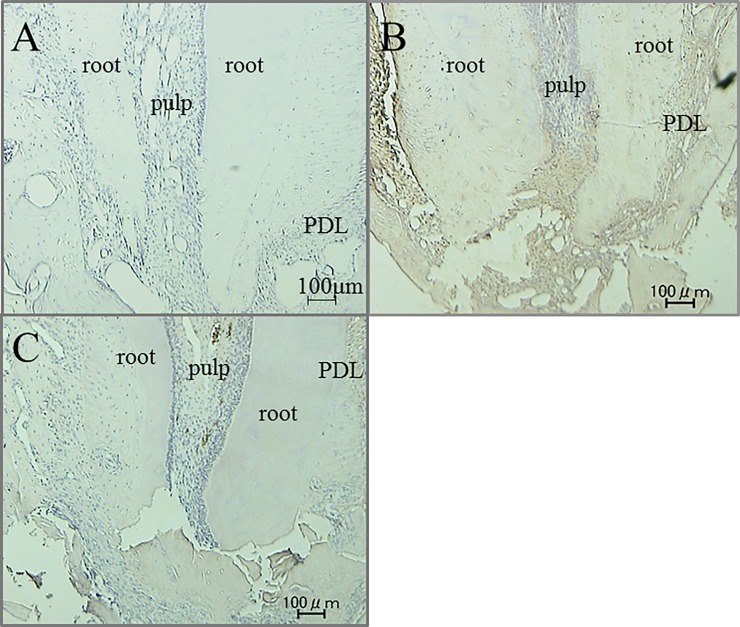
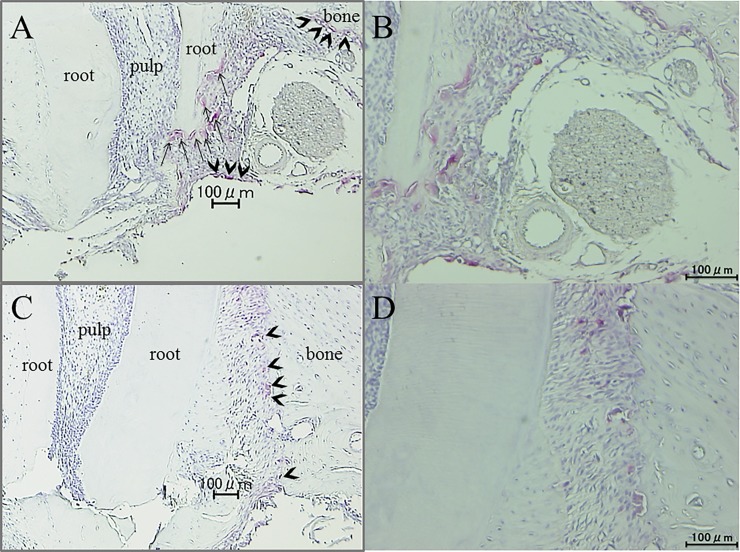
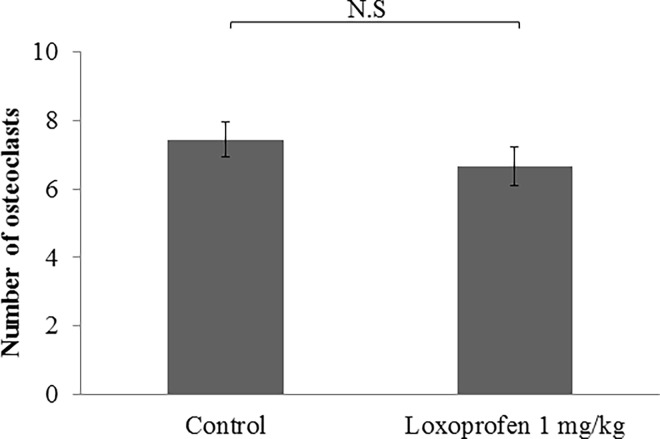
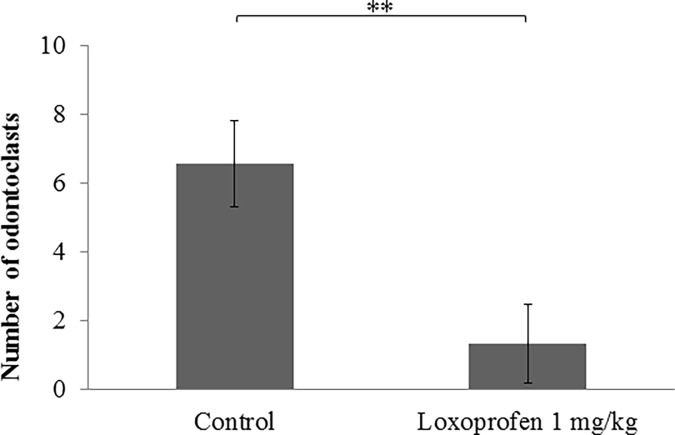
Studies have revealed that severe apical root resorption during tooth movement is caused by the noninfective inflammatory reaction of apical root tissues. We hypothesized that loxoprofen can suppress apical root resorption during tooth movement. Cyclic tensile force (CTF) of 10 kPa was applied to the human pulp cells for 48 hours by the Flexcell Strain Unit. Loxoprofen (10 and 100 μM) was added to the culture cells, and expression of cyclooxygenase (COX)-1, COX-2, interleukin (IL)-1β, receptor activator of nuclear factor kappa-B ligand (RANKL), tumor necrosis factor (TNF)-α, and macrophage colony-stimulating factor (M-CSF) were examined. To determine the effects of loxoprofen sodium on apical root reabsorption during tooth movement, the upper first molars of 7-week-old rats were subjected to mesial movement by 10g force for 30 days with or without the oral administration of loxoprofen. Gene expression and protein concentration of COX-1, COX-2, IL-1β, TNF-α, RANKL and M-CSF were significantly higher in the CTF group than in the control group. However, these levels were decreased by loxoprofen administration. After orthodontic tooth movement, the expression of IL-1β, TNF-α, RANKL and M-CSF decreased in the loxoprofen group than in the control group by immunohistochemical staining. In comparison to control group, less number of odontoclasts and a decrease in the amount of apical root resorption was observed in the loxoprofen group. Many osteoclasts became visible on the pressure side of the alveolar bone in the both groups, and the amount of tooth movement did not show a significant difference. These findings demonstrate that severe apical root resorption may be suppressed by loxoprofen administration, without a disturbance of tooth movement.
研究表明,牙齿移动过程中严重的根尖吸收是由根尖组织的非感染性炎症反应引起的。我们假设洛索洛芬可以抑制牙齿移动过程中的根尖吸收。Flexcell 应变单元施加 10 kPa 的循环张力(CTF)于牙髓细胞 48 小时。将洛索洛芬(10 和 100 μM)添加到培养细胞中,检测环氧化酶(COX)-1、COX-2、白细胞介素(IL)-1β、核因子 kappa-B 配体受体激活剂(RANKL)、肿瘤坏死因子(TNF)-α和巨噬细胞集落刺激因子(M-CSF)的表达。为了确定洛索洛芬钠对牙齿移动过程中根尖吸收的影响,将 7 周龄大鼠的上颌第一磨牙用 10g 力向近中移动 30 天,同时或不给予洛索洛芬钠口服。与对照组相比,CTF 组 COX-1、COX-2、IL-1β、TNF-α、RANKL 和 M-CSF 的基因表达和蛋白浓度显著升高。然而,这些水平通过洛索洛芬给药降低。在正畸牙齿移动后,洛索洛芬组的 IL-1β、TNF-α、RANKL 和 M-CSF 的表达比对照组减少,通过免疫组织化学染色。与对照组相比,洛索洛芬组的破牙细胞数量减少,根尖吸收量减少。两组牙槽骨受压侧均可看到许多破骨细胞,牙齿移动量无显著差异。这些发现表明,洛索洛芬钠的给予可能抑制严重的根尖吸收,而不会干扰牙齿移动。