Knez Igor, Ode Sang Åsa, Gunnarsson Bengt, Hedblom Marcus
Department of Social Work and Psychology, Gävle University College, Gävle, Sweden.
Landscape Architecture, Planning and Management, Swedish University of Agricultural Sciences, Uppsala, Sweden.
Front Psychol. 2018 Apr 11;9:491. doi: 10.3389/fpsyg.2018.00491. eCollection 2018.
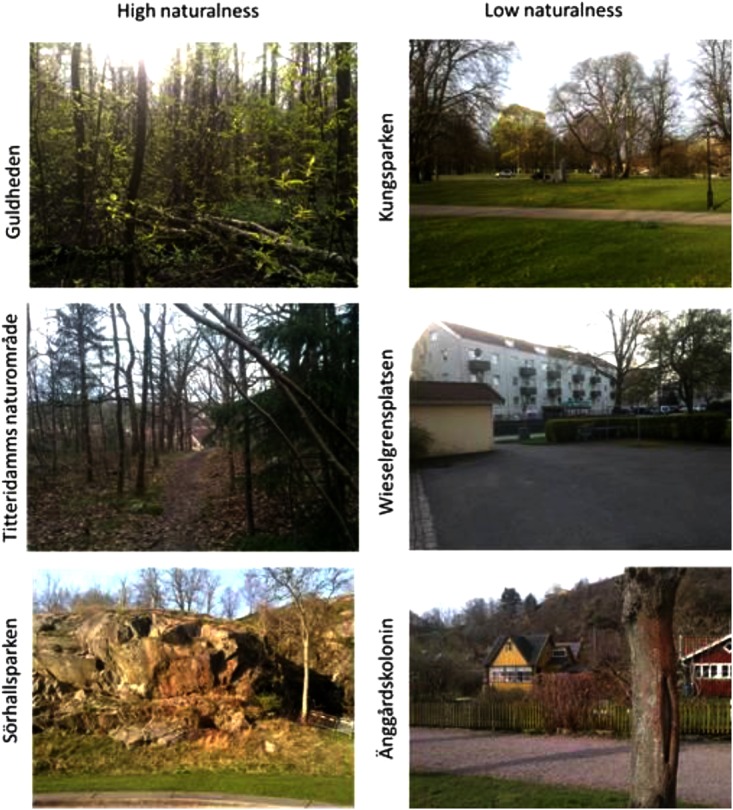
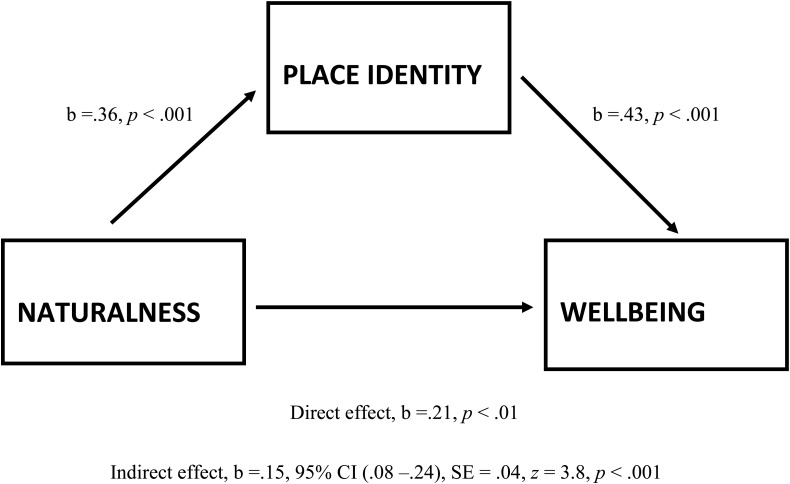
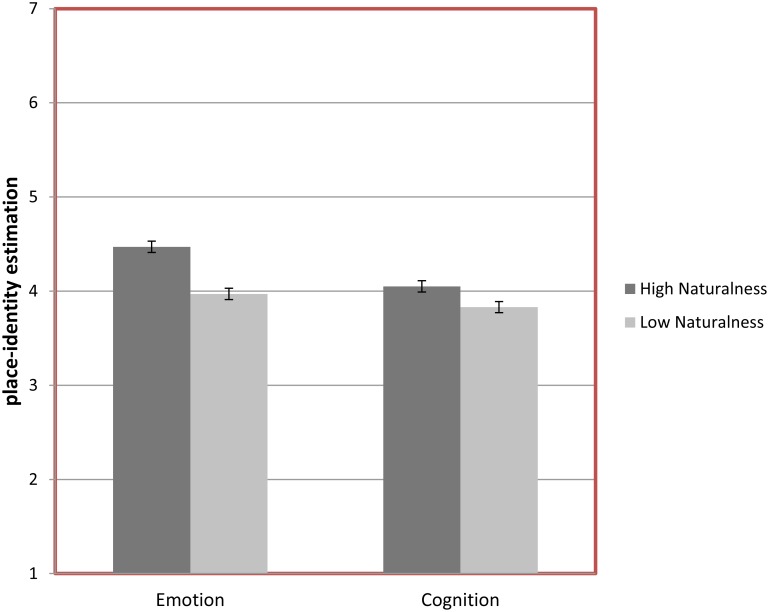
The aim was to investigate effects of urban greenery (high vs. low naturalness) on place identity and wellbeing, and the links between place identity and wellbeing. It was shown that participants (Gothenburg, Sweden, = 1347) estimated a stronger attachment/closeness/belonging (emotional component of place-identity), and more remembrance and thinking about and mental travel (cognitive component of place-identity) in relation to high vs. low perceived naturalness. High naturalness was also reported to generate higher wellbeing in participants than low naturalness. Furthermore, place identity was shown to predict participants' wellbeing in urban greenery, accounting for 35% of variance explained by the regression. However, there was a stronger relationship between the emotional vs. the cognitive component of place identity and wellbeing. Finally, a significant role of place identity in mediating the naturalness-wellbeing relationship was shown, indicating that the naturalness-wellbeing connection can be partly accounted for by the psychological mechanisms of people-place bonding.
本研究旨在探讨城市绿化(高自然度与低自然度)对场所认同感和幸福感的影响,以及场所认同感与幸福感之间的联系。研究表明,参与者(瑞典哥德堡,n = 1347)认为,相较于低自然度,高自然度会带来更强的依恋感/亲近感/归属感(场所认同感的情感成分),以及更多的回忆、思考和心理游历(场所认同感的认知成分)。此外,与低自然度相比,高自然度也能让参与者产生更高的幸福感。此外,研究还表明,场所认同感能够预测参与者在城市绿化环境中的幸福感,回归分析解释的方差中有35%可由此说明。然而,场所认同感的情感成分与认知成分和幸福感之间的关系更为紧密。最后,研究表明场所认同感在自然度与幸福感的关系中起到了显著的中介作用,这表明自然度与幸福感之间的联系部分可由人与场所联结的心理机制来解释。