Department of Biochemistry and Molecular Biology, Ajou University School of Medicine, Suwon, South Korea.
Department of Anatomy, Ajou University School of Medicine, Suwon, 16499, South Korea.
Exp Mol Med. 2018 Apr 27;50(4):1-14. doi: 10.1038/s12276-018-0069-2.
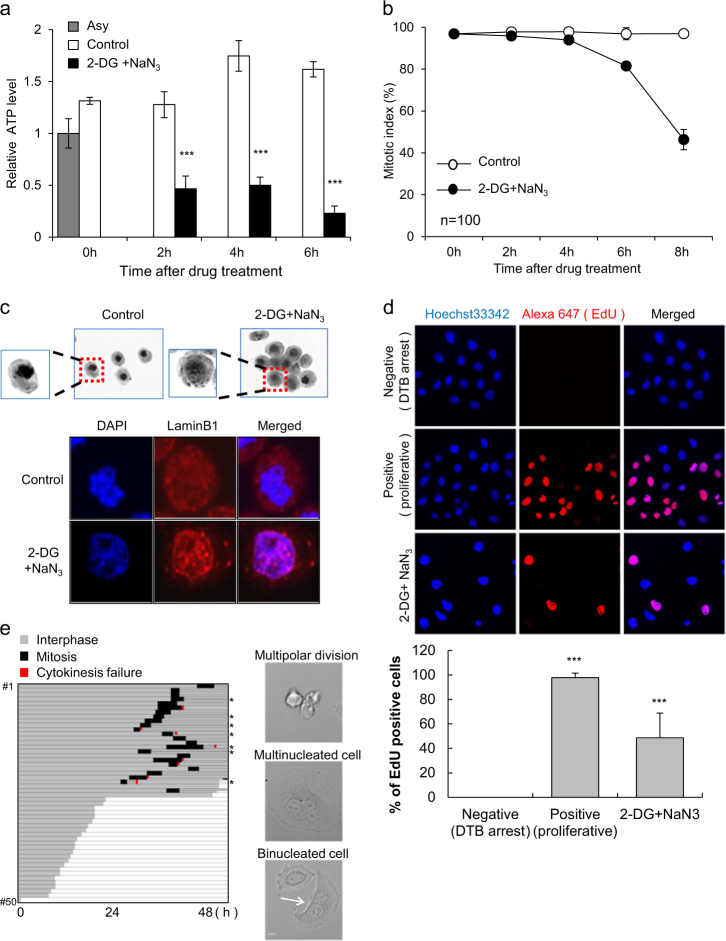
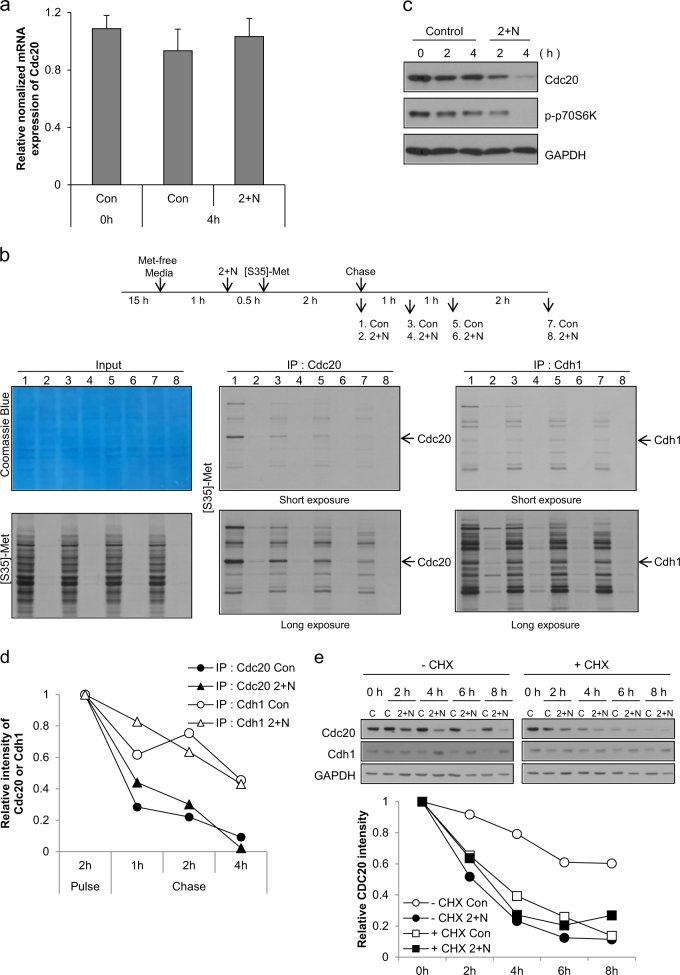
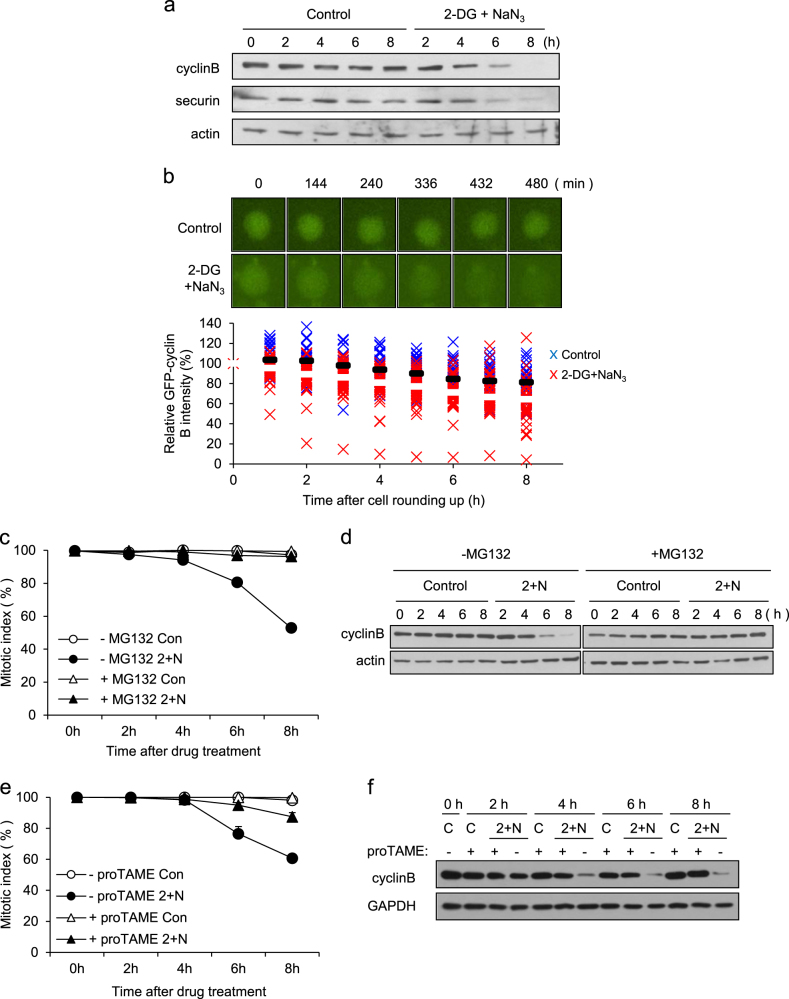
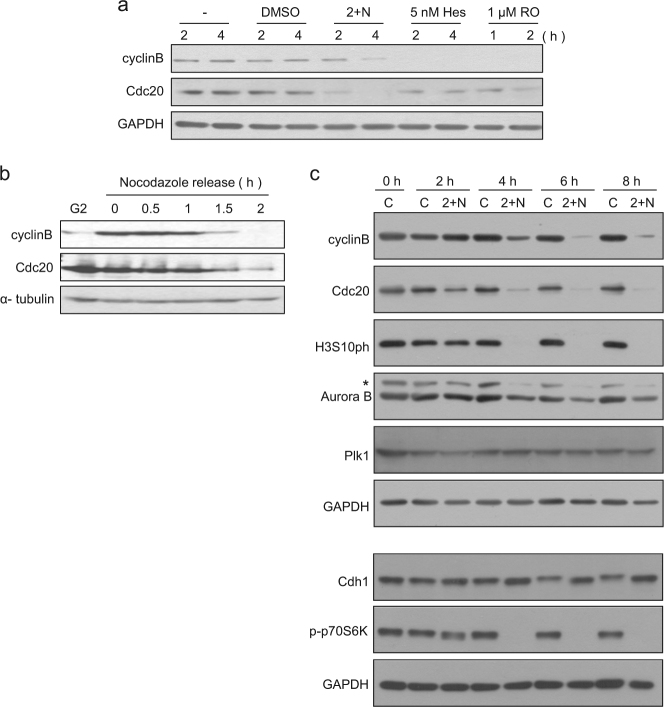
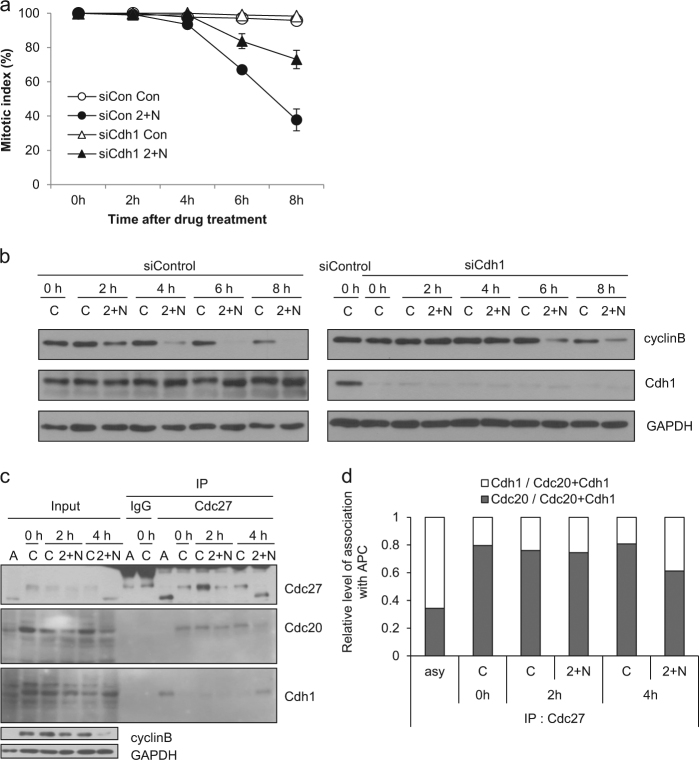
ATP depletion inhibits cell cycle progression, especially during the G1 phase and the G2 to M transition. However, the effect of ATP depletion on mitotic progression remains unclear. We observed that the reduction of ATP after prometaphase by simultaneous treatment with 2-deoxyglucose and NaN did not arrest mitotic progression. Interestingly, ATP depletion during nocodazole-induced prometaphase arrest resulted in mitotic slippage, as indicated by a reduction in mitotic cells, APC/C-dependent degradation of cyclin B1, increased cell attachment, and increased nuclear membrane reassembly. Additionally, cells successfully progressed through the cell cycle after mitotic slippage, as indicated by EdU incorporation and time-lapse imaging. Although degradation of cyclin B during normal mitotic progression is primarily regulated by APC/C, we observed an unexpected decrease in Cdc20 prior to degradation of cyclin B during mitotic slippage. This decrease in Cdc20 was followed by a change in the binding partner preference of APC/C from Cdc20 to Cdh1; consequently, APC/C, but not APC/C, facilitated cyclin B degradation following ATP depletion. Pulse-chase analysis revealed that ATP depletion significantly abrogated global translation, including the translation of Cdc20 and Cdh1. Additionally, the half-life of Cdh1 was much longer than that of Cdc20. These data suggest that ATP depletion during mitotic arrest induces mitotic slippage facilitated by APC/C-dependent cyclin B degradation, which follows a decrease in Cdc20 resulting from reduced global translation and the differences in the half-lives of the Cdc20 and Cdh1 proteins.
ATP 耗竭抑制细胞周期进程,特别是在 G1 期和 G2 期到 M 期的转变。然而,ATP 耗竭对有丝分裂进程的影响尚不清楚。我们观察到,通过同时用 2-脱氧葡萄糖和NaN 处理,在前期减少 ATP 不会阻止有丝分裂的进行。有趣的是,在长春花碱诱导的前期阻滞期间的 ATP 耗竭导致有丝分裂滑步,这表现为有丝分裂细胞减少、APC/C 依赖性的 cyclin B1 降解、细胞附着增加和核膜重新组装增加。此外,细胞在有丝分裂滑步后成功地通过细胞周期,这表现为 EdU 掺入和延时成像。尽管 cyclin B 在正常有丝分裂进程中的降解主要受 APC/C 调节,但我们观察到在有丝分裂滑步期间 cyclin B 降解之前 Cdc20 意外减少。Cdc20 的减少伴随着 APC/C 的结合伴侣偏好从 Cdc20 到 Cdh1 的改变;因此,在 ATP 耗竭后,APC/C 而非 APC/C 促进 cyclin B 的降解。脉冲追踪分析显示,ATP 耗竭显著阻断了包括 Cdc20 和 Cdh1 在内的全局翻译。此外,Cdh1 的半衰期比 Cdc20 长得多。这些数据表明,在有丝分裂阻滞期间的 ATP 耗竭诱导由 APC/C 依赖性 cyclin B 降解介导的有丝分裂滑步,这是由于全局翻译减少和 Cdc20 和 Cdh1 蛋白半衰期的差异导致 Cdc20 减少的结果。