Vogelsang David A, D'Esposito Mark
Helen Wills Neuroscience Institute, University of California, Berkeley, Berkeley, CA, United States.
Department of Psychology, University of California, Berkeley, Berkeley, CA, United States.
Front Neurosci. 2018 Apr 12;12:242. doi: 10.3389/fnins.2018.00242. eCollection 2018.
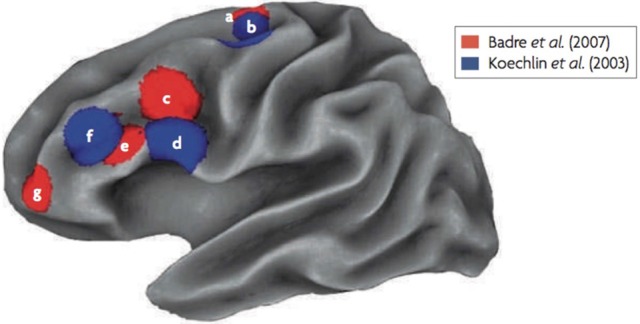
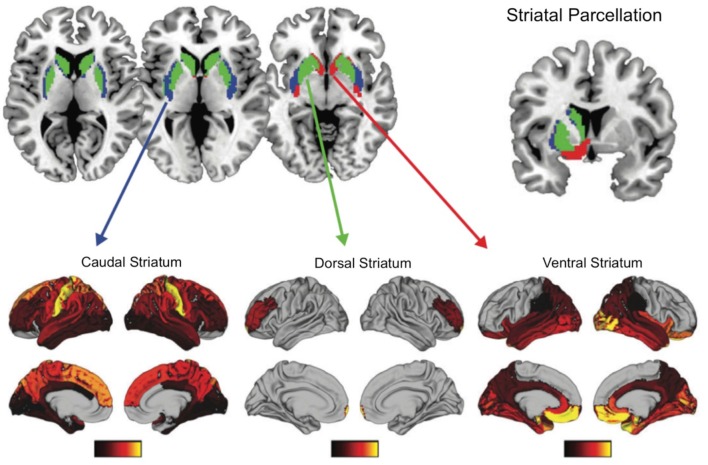
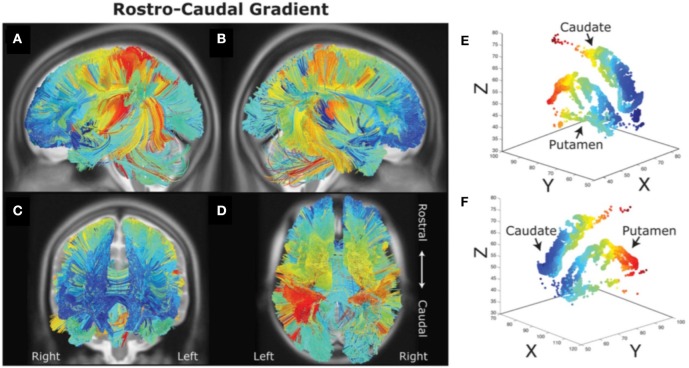
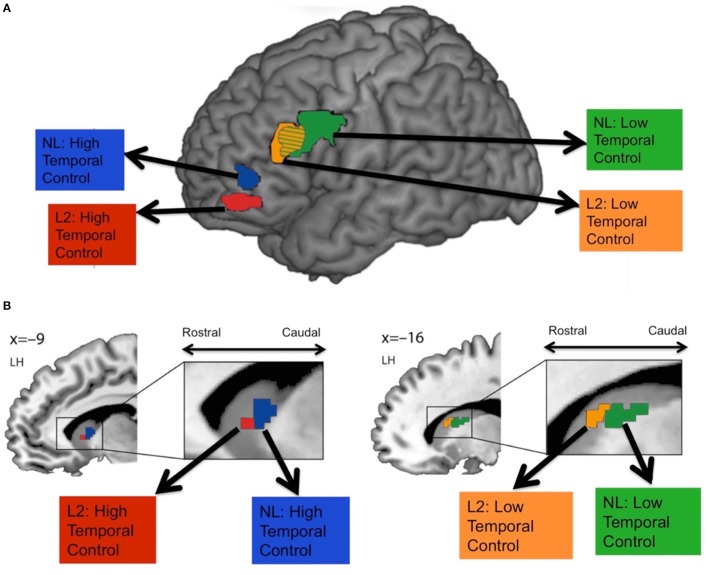
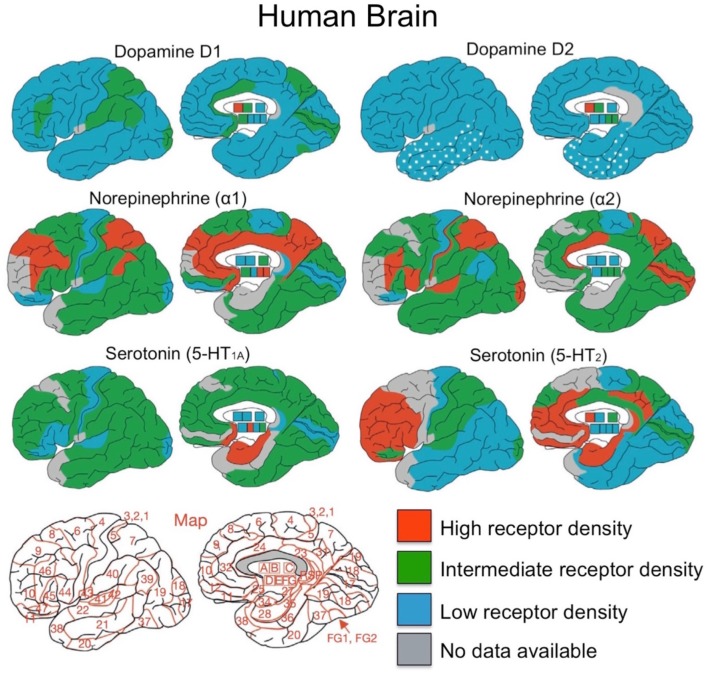
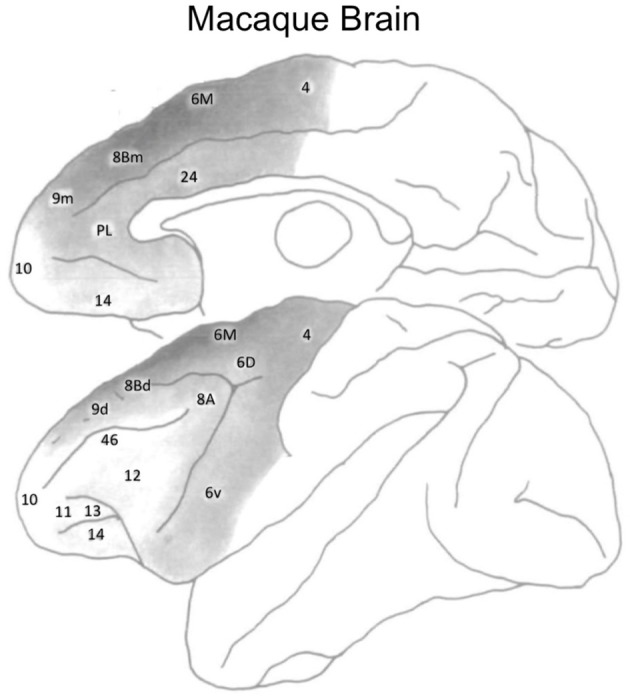
Research has shown that the lateral prefrontal cortex (LPFC) may be hierarchically organized along a rostral-caudal functional gradient such that control processing becomes progressively more abstract from caudal to rostral frontal regions. Here, we briefly review the most recent functional MRI, neuropsychological, and electrophysiological evidence in support of a hierarchical LPFC organization. We extend these observations by discussing how such a rostral-caudal gradient may also exist in the striatum and how the dopaminergic system may play an important role in the hierarchical organization of fronto-striatal loops. There is evidence indicating that a rostral-caudal gradient of dopamine receptor density may exist in both frontal and striatal regions. Here we formulate the hypothesis that dopamine may be an important neuromodulator in hierarchical processing, whereby frontal and striatal regions that have higher dopamine receptor density may have a larger influence over regions that exhibit lower dopamine receptor density. We conclude by highlighting directions for future research that will help elucidating the role dopamine might play in hierarchical frontal-striatal interactions.
研究表明,外侧前额叶皮质(LPFC)可能沿嘴尾功能梯度呈层级组织,使得从尾侧到嘴侧额叶区域,控制加工逐渐变得更加抽象。在此,我们简要回顾支持LPFC层级组织的最新功能磁共振成像、神经心理学和电生理证据。我们通过讨论纹状体中如何也可能存在这样的嘴尾梯度,以及多巴胺能系统如何可能在额-纹状体环路的层级组织中发挥重要作用来扩展这些观察结果。有证据表明,多巴胺受体密度的嘴尾梯度可能存在于额叶和纹状体区域。在此,我们提出假说,即多巴胺可能是层级加工中的一种重要神经调节剂,由此多巴胺受体密度较高的额叶和纹状体区域可能对多巴胺受体密度较低的区域有更大影响。我们通过强调未来研究方向来作总结,这些研究方向将有助于阐明多巴胺在额叶-纹状体层级相互作用中可能发挥的作用。