Adesewa A, Morenikeji O
Department of Zoology, University of Ibadan, Nigeria.
J Prev Med Hyg. 2017 Dec 30;58(4):E328-E333. doi: 10.15167/2421-4248/jpmh2017.58.4.608. eCollection 2017 Dec.
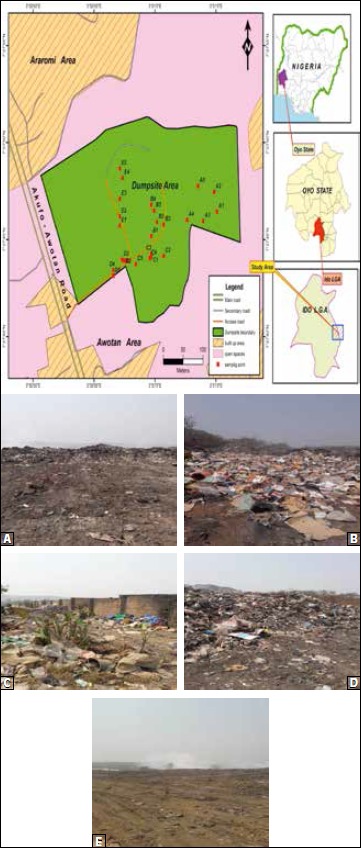
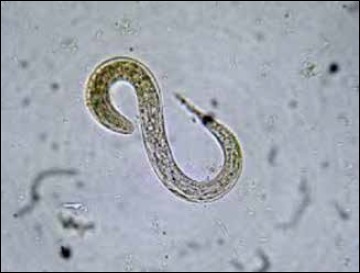
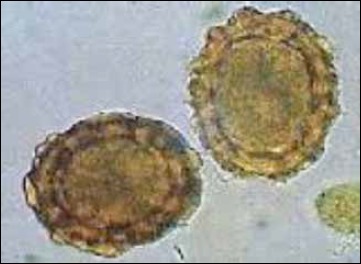
Waste generation is inevitable because humans continue to generate waste due to increase in population, urbanization and advancement in technology. This generation of waste is of public health concern especially when the waste materials are deposited on dumpsites. This study assessed the helminths and heavy metal content of Awotan dumpsite in Ibadan city. Surface soils (0-15cm depth) of the dumpsite were randomly sampled at different dumpsite areas with the aid of a quadrat. Helminth content was determined using the zinc floatation method and the heavy metal concentrations of the soil were determined using Atomic Absorption Spectrophotometry (AAS). Some physicochemical properties of the soil were also determined. Results showed that the dumpsite soil was slightly alkaline with an average pH of 8.1 ± 0.2 while the overall mean electrical conductivity, temperature, moisture content and height above sea level were 545.9 ± 235.3μS/cm, 32.6 ± 2.2oC, 17.2 ± 4.8 % and 236±4.6 m respectively. The overall prevalence of soil helminths was 10.4% with Ascaris lumbricoides being more prevalent (8.8%). The heavy metal concentration of the soil followed the trend Pb (709.7± 1574.9mg/g) > Cu (316 ± 227.1mg/g) > Cr (48.8 ± 17.7mg/g) > Cd (9.7 ± 10.9mg/g). There was a low overall prevalence of soil helminths. However, the heavy metal concentrations exceeded USEPA permissible limits providing a possible source for underground water contamination in residential areas around the dumpsite. Human settlements close to the dumpsite should be discouraged by the government.
由于人口增长、城市化以及技术进步,人类持续产生废弃物,因此废弃物的产生是不可避免的。这种废弃物的产生引发了公众对健康的担忧,尤其是当废弃物被倾倒在垃圾场时。本研究评估了伊巴丹市阿沃坦垃圾场的蠕虫和重金属含量。借助样方在垃圾场的不同区域随机采集了表层土壤(0 - 15厘米深度)。采用锌浮选法测定蠕虫含量,使用原子吸收光谱法(AAS)测定土壤中的重金属浓度。还测定了土壤的一些理化性质。结果表明,垃圾场土壤呈微碱性,平均pH值为8.1 ± 0.2,而总体平均电导率、温度、含水量和海拔高度分别为545.9 ± 235.3μS/cm、32.6 ± 2.2℃、17.2 ± 4.8%和236 ± 4.6米。土壤蠕虫的总体患病率为10.4%,其中蛔虫更为常见(8.8%)。土壤中重金属浓度的趋势为铅(709.7 ± 1574.9mg/g)>铜(316 ± 227.1mg/g)>铬(48.8 ± 17.7mg/g)>镉(9.7 ± 10.9mg/g)。土壤蠕虫的总体患病率较低。然而,重金属浓度超过了美国环境保护局的允许限值,这可能成为垃圾场周边居民区地下水污染的一个潜在源头。政府应不鼓励在靠近垃圾场的地方进行人类居住。