Department of Medicine, Mackay Medical College, New Taipei City, Taiwan.
Section of Cardiology, Department of Internal Medicine, Mackay Memorial Hospital, Taipei City, Taiwan.
PLoS One. 2018 Apr 30;13(4):e0196572. doi: 10.1371/journal.pone.0196572. eCollection 2018.
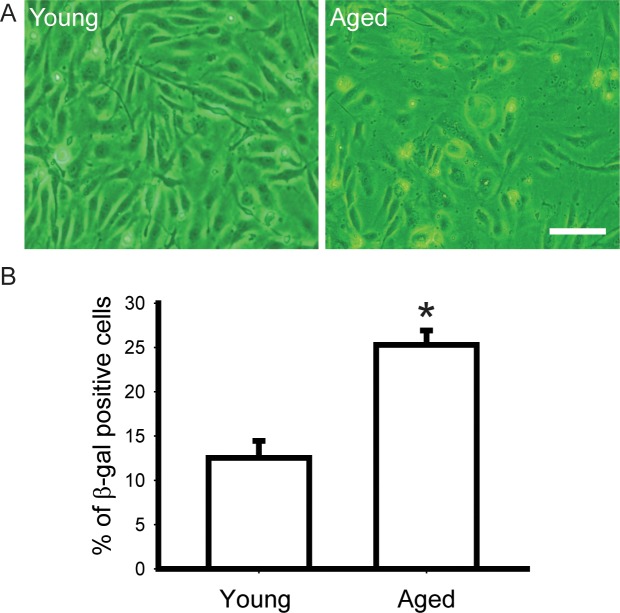
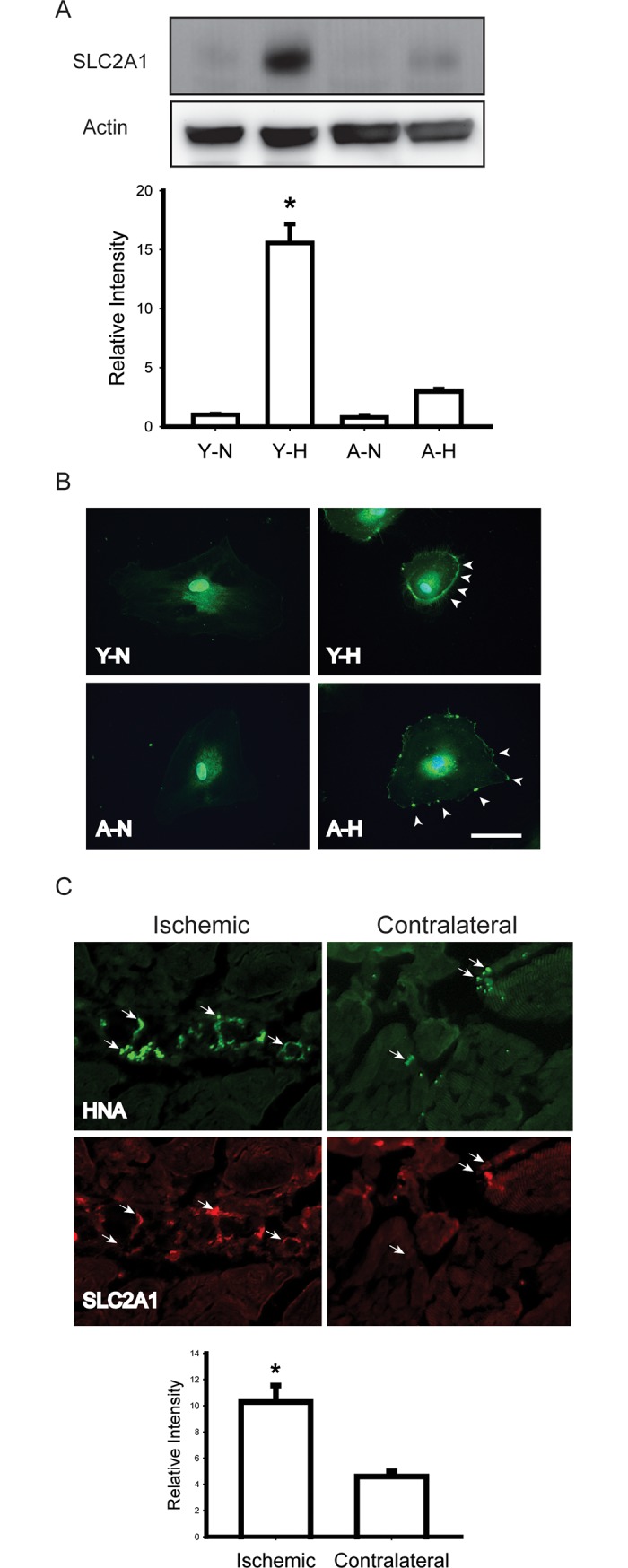
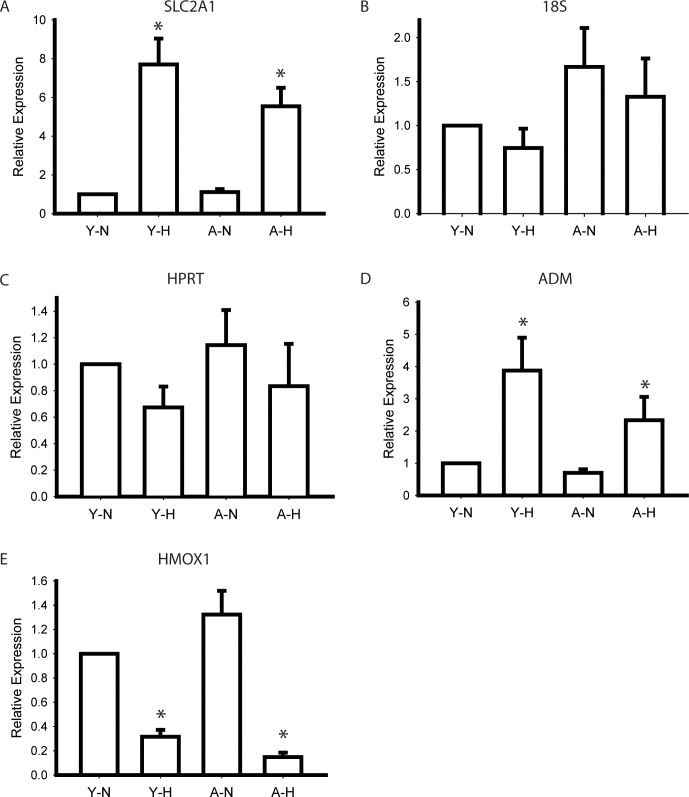
Age is a major risk factor for diseases caused by ischemic hypoxia, such as stroke and coronary artery disease. Endothelial progenitor cells (EPCs) are the major cells respond to ischemic hypoxia through angiogenesis and vascular remodeling. However, the effect of aging on EPCs and their responses to hypoxia are not well understood. CD34+ EPCs were isolated from healthy volunteers and aged by replicative senescence, which was to passage cells until their doubling time was twice as long as the original cells. Young and aged CD34+ EPCs were exposed to a hypoxic environment (1% oxygen for 48hrs) and their gene expression profiles were evaluated using gene expression array. Gene array results were confirmed using quantitative polymerase chain reaction, Western blotting, and BALB/c female athymic nude mice hindlimb ischemia model. We identified 115 differentially expressed genes in young CD34+ EPCs, 54 differentially expressed genes in aged CD34+ EPCs, and 25 common genes between normoxia and hypoxia groups. Among them, the expression of solute carrier family 2 (facilitated glucose transporter), member 1 (SLC2A1) increased the most by hypoxia in young cells. Gene set enrichment analysis indicated the pathways affected by aging and hypoxia most, including genes "response to oxygen levels" in young EPCs and genes involved "chondroitin sulfate metabolic process" in aged cells. Our study results indicate the key factors that contribute to the effects of aging on response to hypoxia in CD34+ EPCs. With the potential applications of EPCs in cardiovascular and other diseases, our study also provides insight on the impact of ex vivo expansion might have on EPCs.
年龄是缺血缺氧性疾病(如中风和冠心病)的主要危险因素。内皮祖细胞(EPCs)是对缺血缺氧做出反应的主要细胞,通过血管生成和血管重塑来发挥作用。然而,年龄对 EPCs 的影响及其对缺氧的反应尚不清楚。我们从健康志愿者中分离出 CD34+ EPCs,并通过复制性衰老使其衰老,即将细胞传代,直到其倍增时间是原始细胞的两倍。将年轻和衰老的 CD34+ EPCs 暴露于低氧环境(1%氧气 48 小时),并使用基因表达谱芯片评估其基因表达谱。使用定量聚合酶链反应、Western blot 和 BALB/c 雌性无胸腺裸鼠后肢缺血模型来验证基因芯片结果。我们在年轻的 CD34+ EPCs 中鉴定出 115 个差异表达基因,在衰老的 CD34+ EPCs 中鉴定出 54 个差异表达基因,在常氧和低氧组之间鉴定出 25 个共同基因。其中,年轻细胞中 SLC2A1(溶质载体家族 2(促进葡萄糖转运蛋白)成员 1)在缺氧条件下的表达增加最多。基因集富集分析表明,受衰老和缺氧影响最大的途径包括年轻 EPCs 中“对氧水平的反应”相关基因和衰老细胞中“硫酸软骨素代谢过程”相关基因。我们的研究结果表明了导致 CD34+ EPCs 对缺氧反应的年龄相关因素。随着 EPCs 在心血管和其他疾病中的潜在应用,我们的研究还提供了关于体外扩增可能对 EPCs 产生影响的见解。