Eli and Edythe Broad Center of Regeneration Medicine and Stem Cell Research, University of California San Francisco, San Francisco, CA, USA.
Division of Gastroenterology, Hepatology and Nutrition, Cincinnati Children's Hospital Medical Center, Cincinnati, OH, USA.
Nature. 2018 May;557(7704):247-251. doi: 10.1038/s41586-018-0075-5. Epub 2018 May 2.
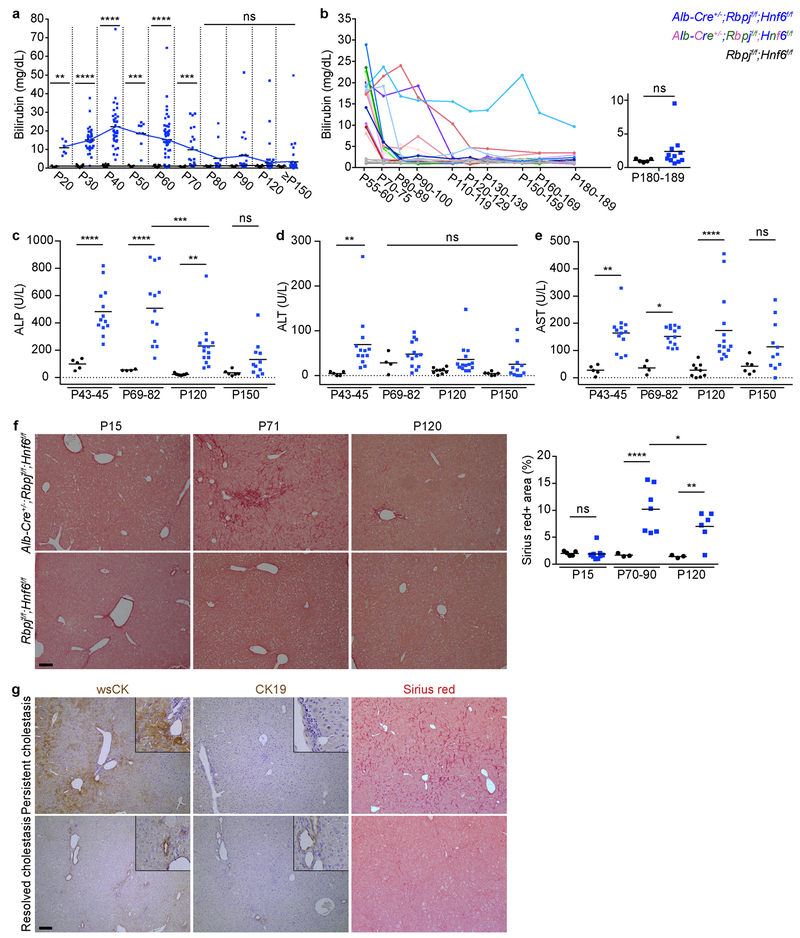
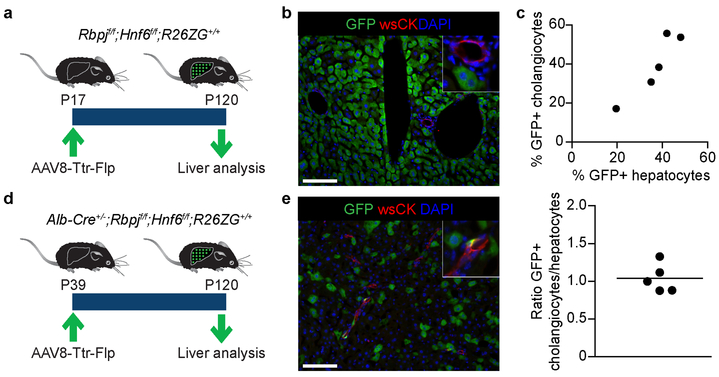
Transdifferentiation is a complete and stable change in cell identity that serves as an alternative to stem-cell-mediated organ regeneration. In adult mammals, findings of transdifferentiation have been limited to the replenishment of cells lost from preexisting structures, in the presence of a fully developed scaffold and niche. Here we show that transdifferentiation of hepatocytes in the mouse liver can build a structure that failed to form in development-the biliary system in a mouse model that mimics the hepatic phenotype of human Alagille syndrome (ALGS). In these mice, hepatocytes convert into mature cholangiocytes and form bile ducts that are effective in draining bile and persist after the cholestatic liver injury is reversed, consistent with transdifferentiation. These findings redefine hepatocyte plasticity, which appeared to be limited to metaplasia, that is, incomplete and transient biliary differentiation as an adaptation to cell injury, based on previous studies in mice with a fully developed biliary system. In contrast to bile duct development, we show that de novo bile duct formation by hepatocyte transdifferentiation is independent of NOTCH signalling. We identify TGFβ signalling as the driver of this compensatory mechanism and show that it is active in some patients with ALGS. Furthermore, we show that TGFβ signalling can be targeted to enhance the formation of the biliary system from hepatocytes, and that the transdifferentiation-inducing signals and remodelling capacity of the bile-duct-deficient liver can be harnessed with transplanted hepatocytes. Our results define the regenerative potential of mammalian transdifferentiation and reveal opportunities for the treatment of ALGS and other cholestatic liver diseases.
转分化是一种细胞特征的完全和稳定改变,可作为干细胞介导的器官再生的替代方案。在成年哺乳动物中,转分化的发现仅限于在完全发育的支架和龛位存在的情况下,从现有结构中补充丢失的细胞。在这里,我们表明,在模拟人类 Alagille 综合征(ALGS)肝脏表型的小鼠模型中,肝脏中的肝细胞转分化可以构建一种未能在发育过程中形成的结构 - 胆管系统。在这些小鼠中,肝细胞转化为成熟的胆管细胞并形成胆管,这些胆管能够有效地排出胆汁,并在胆汁淤积性肝损伤逆转后仍然存在,这与转分化一致。这些发现重新定义了肝细胞的可塑性,之前的研究表明,这种可塑性似乎仅限于肝外胚层发生,即不完全和短暂的胆管分化,是对细胞损伤的适应,这是基于在具有完全发育的胆管系统的小鼠中进行的先前研究。与胆管发育相反,我们表明,肝细胞转分化产生的新胆管形成独立于 NOTCH 信号。我们确定 TGFβ 信号是这种代偿机制的驱动因素,并表明它在一些 ALGS 患者中是活跃的。此外,我们表明,TGFβ 信号可以被靶向以增强从肝细胞形成胆管系统,并且可以利用移植的肝细胞来利用胆管缺陷肝脏的转分化诱导信号和重塑能力。我们的结果定义了哺乳动物转分化的再生潜力,并为治疗 ALGS 和其他胆汁淤积性肝病提供了机会。