Department of Internal Medicine, College of Medicine, King Khalid University, Abha 61421, Saudi Arabia.
Department of Family and Community Medicine, College of Medicine, King Khalid University, P.O. Box 641, Abha 61421, Saudi Arabia.
Int J Environ Res Public Health. 2018 May 7;15(5):927. doi: 10.3390/ijerph15050927.
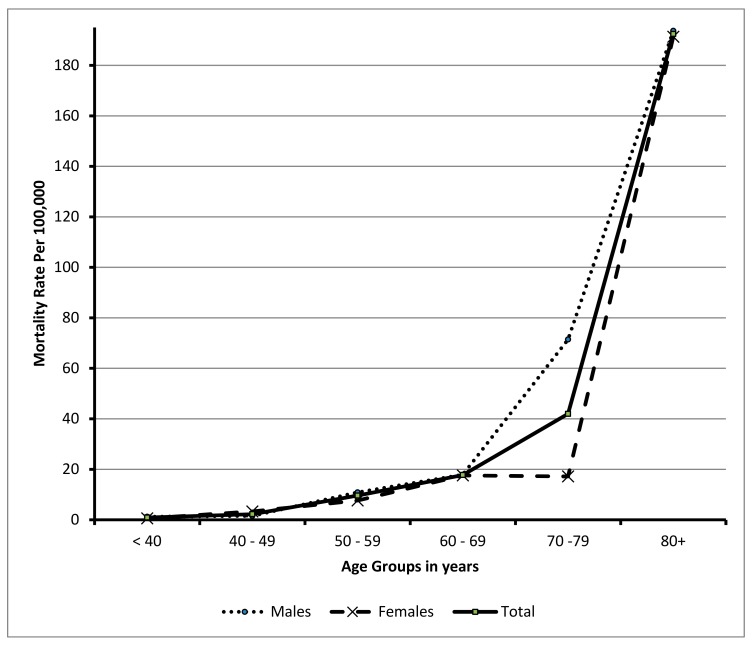
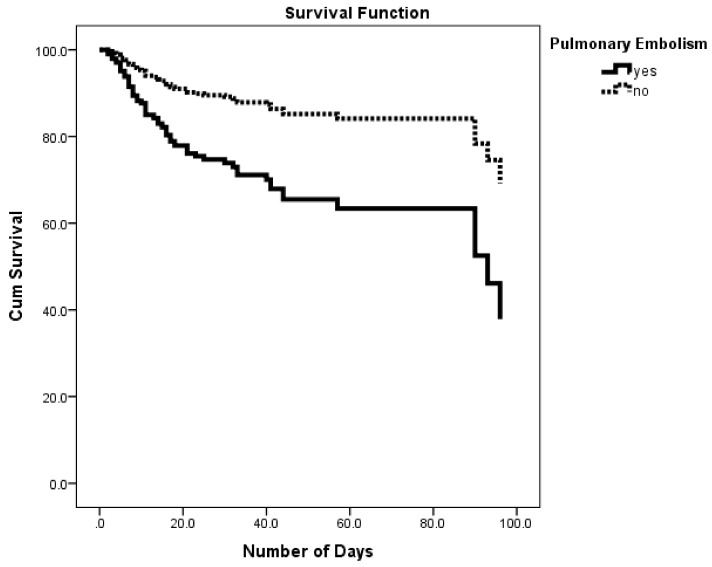
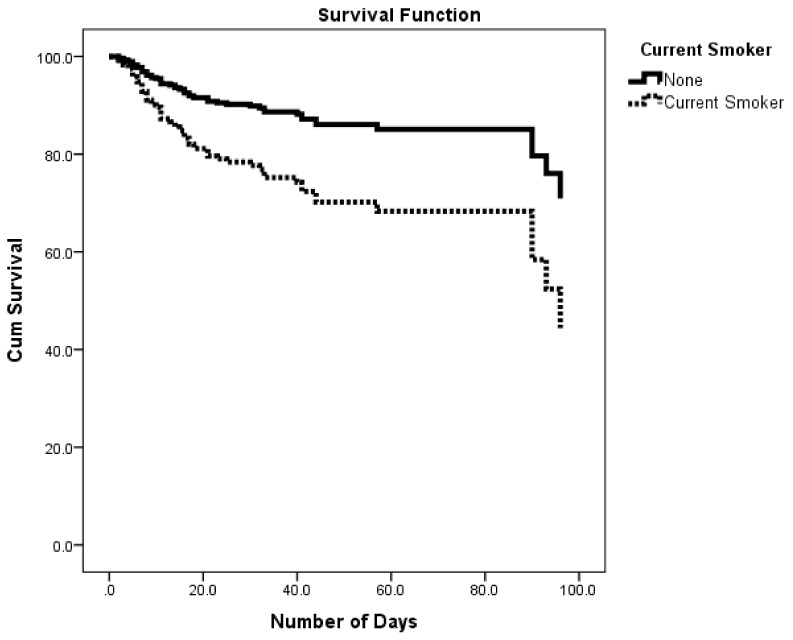
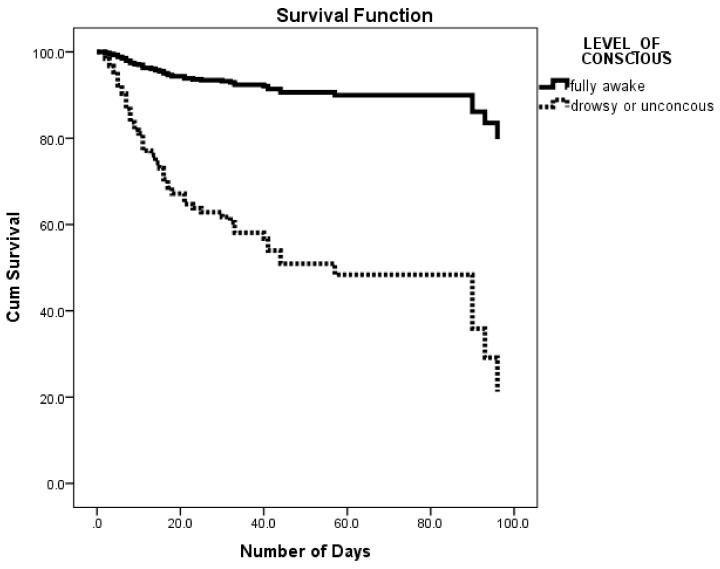
The present study analyzed in-hospital first-time stroke mortality in southwestern Saudi Arabia over one-year to assess the in-hospital stroke case fatality rate, mortality rate and explore the factors associated with in-hospital stroke mortality. : Hospital based follow-up study. First-time stroke patients admitted to all hospitals in Asser region over one-year period (January through December 2016) were included in the study. Data about personal characteristics, pre-stroke history and clinical criteria, on admission clinical criteria, in-hospital complications and survival status were collected. The last reported Aseer region population was used to calculate age and sex stroke mortality rate per 100,000 population/year. Hazard ratios (HR) and concomitant 95% confidence intervals (95% CI) were computed using multivariate Cox regression survival analysis. Kaplan-Meier curve survival analysis for stroke patients were plotted. A total of 121 in-hospital deaths out of 1249 first-time stroke patients giving an overall case fatality rate (CFR) of 9.7%. Non-significant difference with gender and age were observed in CFR. Overall, in-hospital stroke mortality rate was 5.58 per 100,000/year. Males and elders showed a significantly higher mortality rates. Multivariable Cox regression analyses revealed pre-stroke smoking (HR = 2.36), pre-stroke hypertension (HR = 1.77), post-stroke disturbed consciousness (HR = 6.86), poor mobility (HR = 2.60) and developing pulmonary embolism (HR = 2.63) as significant predictors of in-hospital stroke mortality. : In Southwestern Saudi Arabia, the in-hospital stroke mortality rate is higher in men and increases with aging. The prognosis of acute stroke could be improved by smoking cessation, better control of hypertension and prevention of in hospital complication particularly pulmonary embolism.
本研究分析了沙特阿拉伯西南部一年内的住院首次脑卒中死亡率,以评估住院脑卒中病死率、死亡率,并探讨与住院脑卒中死亡相关的因素。:基于医院的随访研究。 研究纳入了一年内(2016 年 1 月至 12 月)阿西尔地区所有医院收治的首次脑卒中患者。收集了个人特征、卒中前病史和临床标准、入院时临床标准、住院并发症和生存状况等数据。使用最后报告的阿西尔地区人口数据计算了每 10 万人/年的年龄和性别脑卒中死亡率。使用多变量 Cox 回归生存分析计算了风险比(HR)和伴随的 95%置信区间(95%CI)。绘制了脑卒中患者的 Kaplan-Meier 曲线生存分析图。 1249 例首次脑卒中患者中有 121 例院内死亡,总病死率(CFR)为 9.7%。CFR 在性别和年龄方面无显著差异。总体而言,住院脑卒中死亡率为 5.58/10 万人/年。男性和老年人的死亡率明显较高。多变量 Cox 回归分析显示,卒中前吸烟(HR=2.36)、卒中前高血压(HR=1.77)、卒中后意识障碍(HR=6.86)、活动能力差(HR=2.60)和发生肺栓塞(HR=2.63)是住院脑卒中死亡的显著预测因素。:在沙特阿拉伯西南部,男性的住院脑卒中死亡率较高,且随年龄增长而增加。通过戒烟、更好地控制高血压和预防住院并发症(特别是肺栓塞),可以改善急性脑卒中的预后。