Materials Research and Technology Department, Luxembourg Institute of Science and Technology (LIST), 41 rue du Brill, Belvaux, L‑4422, Luxembourg.
CEA, LETI, Minatec Campus, Université Grenoble Alpes, 17 Rue des Martyrs, 38054, Grenoble, France.
Nat Commun. 2018 May 8;9(1):1827. doi: 10.1038/s41467-018-04027-9.
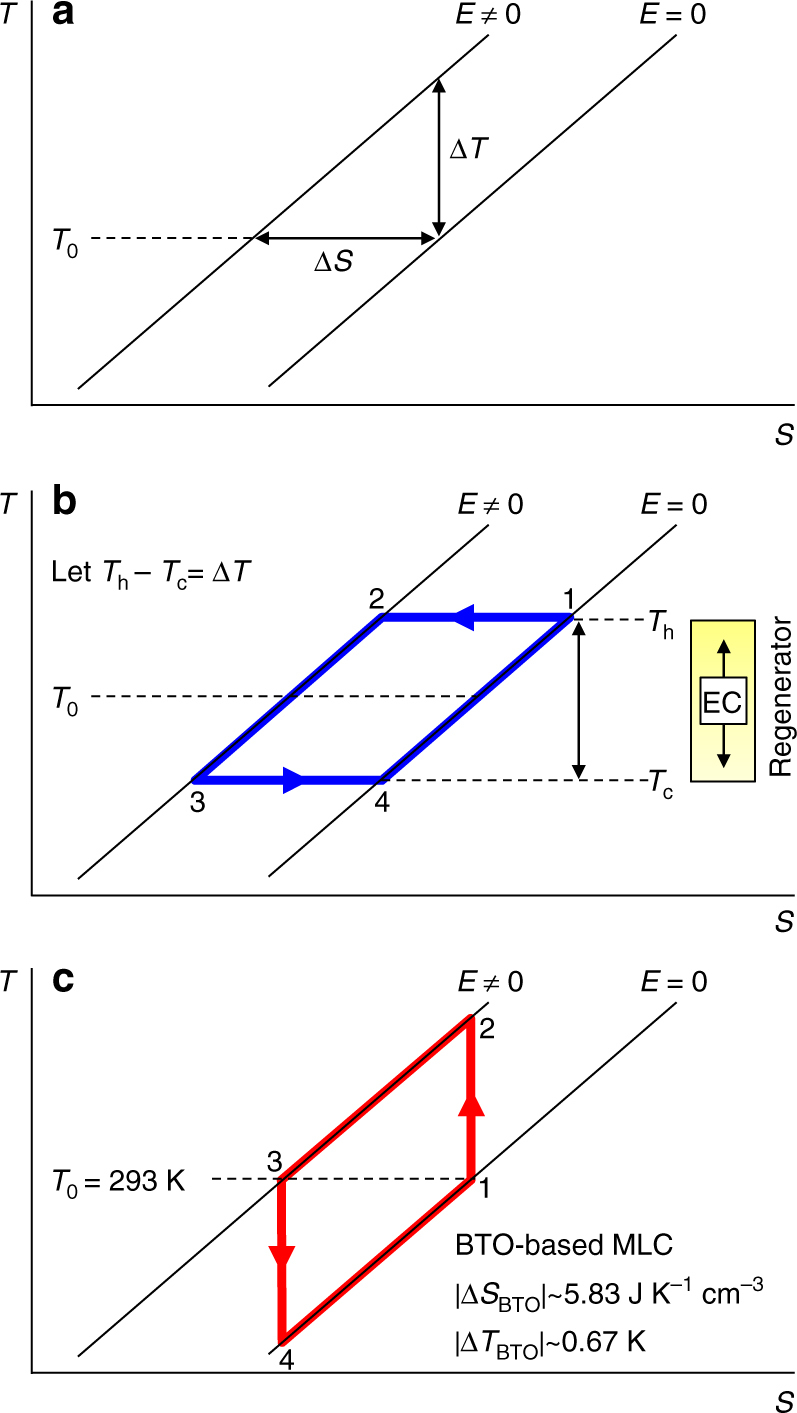
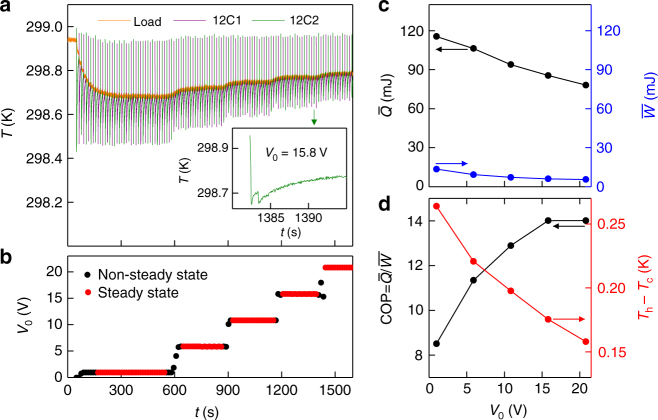
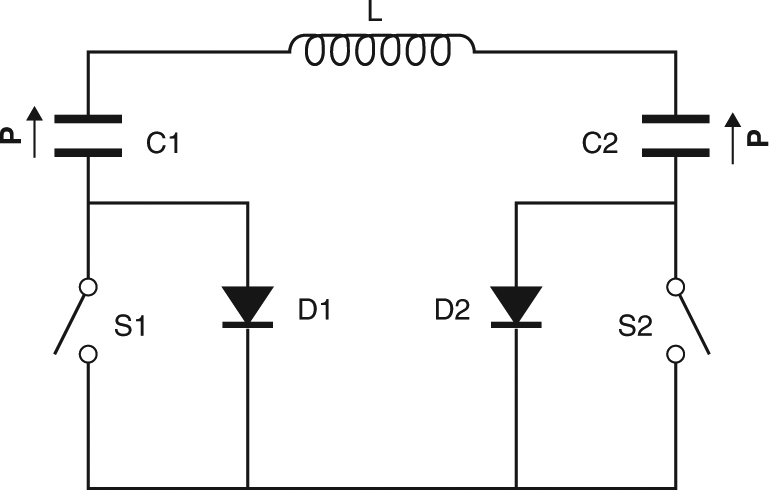
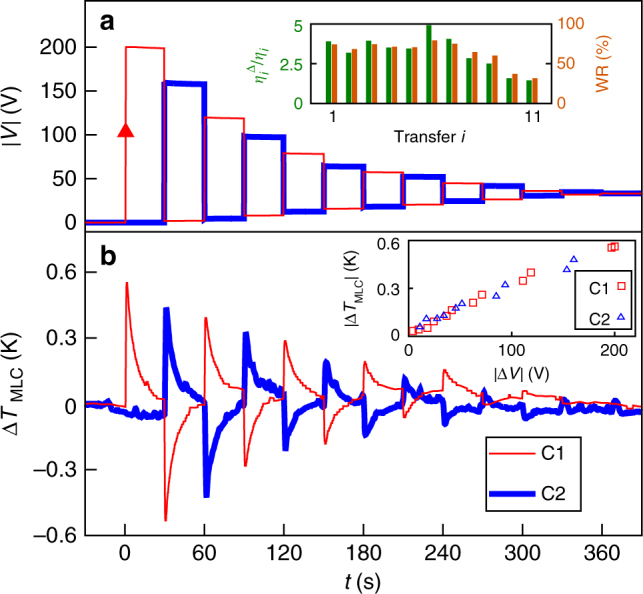
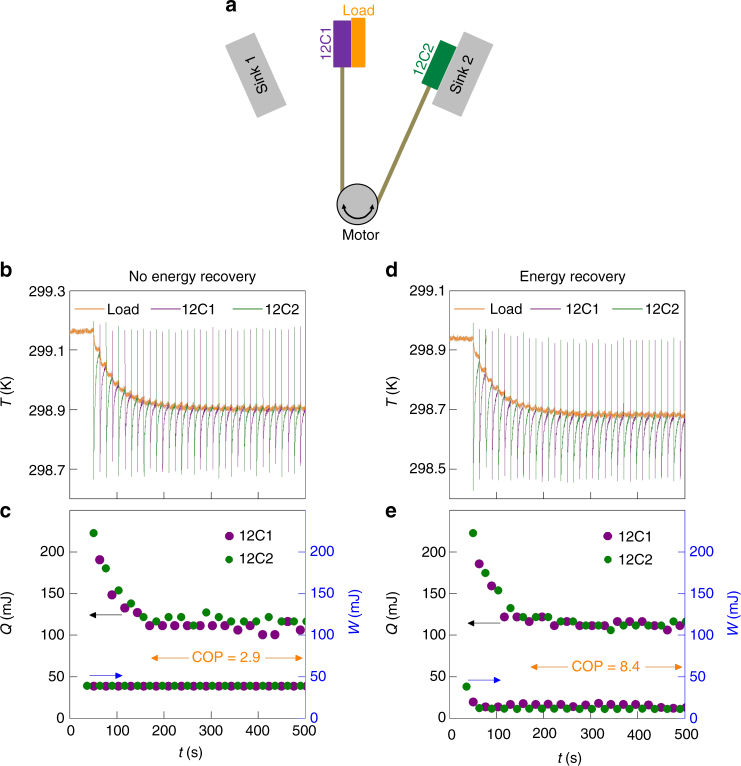
Materials that show large and reversible electrically driven thermal changes near phase transitions have been proposed for cooling applications, but energy efficiency has barely been explored. Here we reveal that most of the work done to drive representative electrocaloric cycles does not pump heat and may therefore be recovered. Initially, we recover 75-80% of the work done each time BaTiO-based multilayer capacitors drive electrocaloric effects in each other via an inductor (diodes prevent electrical resonance while heat flows after each charge transfer). For a prototype refrigerator with 24 such capacitors, recovering 65% of the work done to drive electrocaloric effects increases the coefficient of performance by a factor of 2.9. The coefficient of performance is subsequently increased by reducing the pumped heat and recovering more work. Our strategy mitigates the advantage held by magnetocaloric prototypes that exploit automatic energy recovery, and should be mandatory in future electrocaloric cooling devices.
已经有研究提出使用在相变附近表现出较大且可逆的电致热变化的材料来进行冷却应用,但能量效率几乎没有被探索过。在这里,我们揭示了驱动代表性电卡循环所做的大部分工作实际上并没有泵送热量,因此可能会被回收。最初,我们通过电感器(在每次电荷转移后,二极管会阻止电共振,但热量会流动)使基于 BaTiO3 的多层电容器相互驱动电卡效应,每次回收 75-80% 的工作功。对于一个具有 24 个此类电容器的原型冰箱,回收 65% 的驱动电卡效应的功会使性能系数提高 2.9 倍。通过减少泵送热量和回收更多的功,性能系数随后得到提高。我们的策略减轻了利用自动能量回收的磁卡原型所具有的优势,在未来的电卡冷却设备中应该是强制性的。