Department of Ophthalmology and Visual Sciences, The Vanderbilt Eye Institute, Vanderbilt University Medical Center, 1105 Medical Research Building IV, Nashville, TN, 37232-0654, USA.
Acta Neuropathol Commun. 2018 May 10;6(1):38. doi: 10.1186/s40478-018-0542-0.
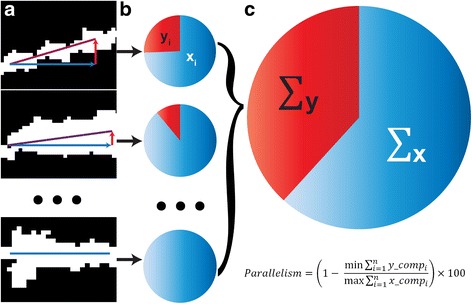
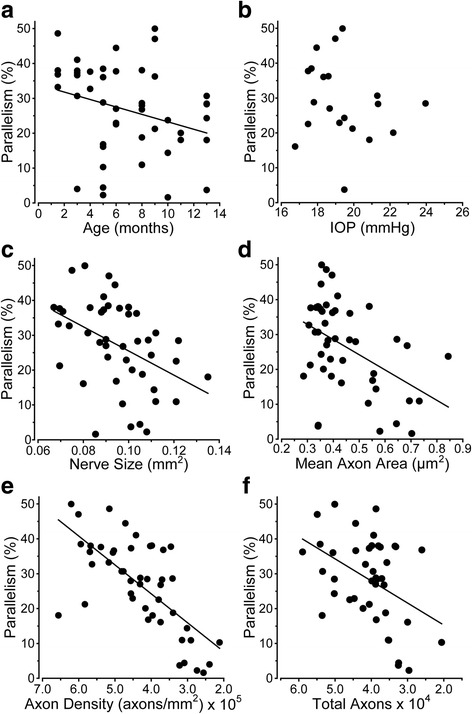
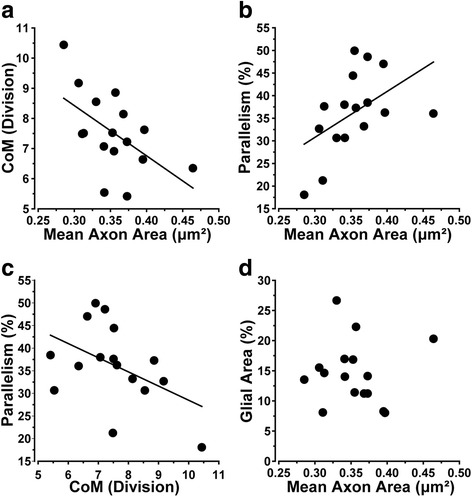
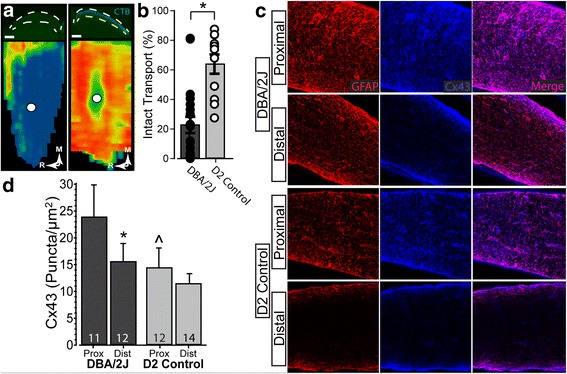
Astroyctes serve myriad functions but are especially critical in white matter tracts, where energy-demanding axons propagate action potentials great distances between neurons. Axonal dependence on astrocytes for even normal function accentuates the critical role astrocytes serve during disease. In glaucoma, the most common optic neuropathy, sensitivity to intraocular pressure (IOP) challenges RGC axons early, including degradation of anterograde transport to the superior colliculus (SC). Astrocyte remodeling presages overt axon degeneration in glaucoma and thus may present a therapeutic opportunity. Here we developed a novel metric to quantify organization of astrocyte processes in the optic nerve relative to axon degeneration in the DBA/2 J hereditary mouse model of glaucoma. In early progression, as axons expand prior to loss, astrocyte processes become more parallel with migration to the nerve's edge without a change in overall coverage of the nerve. As axons degenerate, astrocyte parallelism diminishes with increased glial coverage and reinvasion of the nerve. In longitudinal sections through aged DBA/2 J nerve, increased astrocyte parallelism reflected elevated levels of the astrocyte gap-junction protein connexin 43 (Cx43). In the distal nerve, increased Cx43 also indicated with a higher level of intact anterograde transport from retina to SC. Our results suggest that progression of axonopathy in the optic nerve involves astrocyte remodeling in two phases. In an early phase, astrocyte processes organize in parallel, likely through gap-junction coupling, while a later phase involves deterioration of organization as glial coverage increases and axons are lost.
星形细胞具有多种功能,但在白质束中尤为重要,在白质束中,需要能量的轴突在神经元之间远距离传播动作电位。轴突甚至对正常功能的星形细胞依赖性强调了星形细胞在疾病期间的关键作用。在青光眼,最常见的视神经病变中,对眼内压(IOP)的敏感性会早期挑战 RGC 轴突,包括顺行运输到上丘(SC)的降解。星形细胞重塑预示着青光眼显性轴突退化,因此可能提供治疗机会。在这里,我们开发了一种新的指标,用于定量评估视神经中星形细胞过程相对于 DBA/2 J 遗传性青光眼小鼠模型中轴突退化的组织。在早期进展中,由于轴突在丢失之前扩张,星形细胞过程变得更加平行,迁移到神经边缘,而神经的总体覆盖范围没有变化。随着轴突退化,星形细胞的平行度随着胶质覆盖的增加和神经的再入侵而减小。在经过年龄的 DBA/2 J 神经的纵向切片中,增加的星形细胞平行度反映了星形细胞间隙连接蛋白 43(Cx43)的水平升高。在远端神经中,增加的 Cx43 也表明从视网膜到 SC 的顺行运输完整水平更高。我们的结果表明,视神经中的轴突病变进展涉及两个阶段的星形细胞重塑。在早期阶段,星形细胞过程以平行方式组织,可能通过间隙连接偶联,而在后期阶段,随着胶质覆盖的增加和轴突的丢失,组织恶化。