Longju Medical Research Center, Key Laboratory of Basic Pharmacology of Ministry of Education, Zunyi Medical College, Zunyi, Guizhou, China.
Department of General Surgery, The First Affiliated Hospital of Harbin Medical University, Harbin, China.
Cell Death Differ. 2019 Jan;26(2):306-320. doi: 10.1038/s41418-018-0119-2. Epub 2018 May 10.
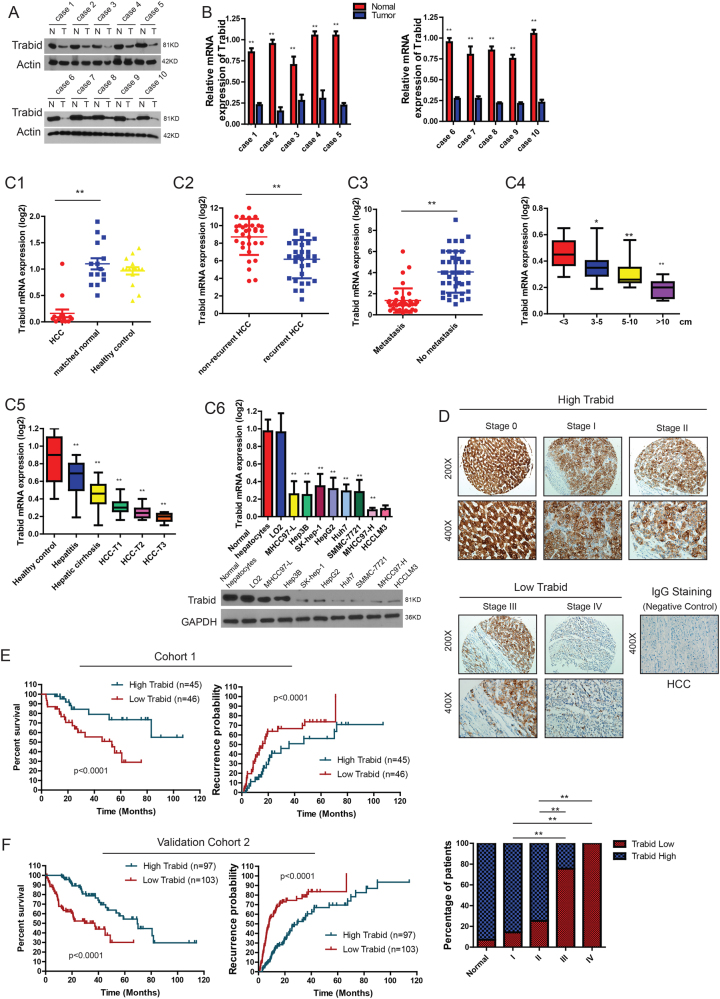
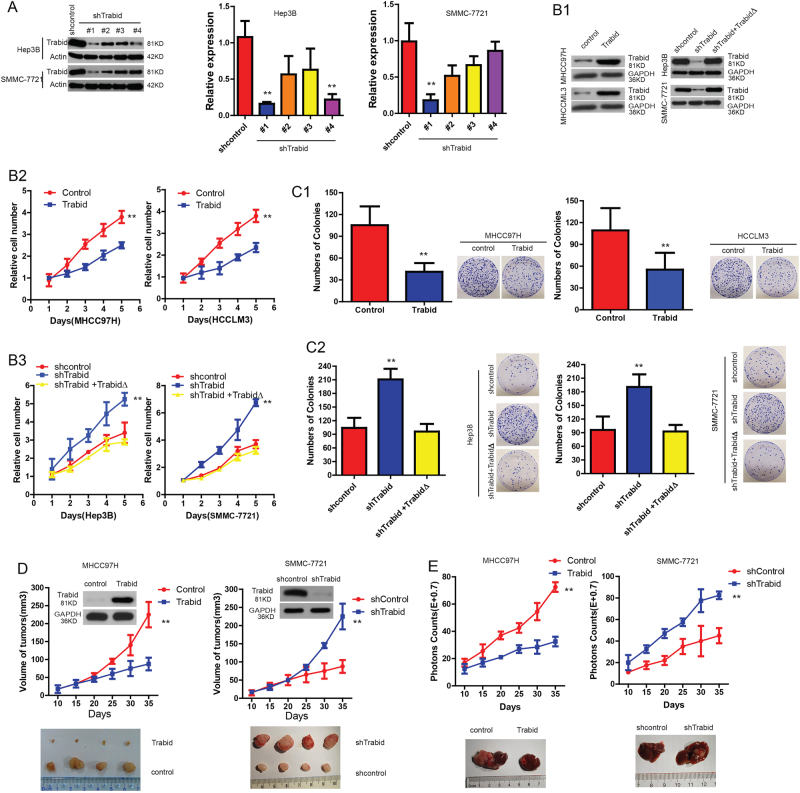
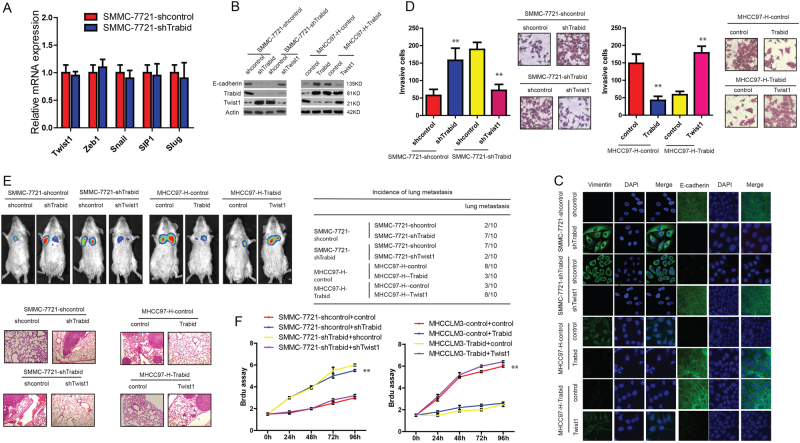
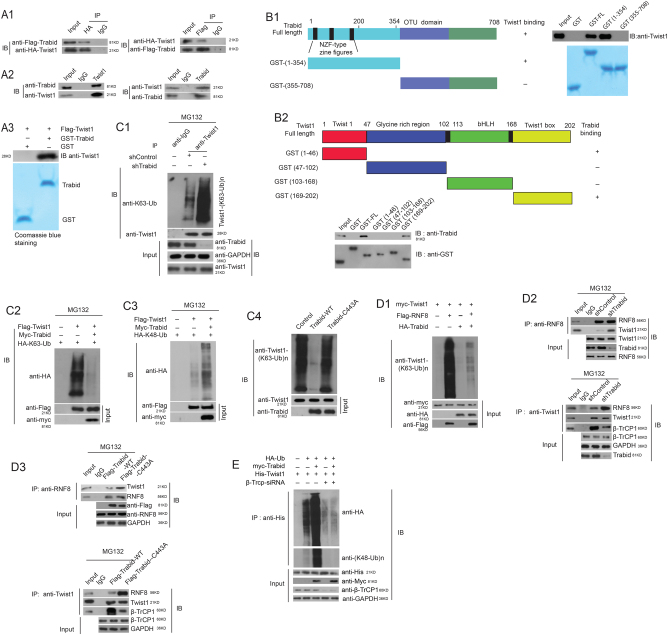
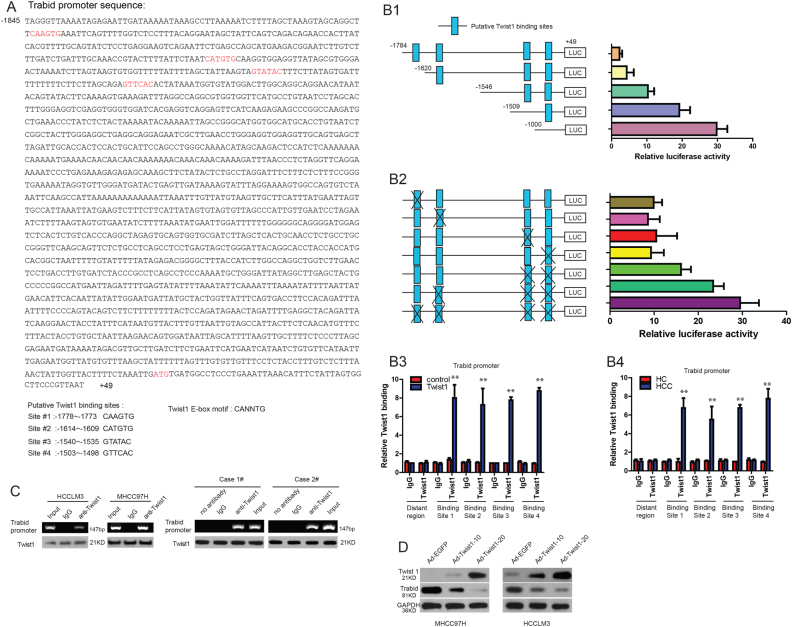
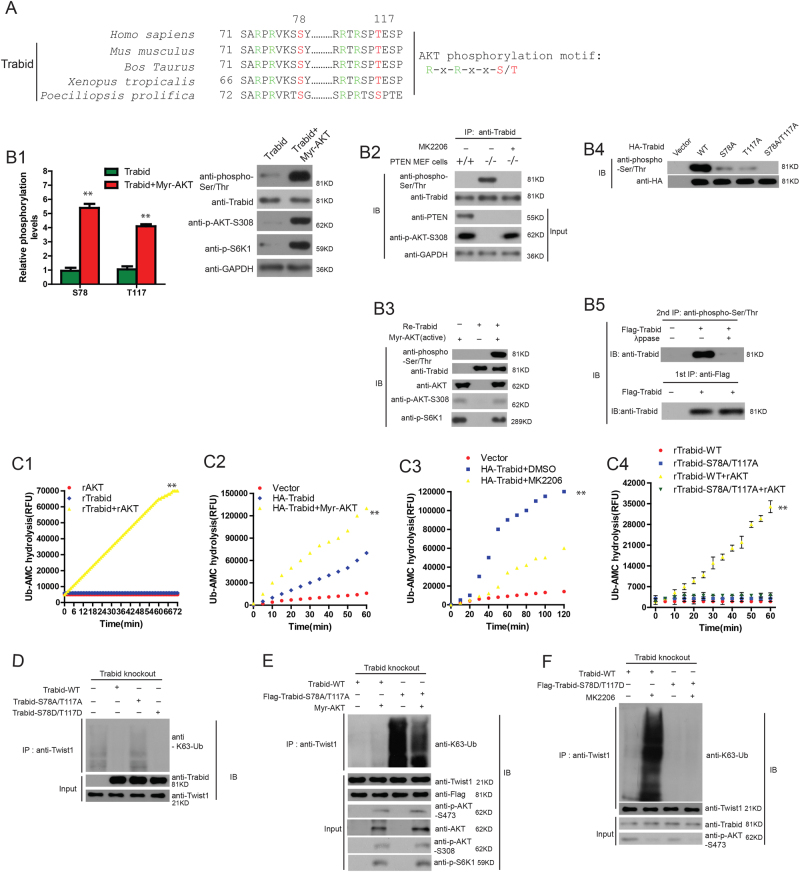
TRAF-binding domain (Trabid), one of deubiquitination enzymes, was recently reported to activate Wnt/ β-catenin signaling pathway. However, the role of Trabid in tumors including hepatocellular carcinoma (HCC) and the underlying mechanisms controlling its activity remain poorly understood. Here, we report that Trabid is significantly downregulated in HCC tumor samples and cell lines compared with normal controls and that its expression level is negatively correlated with HCC pathological grading, recurrence, and metastasis. The reintroduction of Trabid expression in tumor cells significantly decreases HCC progression as well as pulmonary metastasis. The effect of Trabid on HCC development occurs at least partially through regulation of Twist1 activity. Mechanistically, Trabid forms a complex with Twist1 and specifically cleaves RNF8-induced K63-linked poly-ubiquitin chains from Twist1, which enhances the association of Twist1 with β-TrCP1 and allows for subsequent K48-linked ubiquitination of Twist1. Knockdown of Trabid increases K63-linked ubiquitination, but abrogates K48-linked ubiquitination and degradation of Twist1, thus enhancing HCC growth and metastasis. Interestingly, Twist1 negatively regulates the promoter activity of Trabid, indicating that a double-negative feedback loop exists. Our findings also identify an essential role for activation of Trabid by AKT-mediated phosphorylation at Ser78/Thr117 in negatively regulating Twist1 signaling, which further provides insights into the mechanisms by which Trabid regulates Twist1 ubiquitination. Our results reveal that Trabid is a previously unrecognized inhibitor of HCC progression and metastasis, which sheds light on new strategies for HCC treatment.
TRAF 结合结构域(Trabid)是去泛素化酶之一,最近有报道称其可激活 Wnt/β-catenin 信号通路。然而,Trabid 在包括肝细胞癌(HCC)在内的肿瘤中的作用及其对其活性的控制机制仍知之甚少。在这里,我们报告称,与正常对照相比,Trabid 在 HCC 肿瘤样本和细胞系中的表达显著下调,并且其表达水平与 HCC 病理分级、复发和转移呈负相关。在肿瘤细胞中重新引入 Trabid 表达可显著降低 HCC 的进展和肺转移。Trabid 对 HCC 发展的影响至少部分是通过调节 Twist1 活性发生的。在机制上,Trabid 与 Twist1 形成复合物,并特异性地从 Twist1 上切割 RNF8 诱导的 K63 连接多泛素链,从而增强 Twist1 与β-TrCP1 的结合,并允许随后对 Twist1 进行 K48 连接的泛素化。Trabid 的敲低增加了 K63 连接的泛素化,但取消了 K48 连接的泛素化和降解,从而增强了 HCC 的生长和转移。有趣的是,Twist1 负调控 Trabid 的启动子活性,表明存在双负反馈回路。我们的研究结果还确定了 AKT 介导的丝氨酸 78/苏氨酸 117 磷酸化激活 Trabid 在负调控 Twist1 信号中的重要作用,这进一步深入了解了 Trabid 调节 Twist1 泛素化的机制。我们的研究结果揭示了 Trabid 是 HCC 进展和转移的先前未被识别的抑制剂,为 HCC 的治疗提供了新的策略。