Department of Oral Immunology and Infectious Diseases, University of Louisville School of Dentistry, Louisville, Kentucky, USA.
Department of Chemistry, University of Louisville College of Arts and Sciences, Louisville, Kentucky, USA.
Antimicrob Agents Chemother. 2018 Jun 26;62(7). doi: 10.1128/AAC.00400-18. Print 2018 Jul.
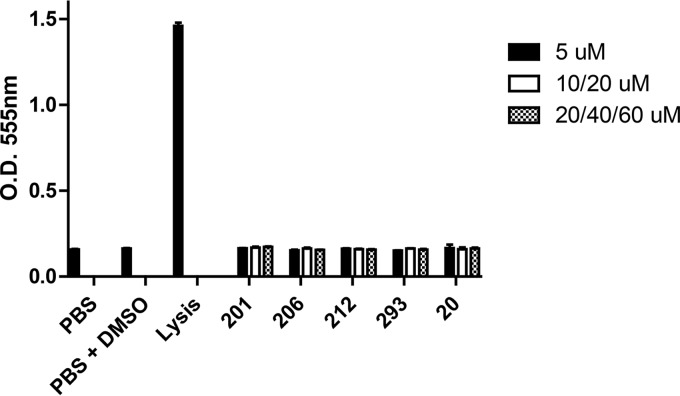
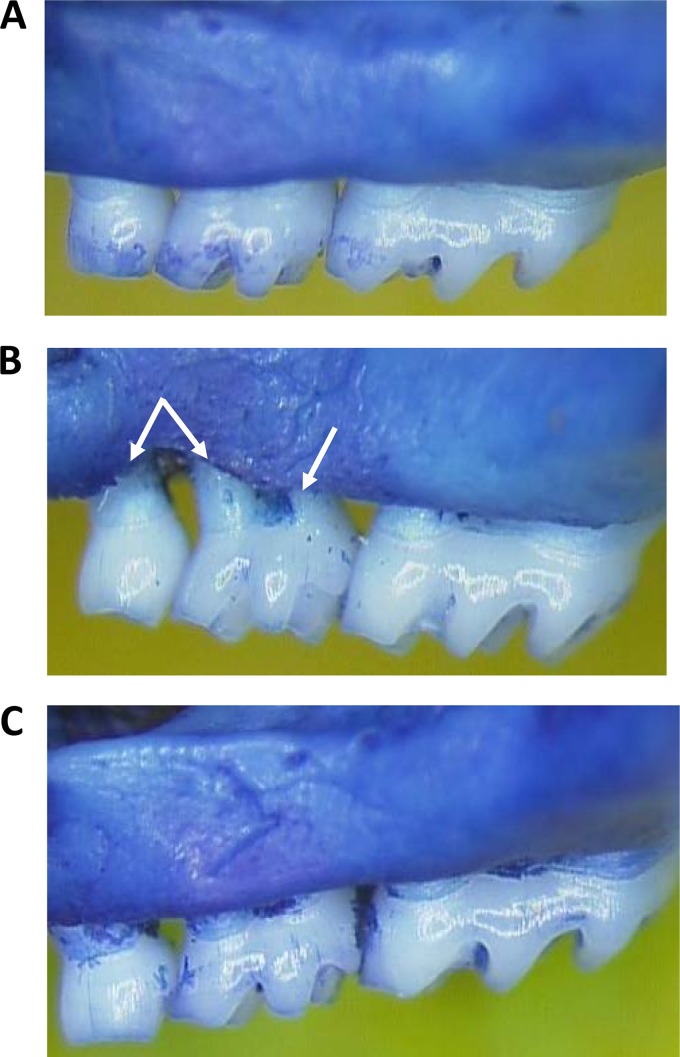
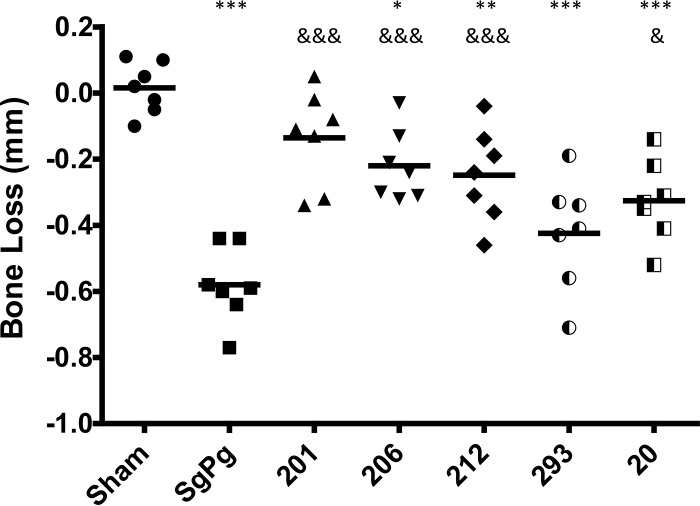
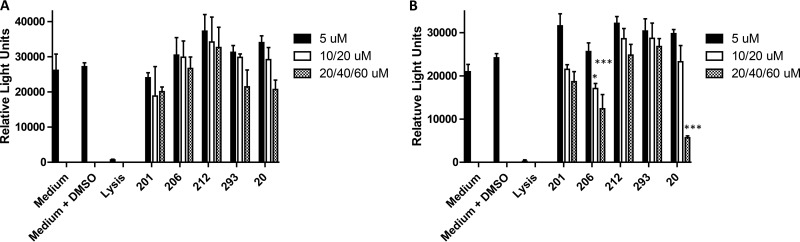
The interaction of the periodontal pathogen with oral streptococci is important for initial colonization of the oral cavity by and is mediated by a discrete motif of the streptococcal antigen I/II protein. A synthetic peptide encompassing this motif functions as a potent inhibitor of adherence, but the use of peptides as topically applied therapeutic agents in the oral cavity has limitations arising from the relatively high cost of peptide synthesis and their susceptibility to degradation by proteases expressed by oral organisms. In this study, we demonstrate the and activity of five small-molecule mimetic compounds of the streptococcal peptide. Using a three-species biofilm model, all five compounds were shown to effectively inhibit the incorporation of into biofilms and exhibited 50% inhibitory concentrations (ICs) of 10 to 20 μM. Four of the five compounds also significantly reduced maxillary alveolar bone resorption induced by infection in a mouse model of periodontitis. All of the compounds were nontoxic toward a human telomerase immortalized gingival keratinocyte cell line. Three compounds exhibited slight toxicity against the murine macrophage J774A.1 cell line at the highest concentration tested. Compound PCP-III-201 was nontoxic to both cell lines and the most potent inhibitor of virulence and thus may represent a novel potential therapeutic agent that targets by preventing its colonization of the oral cavity.
牙周病原体与口腔链球菌的相互作用对于 初始定植口腔至关重要,其由链球菌抗原 I/II 蛋白的离散基序介导。包含该基序的合成肽可作为 附着的有效抑制剂,但由于肽合成成本相对较高以及其易被口腔生物表达的蛋白酶降解,将肽作为局部应用的治疗剂在口腔中使用存在局限性。在本研究中,我们证明了该链球菌肽的五个小分子模拟化合物的 活性和 活性。使用三物种生物膜模型,所有五种化合物均能有效抑制 掺入生物膜,并表现出 50%抑制浓度(IC)为 10 至 20 μM。在牙周炎的小鼠模型中,五种化合物中有四种还显著减少了 感染引起的上颌牙槽骨吸收。所有化合物对永生化人端粒酶牙龈角质细胞系均无细胞毒性。三种化合物在测试的最高浓度下对鼠巨噬细胞 J774A.1 细胞系表现出轻微毒性。化合物 PCP-III-201 对两种细胞系均无毒性,且对 毒力的抑制作用最强,因此可能代表一种新型潜在治疗剂,通过防止其定植口腔来靶向 。