Hijazi Youssef, Klinger Matthias, Kratzer Andrea, Wu Benjamin, Baeuerle Patrick A, Kufer Peter, Wolf Andreas, Nagorsen Dirk, Zhu Min
Amgen Research (Munich) GmbH, Munich, Germany.
Amgen Inc., Thousand Oaks, CA, United States.
Curr Clin Pharmacol. 2018;13(1):55-64. doi: 10.2174/1574884713666180518102514.
Blinatumomab is a bispecific T-cell engager (BiTE®) antibody construct targeting CD3ε on T cells and CD19 on B cells. We describe the relationship between pharmacokinetics (PK) of blinatumomab and pharmacodynamic (PD) changes in peripheral lymphocytes, serum cytokines, and tumor size in patients with non-Hodgkin lymphoma (NHL).
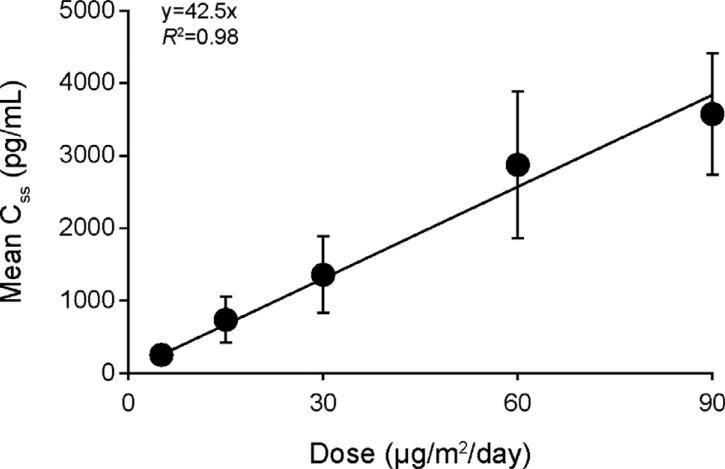
In a phase 1 study, 76 patients with relapsed/refractory NHL received blinatumomab by continuous intravenous infusion at various doses (0.5 to 90 µg/m2/day). PD changes were analyzed with respect to dose, blinatumomab concentration at steady state (Css), and cumulative area under the concentration-versus-time curve (AUCcum).
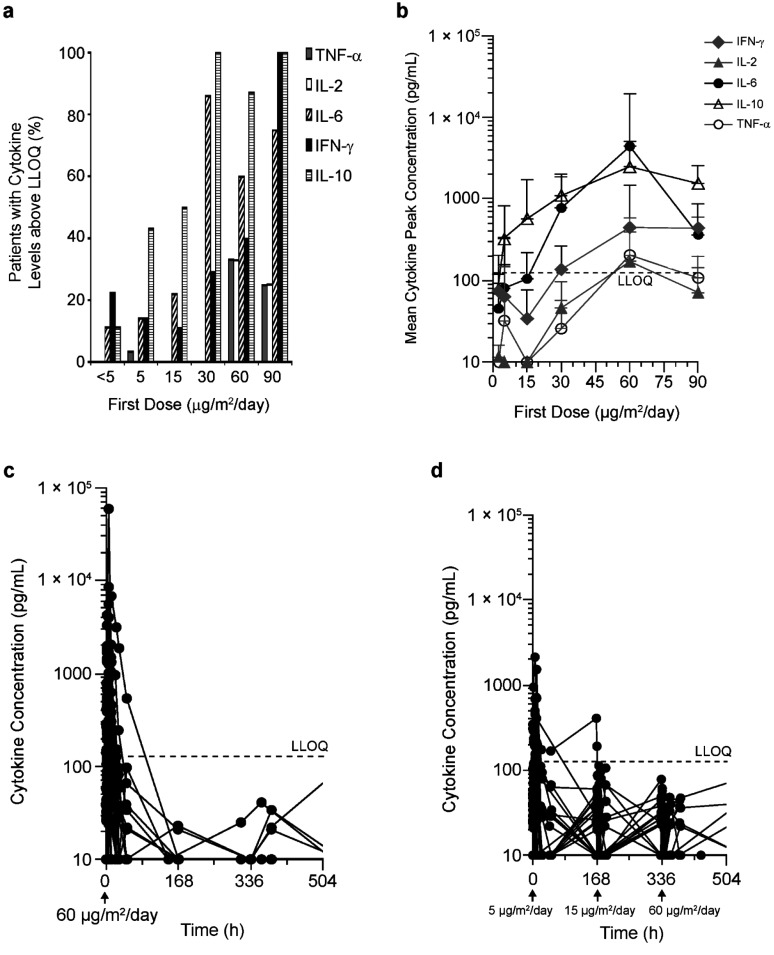
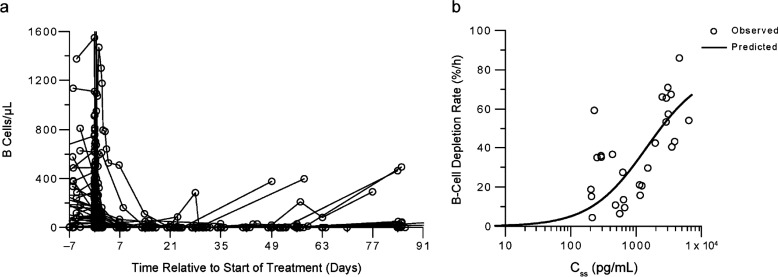
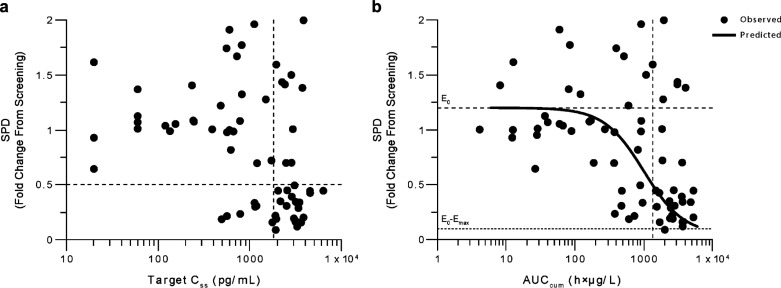
B-cell depletion occurred within 48 hours at doses ≥5 µg/m2/day, followed first-order kinetics, and was blinatumomab exposure-dependent. Change in tumor size depended on systemic blinatumomab exposure and treatment duration and could be fitted to an Emax model, which predicted a 50% reduction in tumor size at AUCcum of ≥1,340 h×µg/L and Css of ≥1,830 pg/mL, corresponding to a blinatumomab dose of 47 µg/m2/day for 28 days. The magnitude of transient cytokine elevation, observed within 1-2 days of infusion start, was dose-dependent, with less pronounced elevation at low starting doses.
B-lymphocyte depletion following blinatumomab infusion was exposure-dependent. Transient cytokine elevation increased with dose; it was less pronounced at low starting doses. Tumor response was a function of exposure, suggesting utility for the PK/PD relationship in dose selection for future studies, including NHL and other malignant settings.
博纳吐单抗是一种双特异性T细胞衔接器(BiTE®)抗体构建体,可靶向T细胞上的CD3ε和B细胞上的CD19。我们描述了博纳吐单抗的药代动力学(PK)与非霍奇金淋巴瘤(NHL)患者外周淋巴细胞、血清细胞因子和肿瘤大小的药效学(PD)变化之间的关系。
在一项1期研究中,76例复发/难治性NHL患者接受了不同剂量(0.5至90μg/m²/天)的博纳吐单抗持续静脉输注。分析了PD变化与剂量、稳态时博纳吐单抗浓度(Css)以及浓度-时间曲线下的累积面积(AUCcum)之间的关系。
在剂量≥5μg/m²/天时,48小时内发生B细胞耗竭,遵循一级动力学,且依赖于博纳吐单抗暴露。肿瘤大小的变化取决于全身博纳吐单抗暴露和治疗持续时间,并且可以拟合到Emax模型,该模型预测在AUCcum≥1340h×μg/L和Css≥1830pg/mL时肿瘤大小减少50%,这相当于47μg/m²/天的博纳吐单抗剂量持续28天。在输注开始后1-2天内观察到的短暂细胞因子升高幅度呈剂量依赖性,低起始剂量时升高不太明显。
博纳吐单抗输注后的B淋巴细胞耗竭依赖于暴露。短暂的细胞因子升高随剂量增加,在低起始剂量时不太明显。肿瘤反应是暴露的函数,表明PK/PD关系在未来研究(包括NHL和其他恶性疾病)的剂量选择中具有实用性。