Department of Laboratory Medicine, Yale University School of Medicine, New Haven, Connecticut.
Lab of Molecular Genetics of Aging and Tumor, Faculty of Medicine, Kunming University of Science and Technology, Kunming, Yunnan Province, China.
Aging Cell. 2018 Aug;17(4):e12783. doi: 10.1111/acel.12783. Epub 2018 May 17.
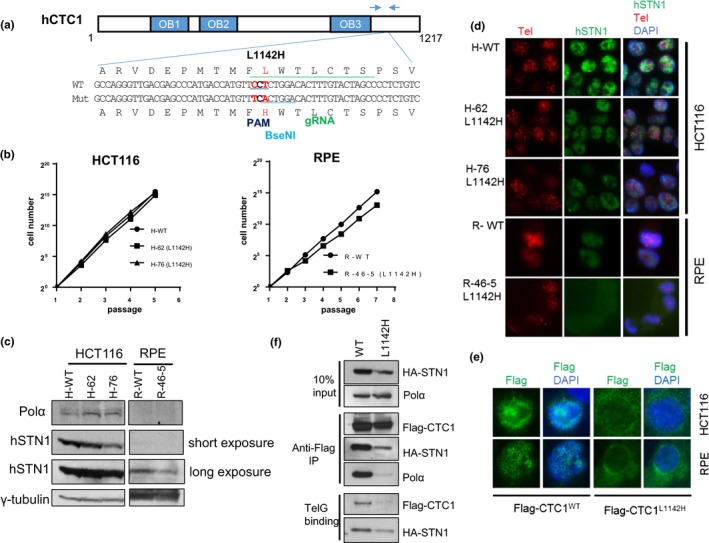
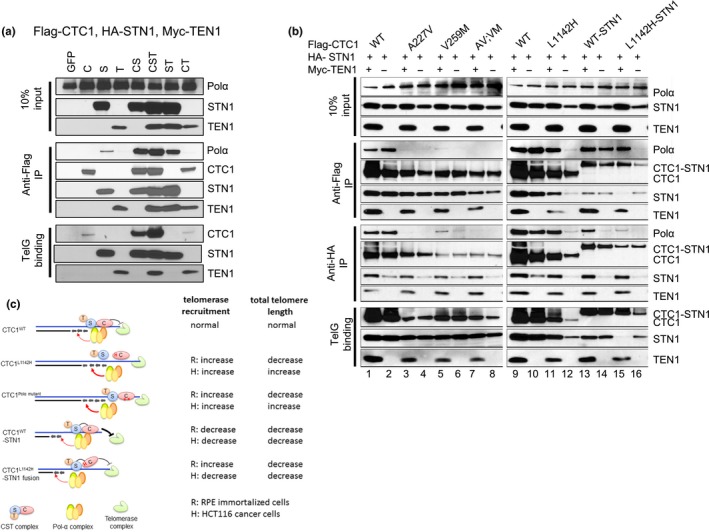
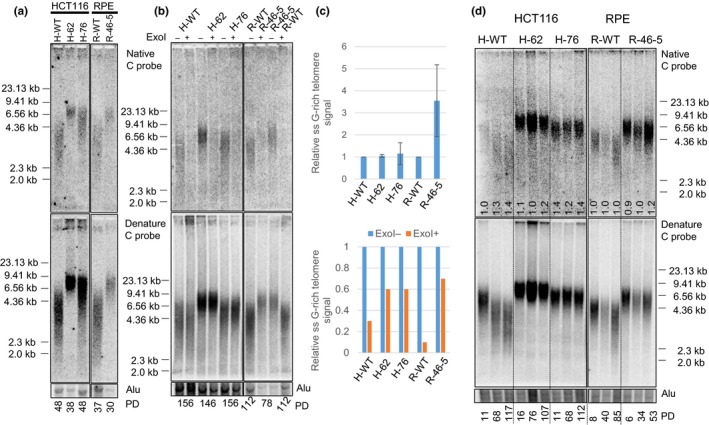
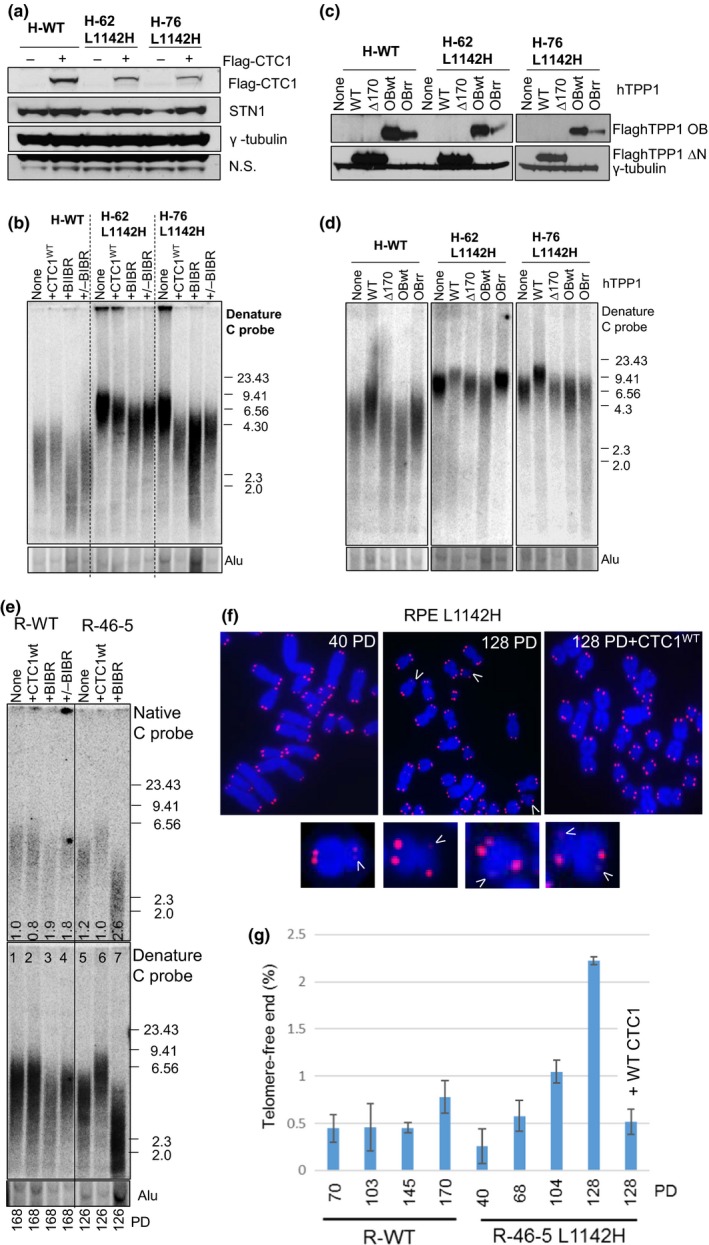
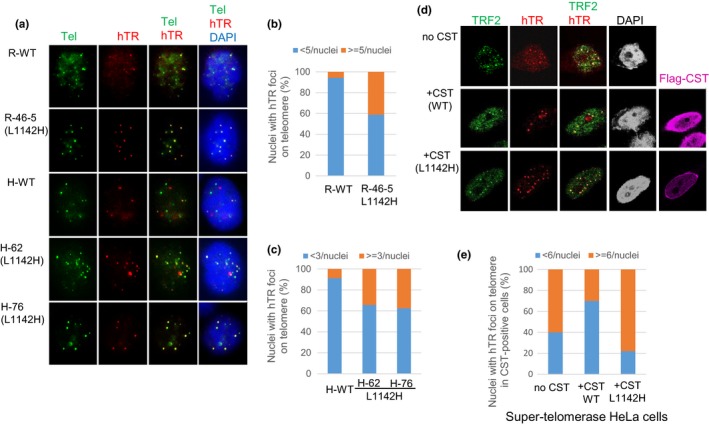
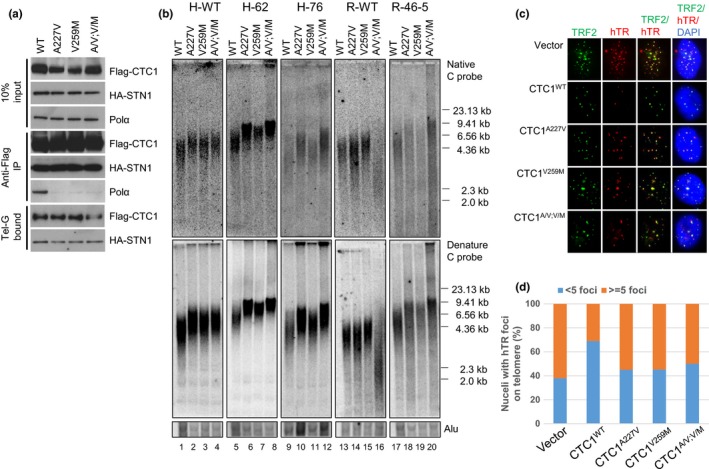
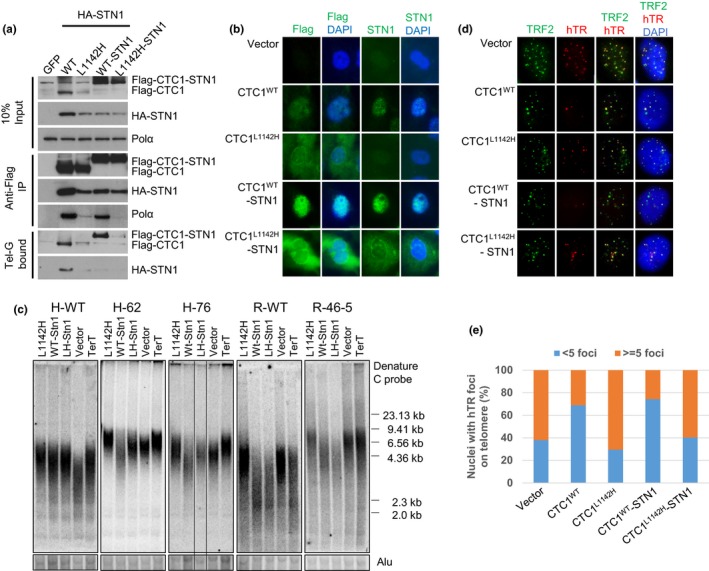
Coats plus (CP) is a rare autosomal recessive disorder caused by mutations in CTC1, a component of the CST (CTC1, STN1, and TEN1) complex important for telomere length maintenance. The molecular basis of how CP mutations impact upon telomere length remains unclear. The CP CTC1 mutation has been previously shown to disrupt telomere maintenance. In this study, we used CRISPR/Cas9 to engineer this mutation into both alleles of HCT116 and RPE cells to demonstrate that CTC1:STN1 interaction is required to repress telomerase activity. CTC1 interacts poorly with STN1, leading to telomerase-mediated telomere elongation. Impaired interaction between CTC1 :STN1 and DNA Pol-α results in increased telomerase recruitment to telomeres and further telomere elongation, revealing that C:S binding to DNA Pol-α is required to fully repress telomerase activity. CP CTC1 mutants that fail to interact with DNA Pol-α resulted in loss of C-strand maintenance and catastrophic telomere shortening. Our findings place the CST complex as an important regulator of both G-strand extensions by telomerase and C-strand synthesis by DNA Pol-α.
coats 综合征(CP)是一种罕见的常染色体隐性遗传病,由 CTC1 基因突变引起,CTC1 是 CST(CTC1、STN1 和 TEN1)复合物的一个组成部分,该复合物对于端粒长度的维持很重要。CP 突变如何影响端粒长度的分子基础仍不清楚。先前的研究表明,CP CTC1 突变会破坏端粒的维持。在这项研究中,我们使用 CRISPR/Cas9 将该突变引入到 HCT116 和 RPE 细胞的两个等位基因中,证明 CTC1:STN1 相互作用对于抑制端粒酶活性是必需的。CTC1 与 STN1 的相互作用很差,导致端粒酶介导的端粒延长。CTC1:STN1 与 DNA Pol-α 之间的相互作用受损导致端粒酶招募到端粒并进一步延长端粒,表明 C:S 与 DNA Pol-α 的结合对于完全抑制端粒酶活性是必需的。不能与 DNA Pol-α 相互作用的 CP CTC1 突变体导致 C 链的维持丧失和灾难性的端粒缩短。我们的发现将 CST 复合物定位为端粒酶介导的 G 链延伸和 DNA Pol-α 介导的 C 链合成的重要调节剂。