Brown S M, Bush S J, Summers K M, Hume D A, Lawrence A B
The Roslin Institute, University of Edinburgh, Easter Bush, EH25 9RG, UK.
The Roslin Institute, University of Edinburgh, Easter Bush, EH25 9RG, UK; Nuffield Department of Clinical Medicine, University of Oxford, John Radcliffe Hospital, Headington, Oxford, OX3 9DU, UK.
Behav Brain Res. 2018 Sep 17;350:6-15. doi: 10.1016/j.bbr.2018.05.015. Epub 2018 May 17.
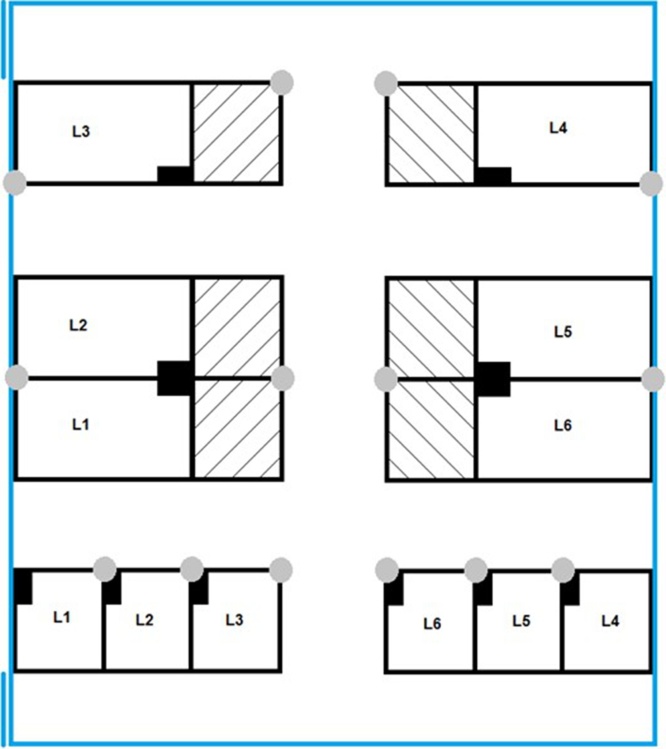
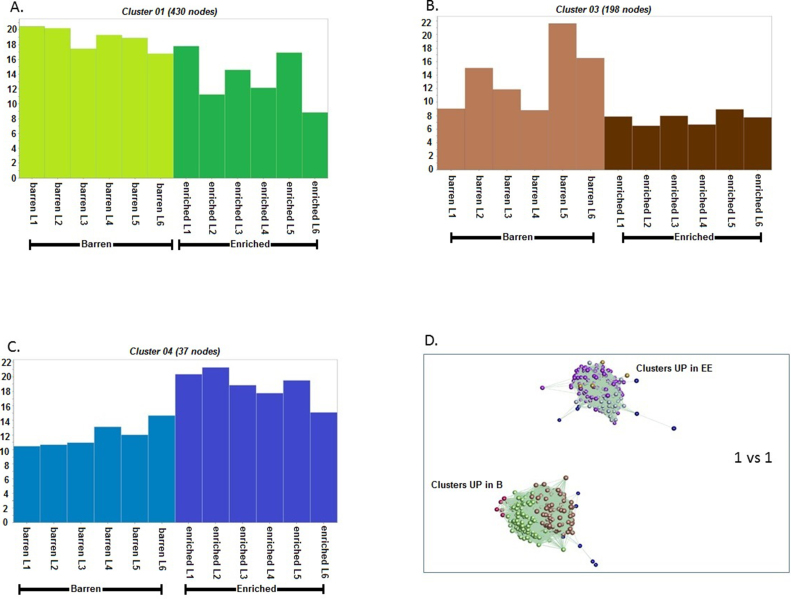
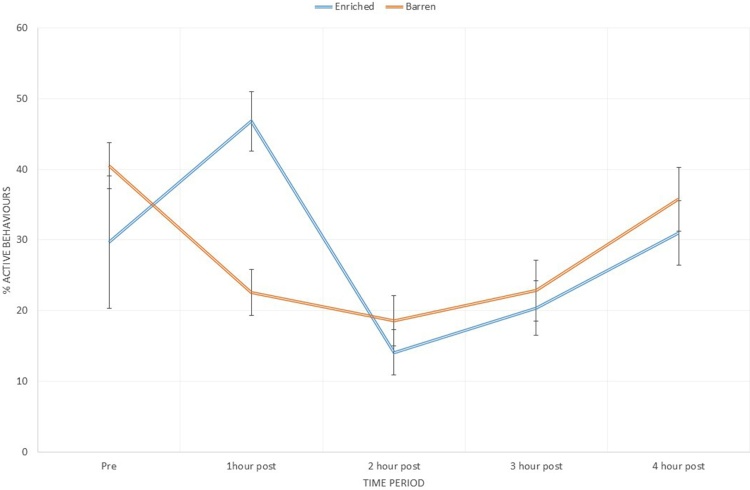
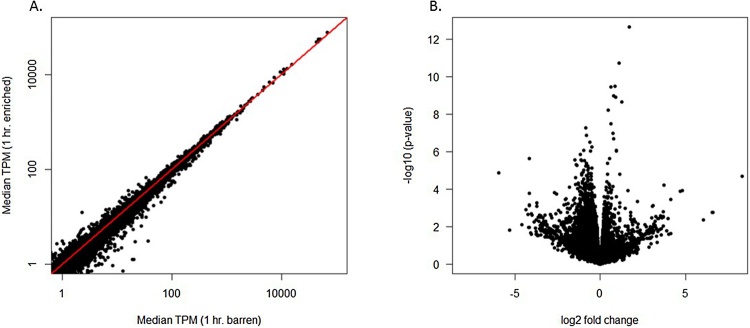
Environmental enrichment (EE) is widely used to study the effects of external factors on brain development, function and health in rodent models, but very little is known of the effects of EE on the brain in a large animal model such as the pig. Twenty-four young pigs (aged 5 weeks at start of study, 1:1 male: female ratio) were housed in environmentally enriched (EE) pens and provided with additional enrichment stimulation (a bag filled with straw) once daily. Litter, weight and sex matched controls n= (24) were housed in barren (B) conditions. Behaviour was recorded on alternate days from study day 10. After 21 days, RNA-sequencing of the frontal cortex of male piglets culled one hour after the enrichment stimulation, but not those at 4 h after stimulation, showed upregulation of genes involved in neuronal activity and synaptic plasticity in the EE compared to the B condition. This result is mirrored in the behavioural response to the stimulation which showed a peak in activity around the 1 h time-point. By contrast, EE piglets displayed a signature consistent with a relative decrease in microglial activity compared to those in the B condition. These results confirm those from rodents, suggesting that EE may also confer neuronal health benefits in large mammal models, through a potential relative reduction in neuroinflammatory process and increase in neuroprotection driven by an enrichment-induced increase in behavioural activity.
环境富集(EE)被广泛用于研究啮齿动物模型中外部因素对大脑发育、功能和健康的影响,但对于EE对大型动物模型(如猪)大脑的影响却知之甚少。24头幼猪(研究开始时5周龄,雌雄比例为1:1)被安置在环境富集(EE)栏中,每天提供一次额外的富集刺激(一个装满稻草的袋子)。窝别、体重和性别匹配的对照组(n = 24)被安置在贫瘠(B)环境中。从研究第10天开始每隔一天记录一次行为。21天后,对富集刺激1小时后宰杀的雄性仔猪额叶皮质进行RNA测序,但不包括刺激4小时后的仔猪,结果显示与B组相比,EE组中参与神经元活动和突触可塑性的基因上调。这一结果反映在对刺激的行为反应中,在1小时时间点左右活动出现峰值。相比之下,与B组相比,EE组仔猪表现出与小胶质细胞活性相对降低一致的特征。这些结果证实了啮齿动物的研究结果,表明EE可能也会通过富集诱导的行为活动增加导致神经炎症过程潜在相对减少和神经保护增加,从而对大型哺乳动物模型的神经元健康有益。