Department of Anesthesiology, The Second Xiangya Hospital, Central South University, Changsha, Hunan 410011, P.R. China.
Int J Mol Med. 2018 Aug;42(2):919-925. doi: 10.3892/ijmm.2018.3687. Epub 2018 May 17.
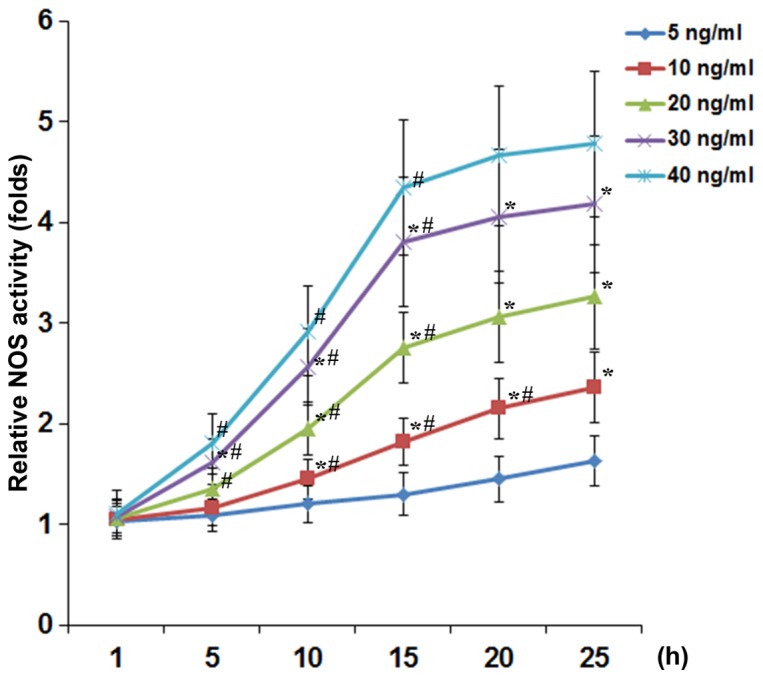
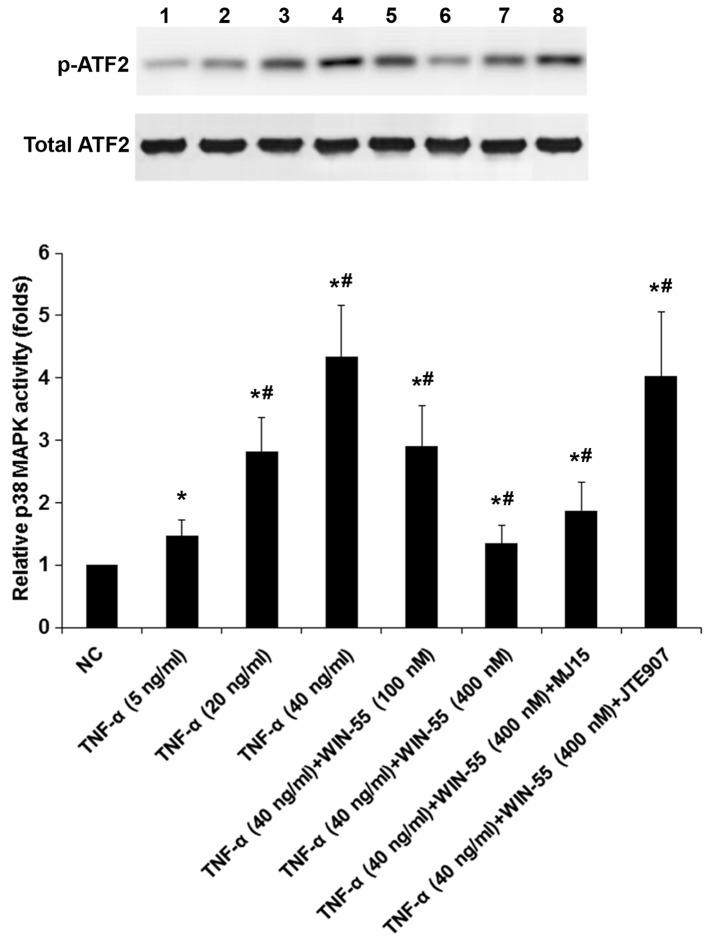
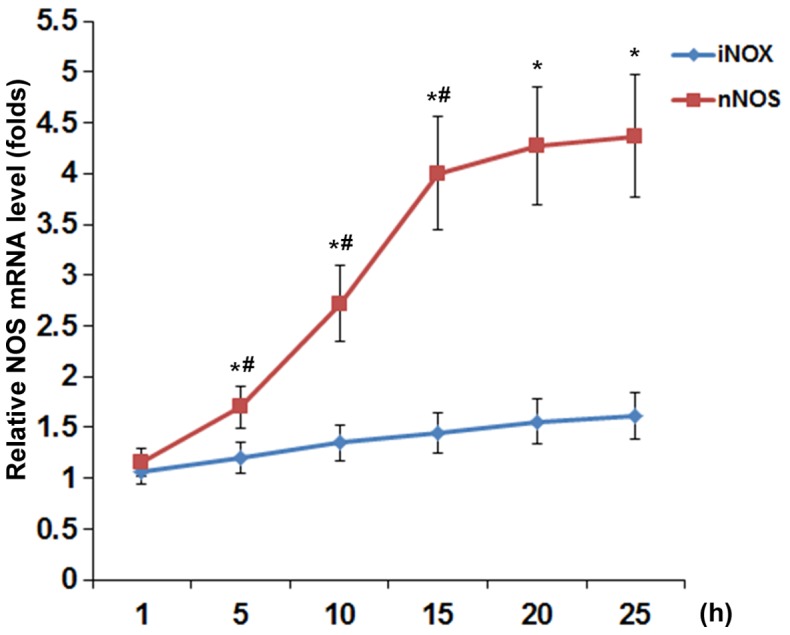
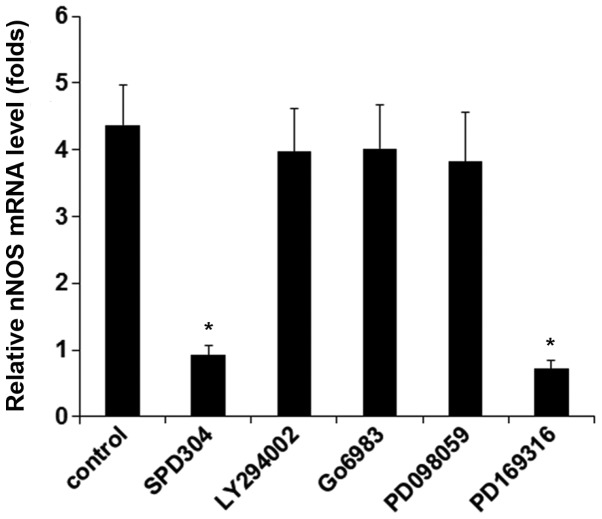
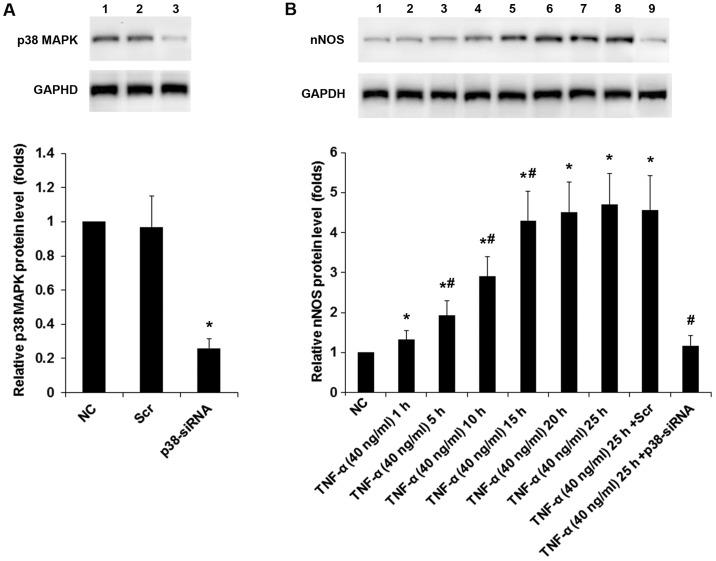
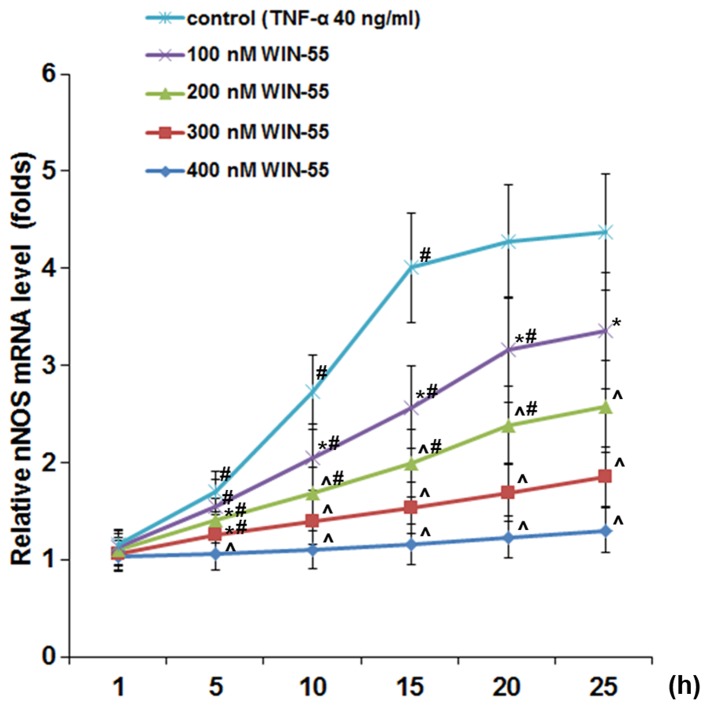
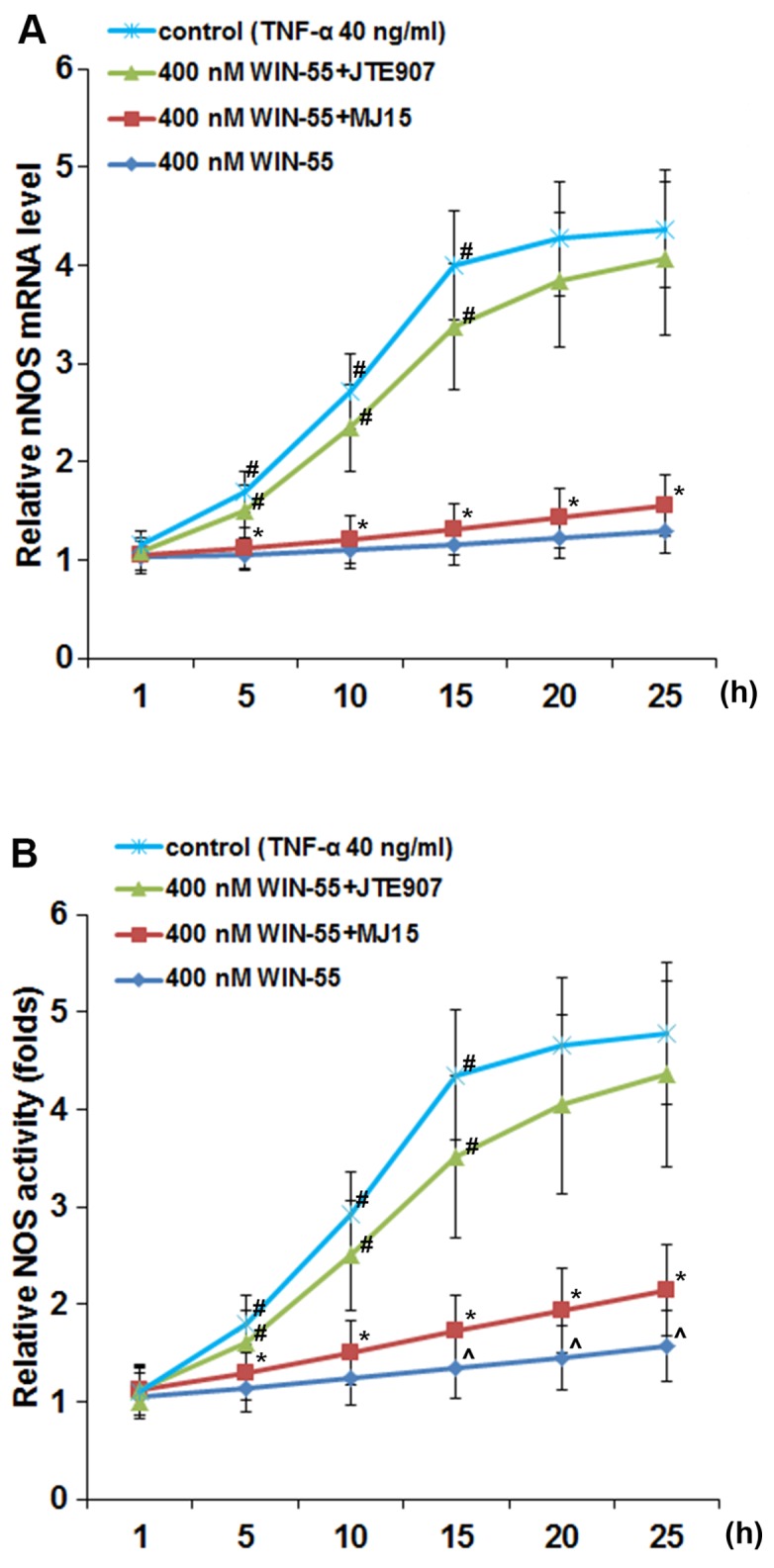
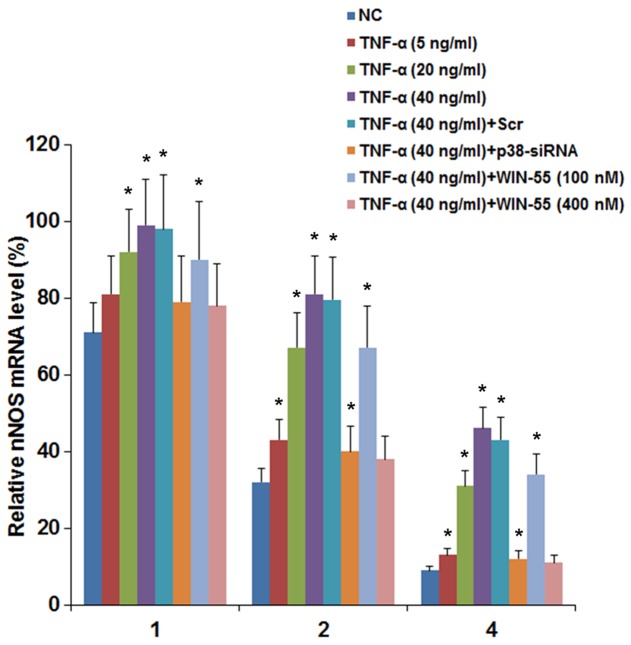
Tumor necrosis factor-α (TNF-α) is an established pain modulator in the peripheral nervous system. Elevated levels of TNF-α in dorsal root ganglion (DRG) neurons reportedly is critical for neuropathic pain processing. It has been shown that the production of nitric oxide, a key player in the development and maintenance of nociception, depends on the expression of nitric oxide synthases (NOSs) and their activities. Accumulating evidence also supports an important role of cannabinoids in modulating neuropathic pain. In this study, we explored the effects and the underlying mechanisms of crosstalk between TNF-α and cannabinoid on the expression/activity of NOS in DRG neurons. With or without knockdown of p38 mitogen-activated protein kinase (MAPK), DRG neurons were treated with TNF-α in the presence or absence of synthetic cannabinoid WIN-55,212-2 mesylate (WIN-55) and selective cannabinoid receptor (CB) antagonists. TNF-α significantly increased the NOS activity as well as the mRNA stability and expression of neuronal NOS (nNOS) in DRG neurons; this was abolished by inhibiting p38 MAPK signaling. WIN-55 inhibited TNF-α-induced p38 MAPK activity as well as TNF-α-induced increase of mRNA stability and expression/activity of nNOS; the inhibitory effect of WIN-55 was blocked by a selective CB2 antagonist. Our findings suggest that TNF-α induces the expression/activity of nNOS in DRG neurons by increasing its mRNA stability by a p38 MAPK-dependent mechanism; WIN-55 inhibits this effect of TNF-α by inhibiting p38 MAPK via CB2. By linking the functions of TNF-α, NOS and cannabinoid in DRG neurons, this study adds new insights into the molecular mechanisms underlying the pharmacologic effects of cannabinoids on neuropathic pain as well as into the pathophysiology of neuropathic pain.
肿瘤坏死因子-α(TNF-α)是外周神经系统中一种已确立的疼痛调节剂。据报道,背根神经节(DRG)神经元中 TNF-α水平升高对于神经病理性疼痛处理至关重要。已经表明,一氧化氮的产生,即伤害感受发展和维持的关键因素,依赖于一氧化氮合酶(NOS)的表达及其活性。越来越多的证据也支持大麻素在调节神经病理性疼痛方面的重要作用。在这项研究中,我们探讨了 TNF-α和大麻素之间的相互作用对 DRG 神经元中 NOS 表达/活性的影响及其潜在机制。在存在或不存在 p38 有丝分裂原激活蛋白激酶(MAPK)抑制剂的情况下,用 TNF-α处理 DRG 神经元,或同时用合成大麻素 WIN-55,212-2 甲磺酸盐(WIN-55)和选择性大麻素受体(CB)拮抗剂处理。TNF-α显著增加了 DRG 神经元中 NOS 的活性以及神经元 NOS(nNOS)的 mRNA 稳定性和表达;这一作用被抑制 p38 MAPK 信号通路所阻断。WIN-55 抑制了 TNF-α诱导的 p38 MAPK 活性以及 TNF-α诱导的 nNOS mRNA 稳定性和表达/活性的增加;WIN-55 的抑制作用被选择性 CB2 拮抗剂阻断。我们的研究结果表明,TNF-α通过依赖于 p38 MAPK 的机制增加 nNOS 的 mRNA 稳定性来诱导 DRG 神经元中 nNOS 的表达/活性;WIN-55 通过 CB2 抑制 p38 MAPK 从而抑制 TNF-α的这种作用。通过将 TNF-α、NOS 和大麻素在 DRG 神经元中的功能联系起来,本研究为大麻素对神经病理性疼痛的药理作用以及神经病理性疼痛的病理生理学提供了新的见解。