1 Department of Radiology and Imaging Sciences, Indiana University School of Medicine , Indianapolis, Indiana.
2 Department of Epidemiology and Biostatistics, School of Public Health, Indiana University , Bloomington, Indiana.
J Neurotrauma. 2018 Oct 15;35(20):2377-2390. doi: 10.1089/neu.2017.5566. Epub 2018 Jul 6.
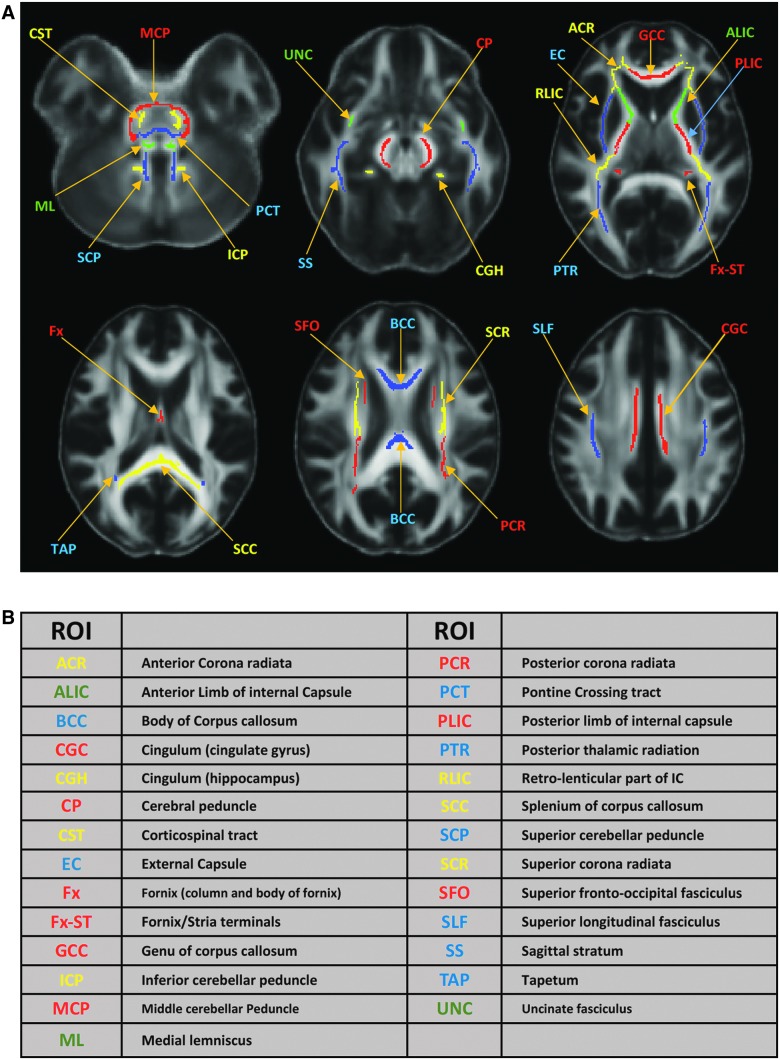
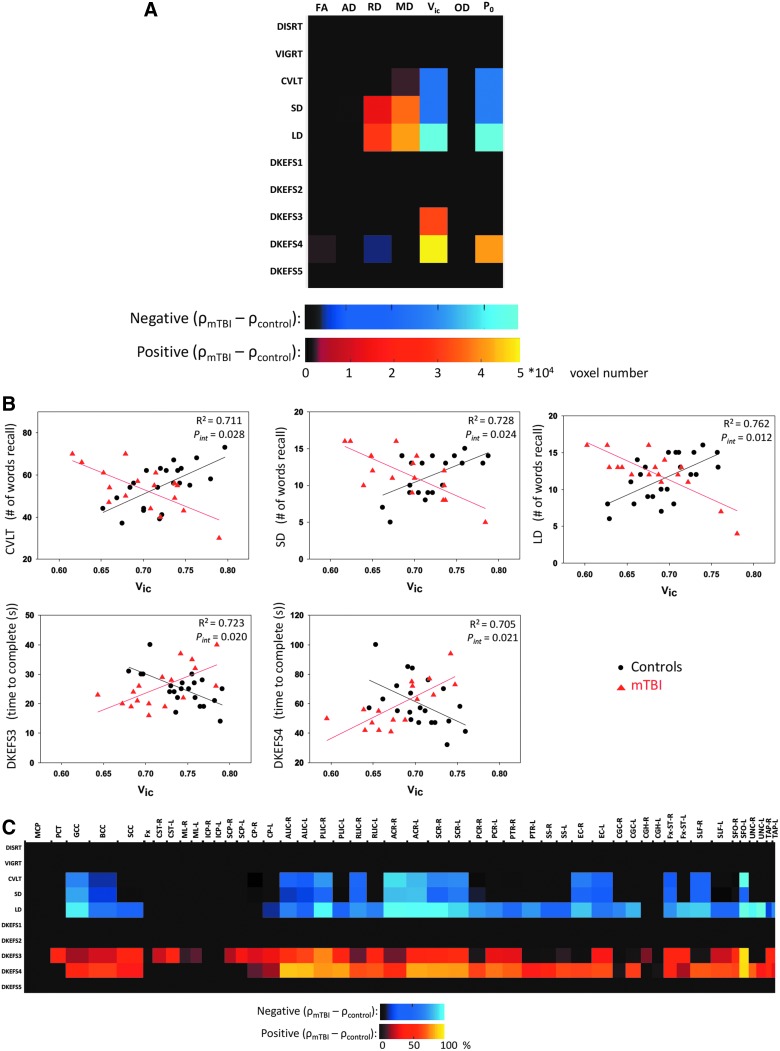
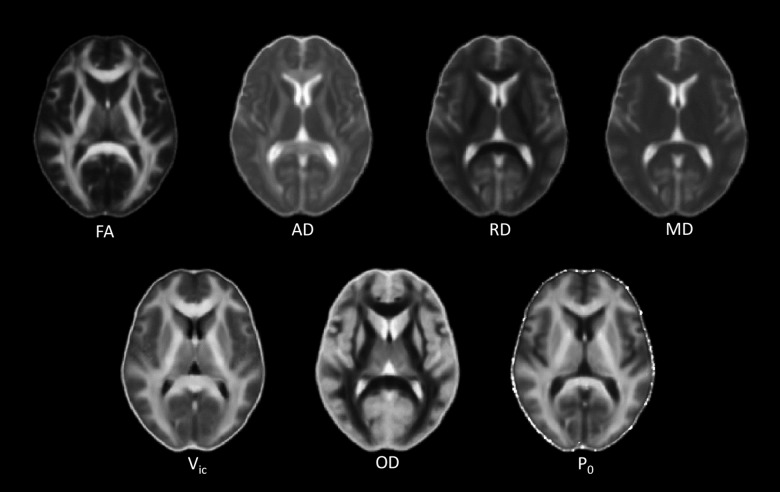
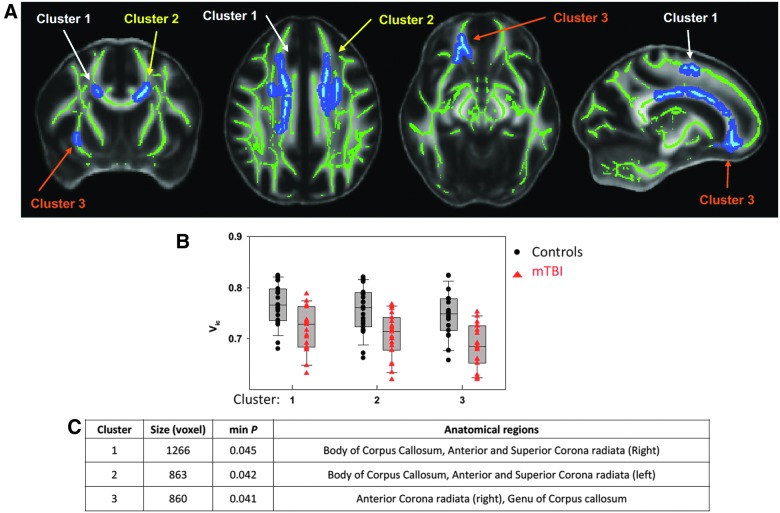
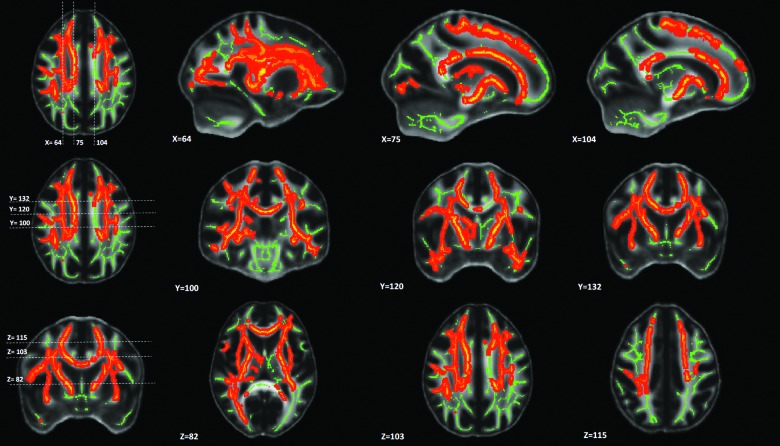
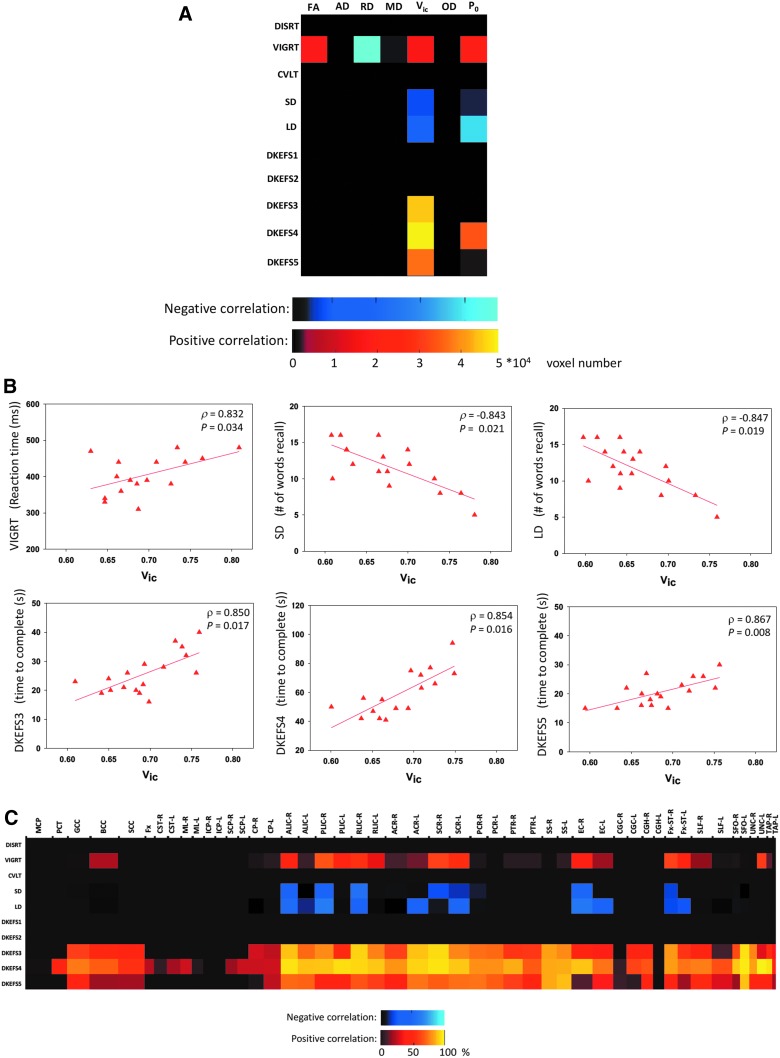
Mild traumatic brain injury (mTBI) is an important public health problem. Although conventional medical imaging techniques can detect moderate-to-severe injuries, they are relatively insensitive to mTBI. In this study, we used hybrid diffusion imaging (HYDI) to detect white matter alterations in 19 patients with mTBI and 23 other trauma control patients. Within 15 days (standard deviation = 10) of brain injury, all subjects underwent magnetic resonance HYDI and were assessed with a battery of neuropsychological tests of sustained attention, memory, and executive function. Tract-based spatial statistics (TBSS) was used for voxel-wise statistical analyses within the white matter skeleton to study between-group differences in diffusion metrics, within-group correlations between diffusion metrics and clinical outcomes, and between-group interaction effects. The advanced diffusion imaging techniques, including neurite orientation dispersion and density imaging (NODDI) and q-space analyses, appeared to be more sensitive then classic diffusion tensor imaging. Only NODDI-derived intra-axonal volume fraction (V) demonstrated significant group differences (i.e., 5-9% lower in the injured brain). Within the mTBI group, V and a q-space measure, P, correlated with 6 of 10 neuropsychological tests, including measures of attention, memory, and executive function. In addition, the direction of correlations differed significantly between groups (R > 0.71 and p < 0.03). Specifically, in the control group, higher V and P were associated with better performances on clinical assessments, whereas in the mTBI group, higher V and P were associated with worse performances with correlation coefficients >0.83. In summary, the NODDI-derived axonal density index and q-space measure for tissue restriction demonstrated superior sensitivity to white matter changes shortly after mTBI. These techniques hold promise as a neuroimaging biomarker for mTBI.
轻度创伤性脑损伤(mTBI)是一个重要的公共卫生问题。尽管传统的医学成像技术可以检测到中度至重度损伤,但它们对 mTBI 相对不敏感。在这项研究中,我们使用混合扩散成像(HYDI)来检测 19 名 mTBI 患者和 23 名其他创伤对照患者的白质改变。在脑损伤后 15 天内(标准差=10),所有受试者都接受了磁共振 HYDI 检查,并进行了一系列持续注意力、记忆和执行功能的神经心理学测试。基于体素的空间统计学(TBSS)用于白质骨架内的体素统计分析,以研究扩散指标的组间差异、组内扩散指标与临床结果的相关性以及组间的相互作用效应。先进的扩散成像技术,包括神经丝取向分散和密度成像(NODDI)和 q 空间分析,似乎比经典的扩散张量成像更敏感。只有 NODDI 衍生的轴内体积分数(V)表现出显著的组间差异(即损伤大脑中低 5-9%)。在 mTBI 组中,V 和 q 空间测量 P 与 10 项神经心理学测试中的 6 项相关,包括注意力、记忆和执行功能的测试。此外,两组之间的相关性方向差异显著(R>0.71,p<0.03)。具体而言,在对照组中,较高的 V 和 P 与临床评估中的更好表现相关,而在 mTBI 组中,较高的 V 和 P 与更差的表现相关,相关系数>0.83。总之,NODDI 衍生的轴突密度指数和 q 空间测量组织限制显示出对 mTBI 后不久白质变化的更高敏感性。这些技术有望成为 mTBI 的神经影像学生物标志物。