Hennecke Dieter, Bauer Angela, Herrchen Monika, Wischerhoff Erik, Gores Friedhelm
1Fraunhofer Institute for Molecular Biology and Applied Ecology, Auf dem Aberg 1, 57392 Schmallenberg, Germany.
2Fraunhofer Institute for Applied Polymer Research IAP, 14776 Potsdam-Golm, Germany.
Environ Sci Eur. 2018;30(1):16. doi: 10.1186/s12302-018-0143-3. Epub 2018 May 18.
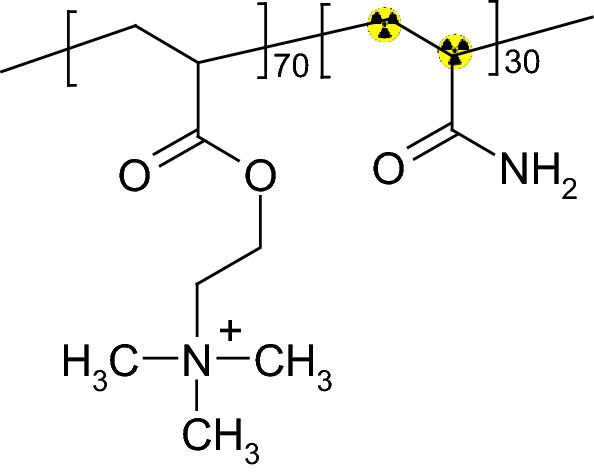
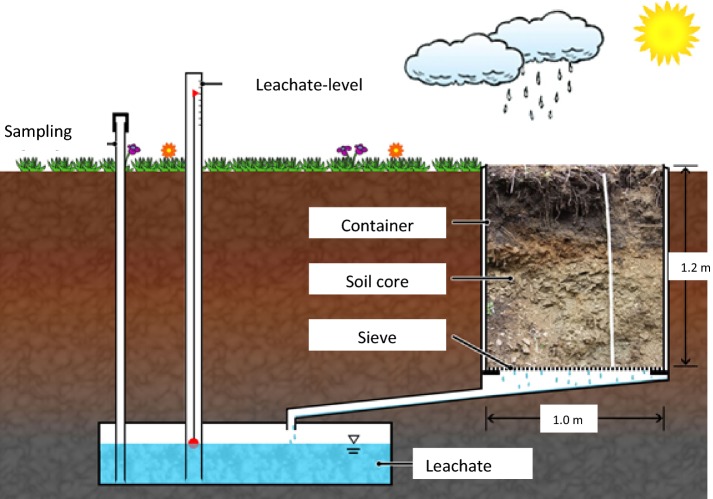
Cationic polyacrylamide copolymers (PAMs) are used for sludge dewatering in municipal waste water treatment and might enter the environment by spreading of the sludge on agricultural land. Concern has been expressed since little is known about the degradation of PAMs in soils. To obtain detailed information on the polymer's fate in the soil compartment, the degradation of C-radiolabelled PAM in an outdoor lysimeter was studied.
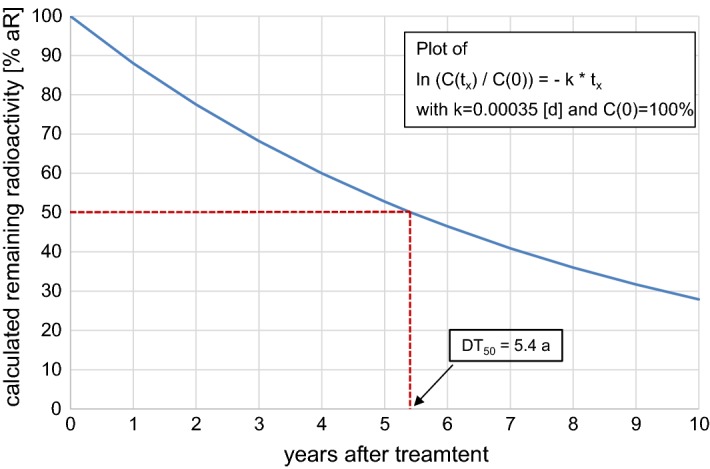
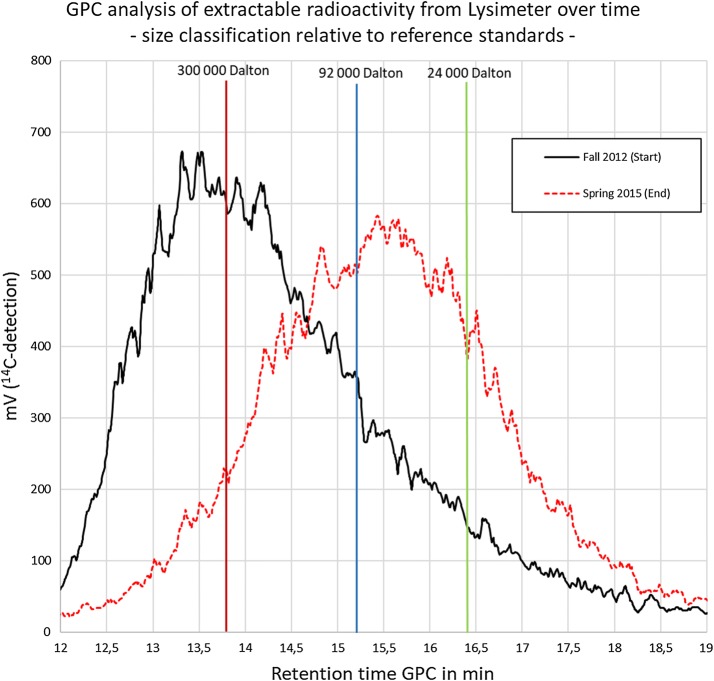
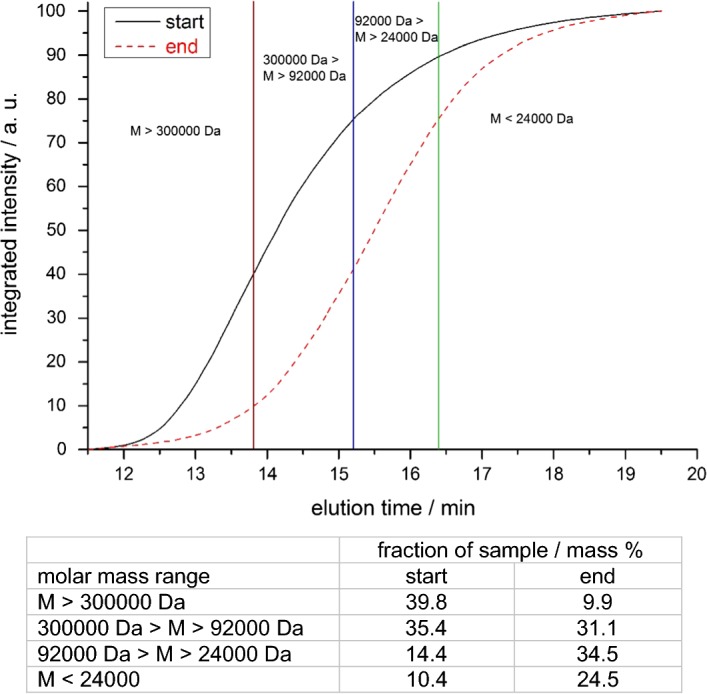
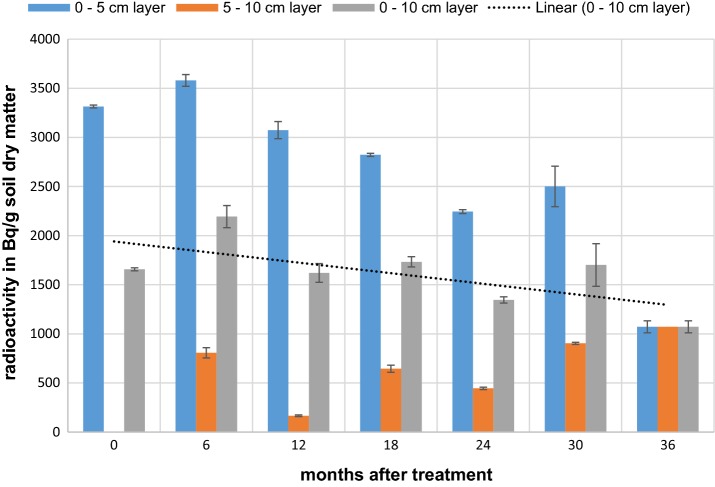
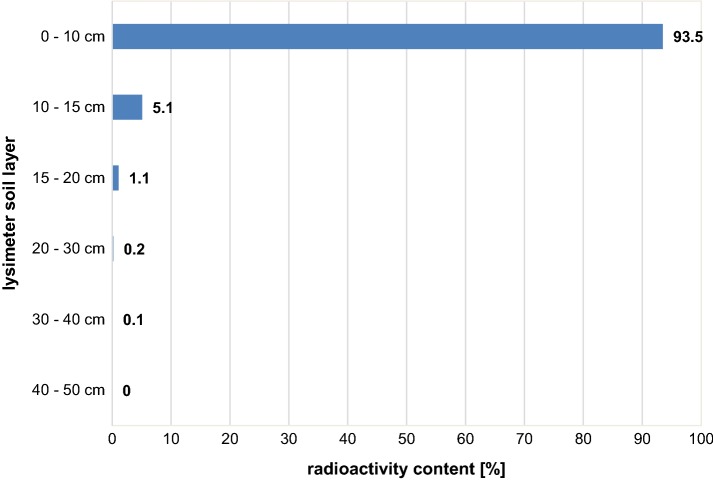
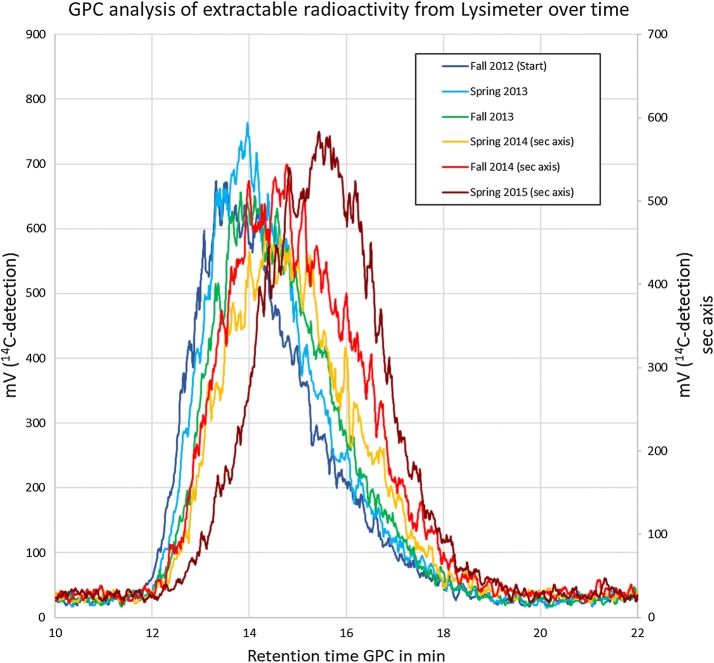
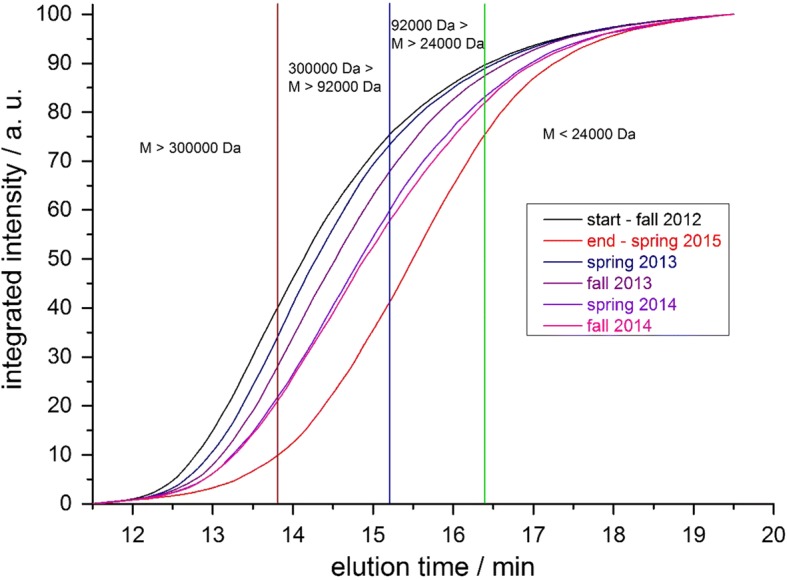
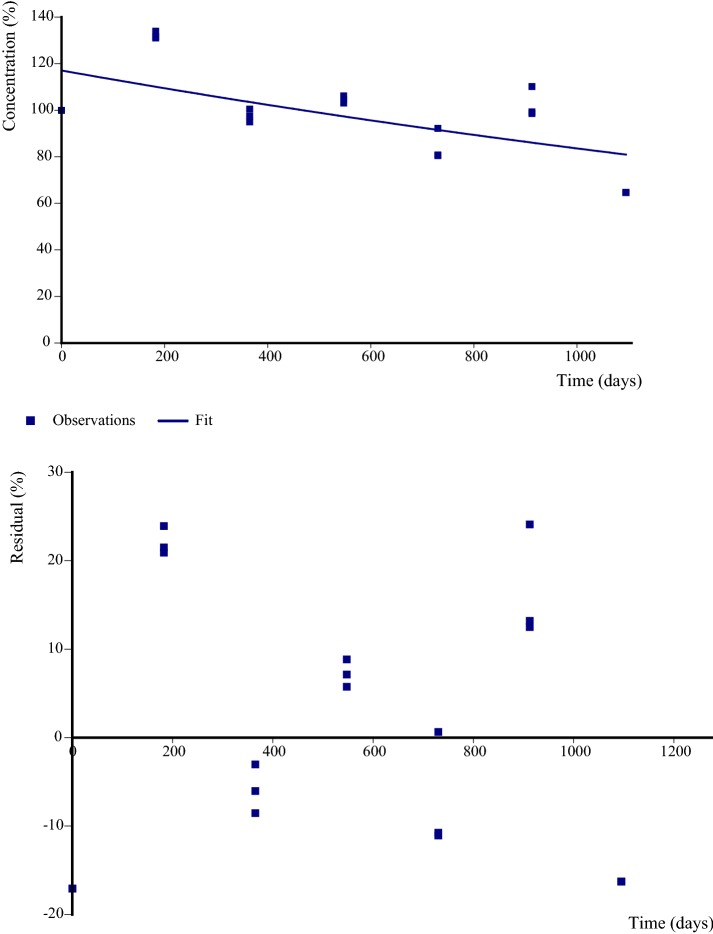
No plant uptake and leaching of radioactivity was observed. There was practically no vertical movement of polymer and no transformation products found at the end of the study. For the top 10 cm soil layer, a mass balance was established throughout the study. About 10% of applied radioactivity was not extractable from soil even with a matrix destructive method, and this was concluded to be bound residue. Characterization of extractable radioactivity by means of GPC-analysis showed a significant decrease of the molecular weight of the PAM with time. The decrease in molecular weight indicates a breakdown of the polymer backbone (the C-C-chain), and is assumed to be primary degradation. The total radioactivity content in the 10 cm top soil layer was quantified every 6 months over a period of 3 years. The results show a significant decrease of the total radioactivity over time and this is defined as ultimate degradation following the definition of OECD and EPA. Based on the data, a half-life time of 2.0 × 10 days and a rate constant of 0.00035/day were calculated. With a of 12.0 the results of the calculation are thus valid and reliable. The rate constant indicates a mineralization of 22.5% within a period of 2 years based on the total recovered radioactivity. This half-life time is solely based on mineralization and does not take into account the degradation of the polymer backbone, hydrolysis of the side chains, incorporation into the soil matrix, and thus is a conservative approach.
C-PAM degrades very slowly in soil after land-spreading as a component of sewage sludge. Even in a very conservative evaluation which only considered the loss of radioactivity, a half-life time of 5.4 years was determined.
阳离子聚丙烯酰胺共聚物(PAMs)用于城市污水处理中的污泥脱水,可能会通过污泥在农田上的施用而进入环境。由于对PAMs在土壤中的降解了解甚少,人们对此表示担忧。为了获得有关该聚合物在土壤环境中归宿的详细信息,研究了在室外渗漏计中¹⁴C放射性标记的PAM的降解情况。
未观察到植物对放射性的吸收和淋溶。在研究结束时,实际上没有聚合物的垂直移动,也未发现转化产物。对于表层10厘米的土壤层,在整个研究过程中建立了质量平衡。即使采用破坏基质的方法,仍有约10%的施加放射性无法从土壤中提取出来,这被认定为结合残留物。通过凝胶渗透色谱分析对可提取放射性进行表征,结果表明PAM的分子量随时间显著降低。分子量的降低表明聚合物主链(C-C链)发生了断裂,被认为是初级降解。在3年的时间里,每6个月对表层10厘米土壤层中的总放射性含量进行一次定量。结果表明,总放射性随时间显著降低,根据经合组织(OECD)和美国环境保护局(EPA)的定义,这被定义为最终降解。根据这些数据,计算得出半衰期为2.0×10天,速率常数为0.00035/天。由于r²为12.0,因此计算结果有效且可靠。该速率常数表明,基于回收的总放射性,在2年的时间内矿化率为22.5%。这个半衰期仅基于矿化,未考虑聚合物主链的降解、侧链的水解、与土壤基质的结合,因此是一种保守的方法。
作为污水污泥的一部分,¹⁴C-PAM在土地施用后在土壤中降解非常缓慢。即使在仅考虑放射性损失的非常保守的评估中,也确定半衰期为5.4年。