Patel Neel H, Bloom Jonathan, Hillelsohn Joel, Fullerton Sean, Allman Denton, Matthews Gerald, Eshghi Majid, Phillips John L
Department of Urology, New York Medical College, Valhalla, New York.
Urologic Oncology Branch, National Cancer Institute, Bethesda, Maryland.
Health Equity. 2018 May 1;2(1):55-61. doi: 10.1089/heq.2018.0004. eCollection 2018.
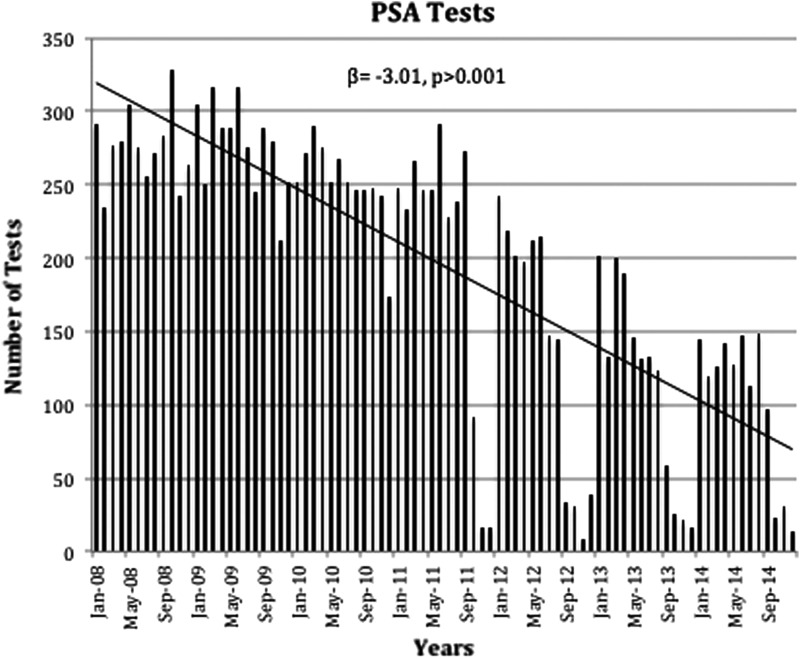
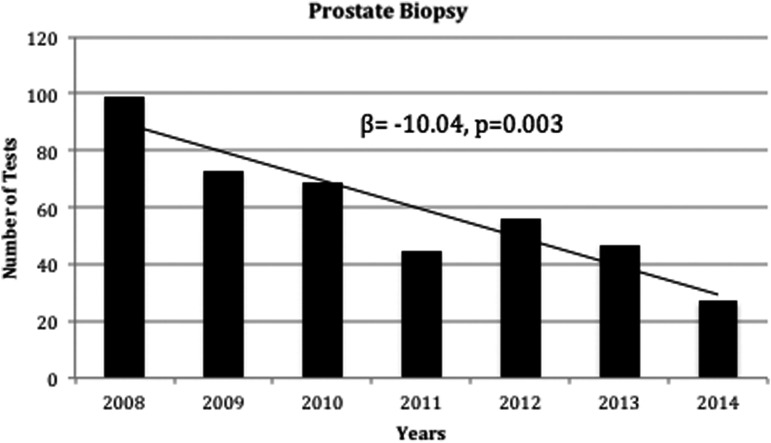
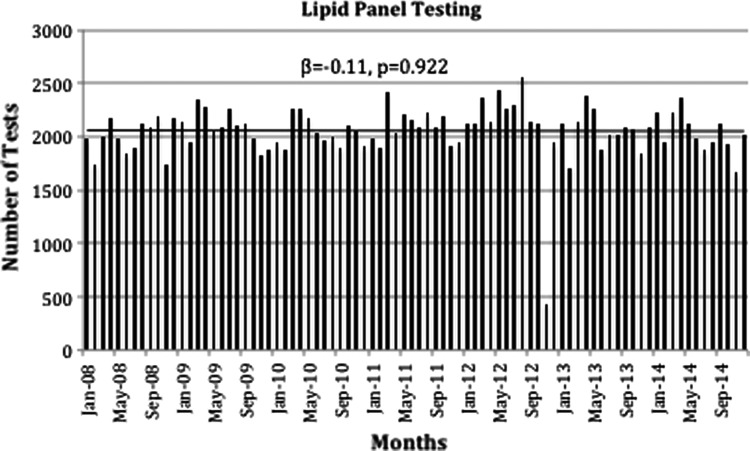
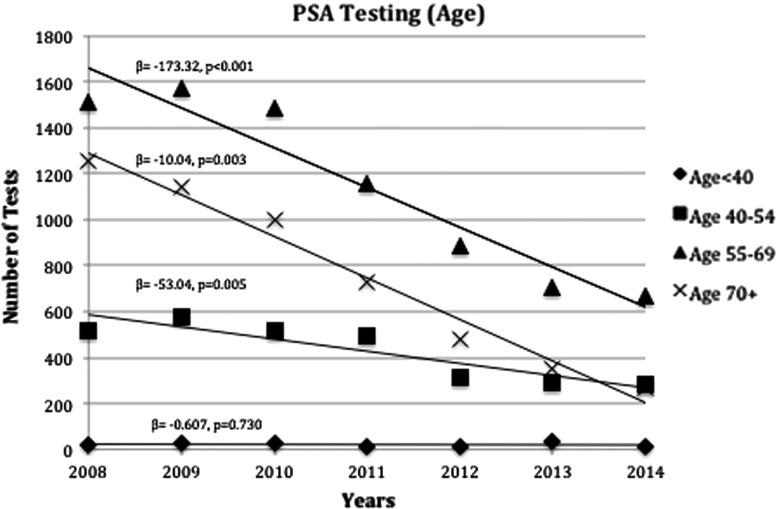
Prostate cancer screening is a controversial topic. We examined trends in Prostate Specific Antigen (PSA) testing in an underserved population before and after the United States Preventative Services Task Force (USPSTF) recommendation against screening. Data were collected on all PSA and cholesterol screening tests from 2008 to 2014. We examined the trend of these tests and prostate biopsies while comparing this data to lipid panel data to adjust for changes in patient population. A decrease in PSA screening was observed from 2010 through 2014, with the greatest decline in 2012. The age group most affected was patients aged 55-69 years. The amount of prostate biopsies during this period decreased as well. Decreased rates of PSA screening were observed in our urban hospital population that preceded the publication of the USPSTF guidelines. The incidence of prostate biopsies decreased in this timeframe. It now remains to be demonstrated whether decreased PSA screening rates impact the diagnosis of and ultimately the survival from prostate cancer.
前列腺癌筛查是一个颇具争议的话题。我们研究了在美国预防服务工作组(USPSTF)发布反对筛查的建议前后,服务不足人群中前列腺特异性抗原(PSA)检测的趋势。收集了2008年至2014年期间所有PSA和胆固醇筛查检测的数据。我们研究了这些检测和前列腺活检的趋势,同时将这些数据与血脂检测数据进行比较,以调整患者人群的变化。2010年至2014年期间观察到PSA筛查有所减少,2012年下降幅度最大。受影响最大的年龄组是55至69岁的患者。在此期间前列腺活检的数量也有所减少。在USPSTF指南发布之前,我们城市医院人群中的PSA筛查率就已下降。在此时间范围内,前列腺活检的发生率也有所下降。目前仍有待证明PSA筛查率的降低是否会影响前列腺癌的诊断以及最终的生存率。