School of Pharmacy, College of Medicine, National Taiwan University, Taipei, Taiwan.
School of Pharmacy, College of Pharmacy, Taipei Medical University, Taipei, Taiwan.
Cell Death Dis. 2018 May 29;9(6):655. doi: 10.1038/s41419-018-0688-5.
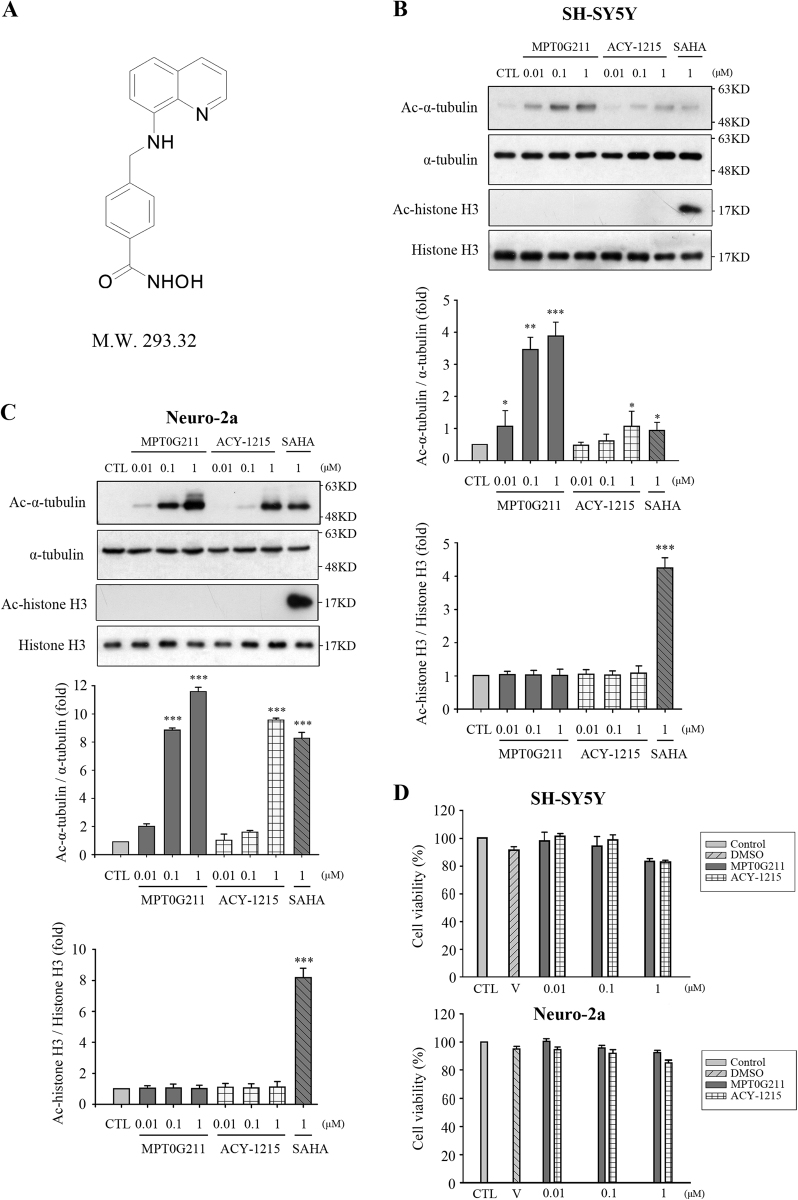
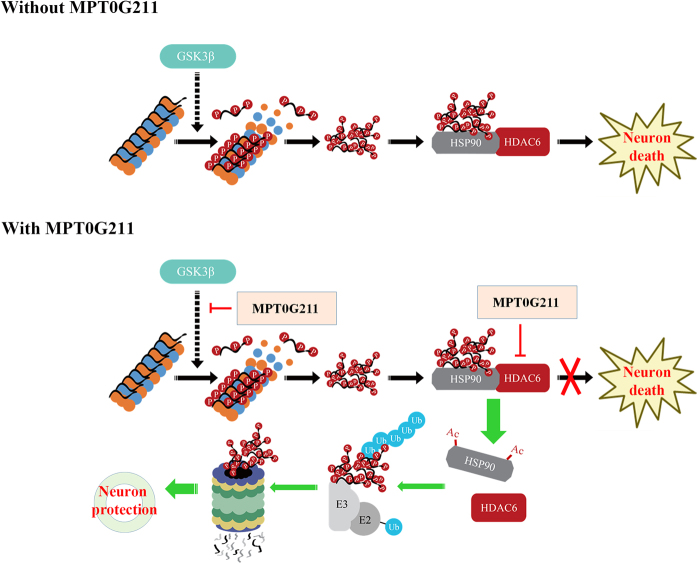
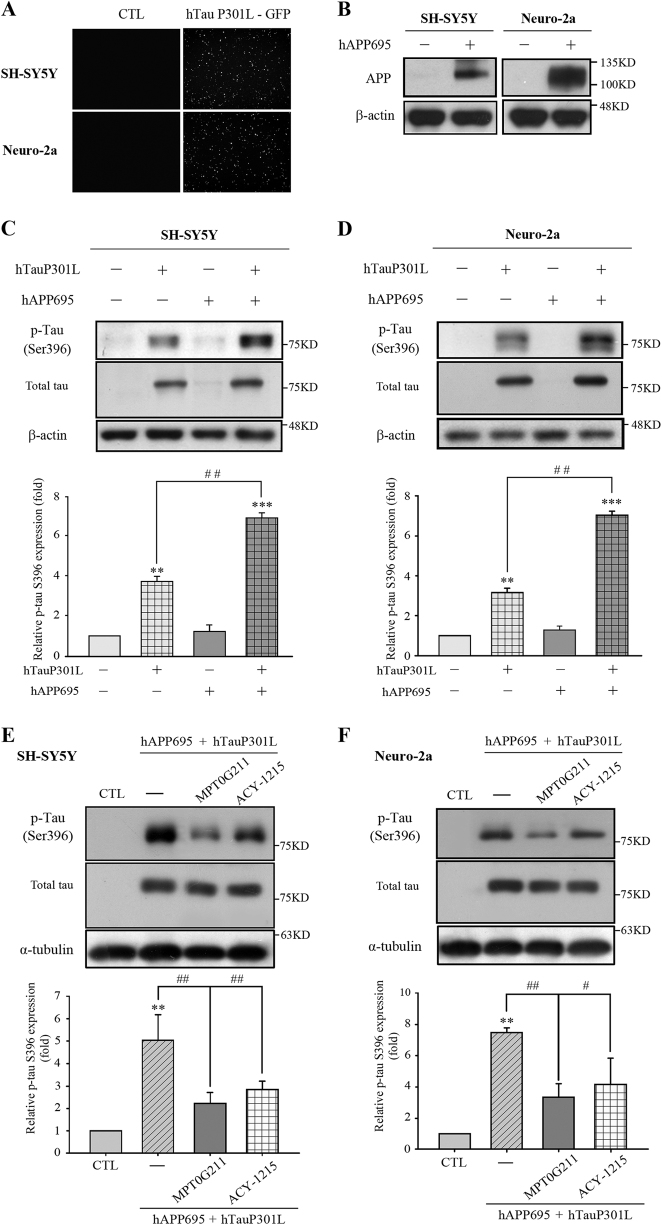
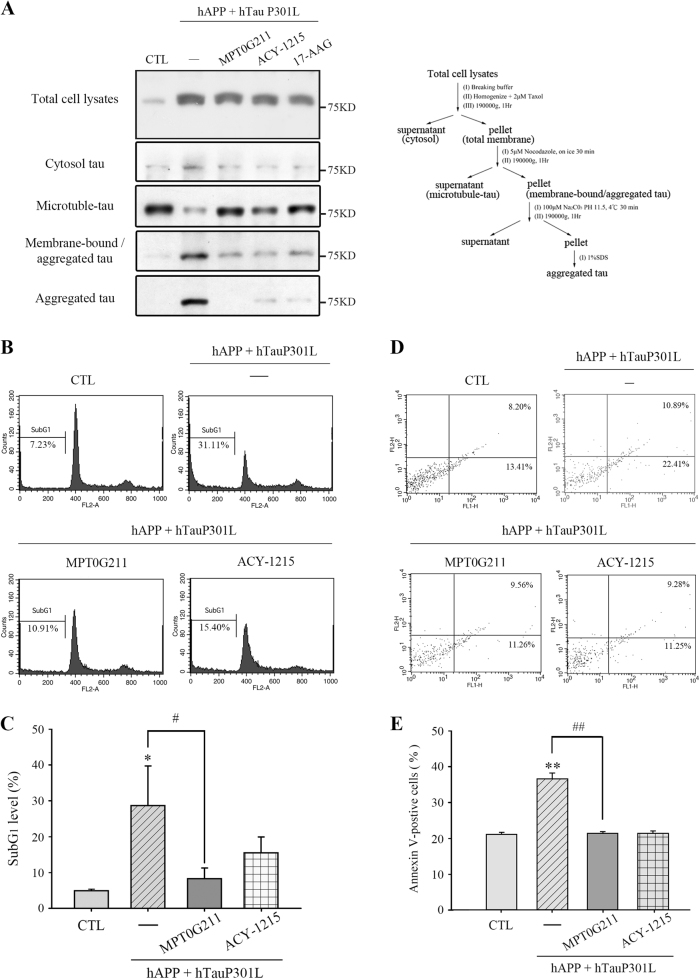
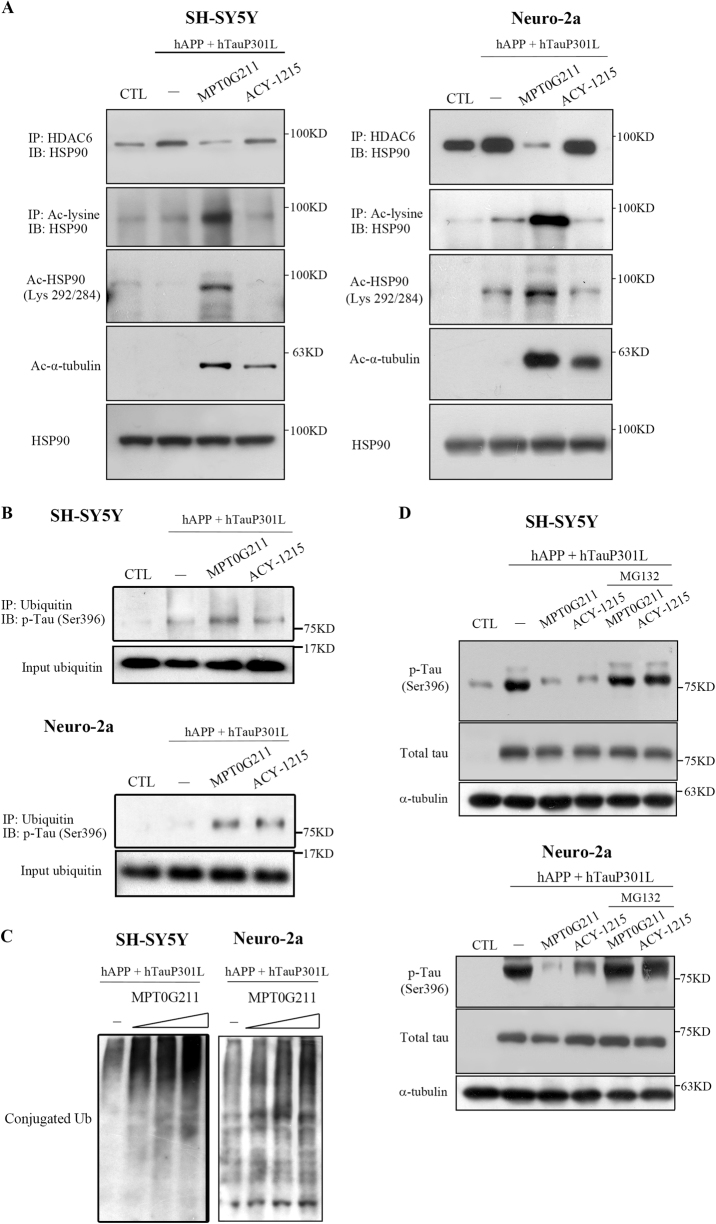
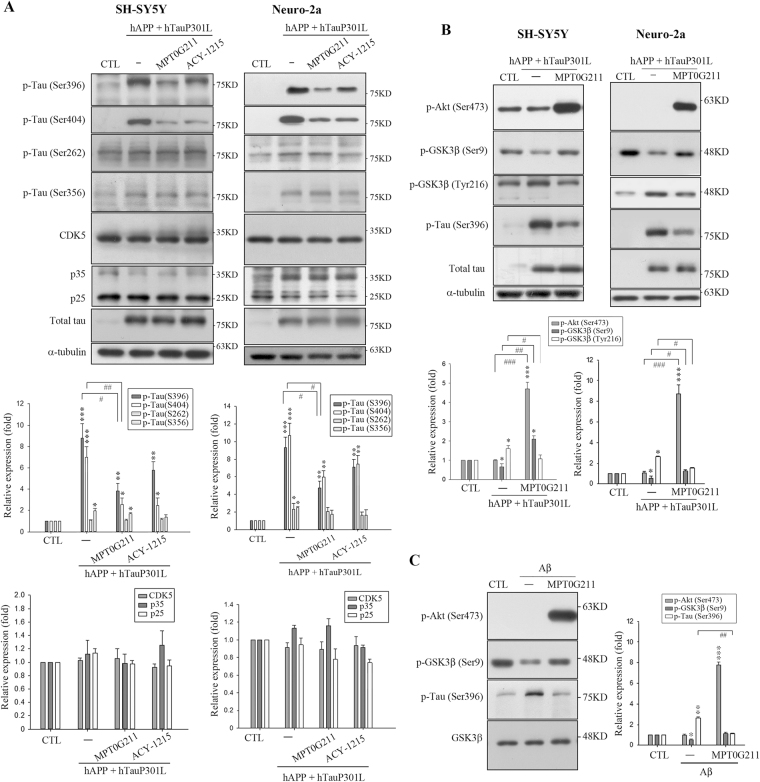
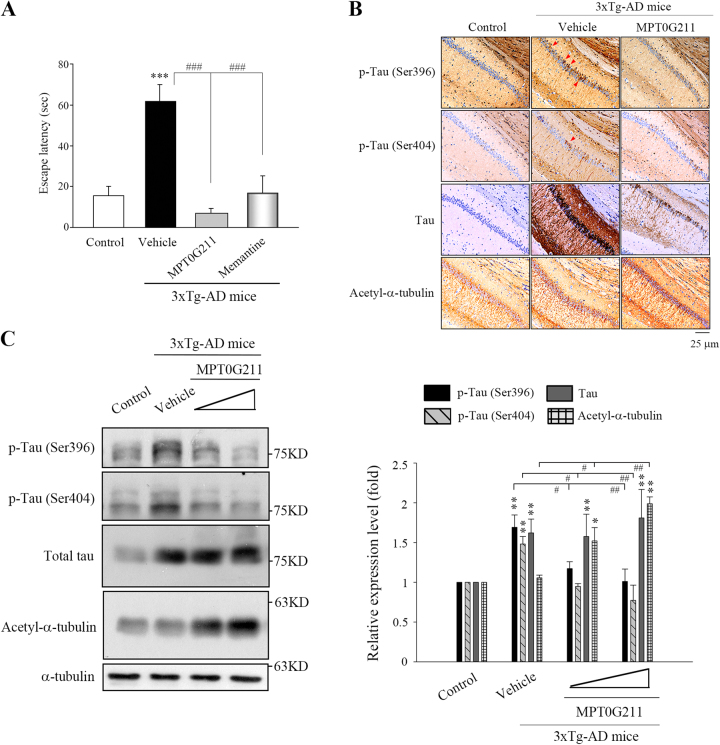
Alzheimer's disease (AD) is a dreadful neurodegenerative disease that leads to severe impairment of cognitive function, leading to a drastic decline in the quality of life. The primary pathological features of AD include senile plaques (SPs) and intracellular neurofibrillary tangles (NFTs), comprising aggregated amyloid β (Aβ) and hyperphosphorylated tau protein, respectively, in the hippocampus of AD patients. Histone deacetylase 6 (HDAC6) is a key enzyme in this neurodegenerative disease, in particular, as it relates to tau hyperphosphorylation. This study aimed to investigate the protective effects and mechanism of the novel HDAC6 inhibitor, MPT0G211, using an AD model. Our results indicated that MPT0G211 significantly reduced tau phosphorylation and aggregation, the processes highly correlated with the formation of NFTs. This HDAC6 inhibitory activity resulted in an increase in acetylated Hsp90, which decreased Hsp90 and HDAC6 binding, causing ubiquitination of phosphorylated tau proteins. In addition, a significant increase of phospho-glycogen synthase kinase-3β (phospho-GSK3β) on Ser9 (the inactive form) through Akt phosphorylation was associated with the inhibition of phospho-tau Ser396 in response to MPT0G211 treatment. In AD in vivo models, MPT0G211 appeared to ameliorate learning and memory impairment in animals. Furthermore, MPT0G211 treatment reduced the amount of phosphorylated tau in the hippocampal CA1 region. In summary, MPT0G211 treatment appears to be a promising strategy for improving the AD phenotypes, including tau hyperphosphorylation and aggregation, neurodegeneration, and learning and memory impairment, making it a valuable agent for further investigation.
阿尔茨海默病(AD)是一种可怕的神经退行性疾病,可导致严重的认知功能障碍,使生活质量急剧下降。AD 患者海马体中的主要病理特征包括老年斑(SPs)和细胞内神经原纤维缠结(NFTs),分别由聚集的淀粉样β(Aβ)和过度磷酸化的tau 蛋白组成。组蛋白去乙酰化酶 6(HDAC6)是这种神经退行性疾病的关键酶,特别是与 tau 过度磷酸化有关。本研究旨在使用 AD 模型研究新型 HDAC6 抑制剂 MPT0G211 的保护作用和机制。我们的结果表明,MPT0G211 可显著降低 tau 磷酸化和聚集,这与 NFT 的形成高度相关。这种 HDAC6 抑制活性导致乙酰化 Hsp90 增加,减少 Hsp90 和 HDAC6 结合,导致磷酸化 tau 蛋白的泛素化。此外,通过 Akt 磷酸化,磷酸化糖原合酶激酶-3β(磷酸化-GSK3β)在 Ser9 上的显著增加(无活性形式)与 MPT0G211 处理对磷酸化 tau Ser396 的抑制有关。在 AD 体内模型中,MPT0G211 似乎改善了动物的学习和记忆障碍。此外,MPT0G211 治疗可减少海马 CA1 区磷酸化 tau 的含量。总之,MPT0G211 治疗似乎是改善 AD 表型的一种有前途的策略,包括 tau 过度磷酸化和聚集、神经退行性变以及学习和记忆障碍,使其成为进一步研究的有价值的药物。