• 文献检索
  • 文档翻译
  • 深度研究
  • 学术资讯
  • Suppr Zotero 插件Zotero 插件
  • 邀请有礼
  • 套餐&价格
  • 历史记录
应用&插件
Suppr Zotero 插件Zotero 插件浏览器插件Mac 客户端Windows 客户端微信小程序
定价
高级版会员购买积分包购买API积分包
服务
文献检索文档翻译深度研究API 文档MCP 服务
关于我们
关于 Suppr公司介绍联系我们用户协议隐私条款
关注我们

Suppr 超能文献

核心技术专利:CN118964589B侵权必究
粤ICP备2023148730 号-1Suppr @ 2026

文献检索

告别复杂PubMed语法,用中文像聊天一样搜索,搜遍4000万医学文献。AI智能推荐,让科研检索更轻松。

立即免费搜索

文件翻译

保留排版,准确专业,支持PDF/Word/PPT等文件格式,支持 12+语言互译。

免费翻译文档

深度研究

AI帮你快速写综述,25分钟生成高质量综述,智能提取关键信息,辅助科研写作。

立即免费体验

难治性颞下颌关节脱位——腕部枢轴法复位

Refractory Temporomandibular Joint Dislocation - Reduction Using the Wrist Pivot Method.

作者信息

Lum Vincent W M, Poh Juliana

机构信息

Changi General Hospital, Department of Accident & Emergency, Singapore, Singapore.

Singapore General Hospital, Department of Emergency Medicine, Bukit Merah, Singapore.

出版信息

Clin Pract Cases Emerg Med. 2017 Oct 18;1(4):380-383. doi: 10.5811/cpcem.2017.9.35834. eCollection 2017 Nov.

DOI:10.5811/cpcem.2017.9.35834
PMID:29849337
原文链接:https://pmc.ncbi.nlm.nih.gov/articles/PMC5965220/
Abstract

We report a case of a 19-year-old male who presented to the emergency department with refractory atraumatic temporomandibular joint dislocation. Multiple attempts at reduction by emergency physicians before and after sedation were unsuccessful. The dislocation was eventually reduced using the wrist pivot technique. This case highlights the need to consider alternative methods of temporomandibular joint reduction, particularly in cases refractory to reduction despite the use of sedation.

摘要

我们报告一例19岁男性病例,该患者因难治性非创伤性颞下颌关节脱位就诊于急诊科。急诊医生在镇静前后多次尝试复位均未成功。最终采用腕部支点技术成功复位。该病例强调了需要考虑颞下颌关节复位的替代方法,尤其是在尽管使用了镇静但仍难以复位的病例中。
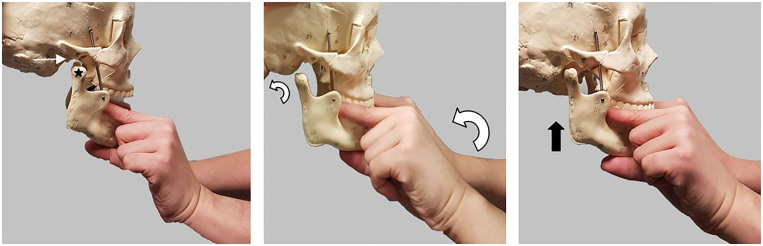
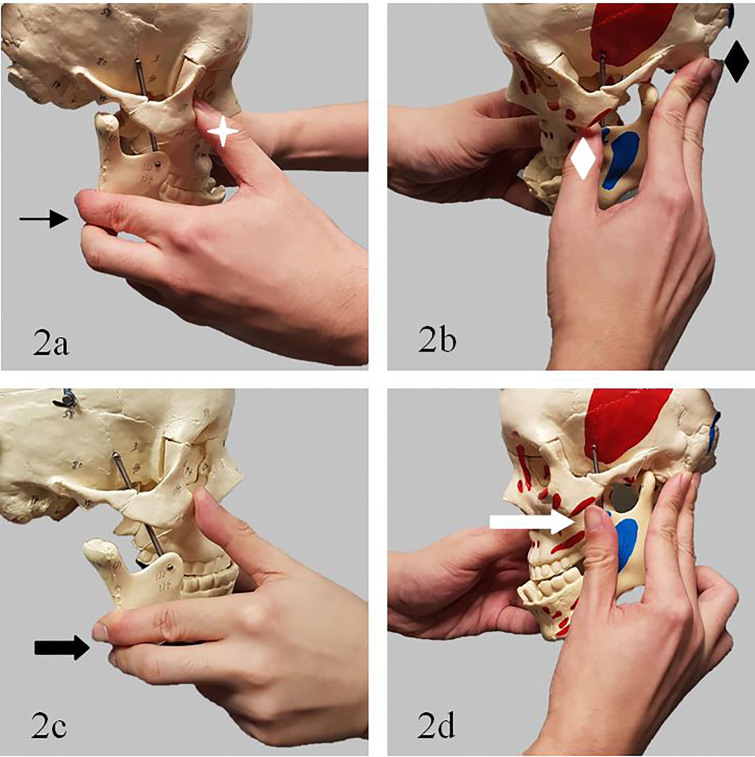
https://cdn.ncbi.nlm.nih.gov/pmc/blobs/a510/5965220/23afae656090/cpcem-01-380-g002.jpg
https://cdn.ncbi.nlm.nih.gov/pmc/blobs/a510/5965220/898acfbf4f9d/cpcem-01-380-g001.jpg
https://cdn.ncbi.nlm.nih.gov/pmc/blobs/a510/5965220/23afae656090/cpcem-01-380-g002.jpg
https://cdn.ncbi.nlm.nih.gov/pmc/blobs/a510/5965220/898acfbf4f9d/cpcem-01-380-g001.jpg
https://cdn.ncbi.nlm.nih.gov/pmc/blobs/a510/5965220/23afae656090/cpcem-01-380-g002.jpg

相似文献

1
Refractory Temporomandibular Joint Dislocation - Reduction Using the Wrist Pivot Method.难治性颞下颌关节脱位——腕部枢轴法复位
Clin Pract Cases Emerg Med. 2017 Oct 18;1(4):380-383. doi: 10.5811/cpcem.2017.9.35834. eCollection 2017 Nov.
2
The wrist pivot method, a novel technique for temporomandibular joint reduction.
J Emerg Med. 2004 Aug;27(2):167-70. doi: 10.1016/j.jemermed.2004.03.007.
3
Comparison of different approaches to the reduction of anterior temporomandibular joint dislocation: a randomized clinical trial.不同方法复位颞下颌关节前脱位的比较:一项随机临床试验
Int J Oral Maxillofac Surg. 2016 Aug;45(8):1009-14. doi: 10.1016/j.ijom.2016.04.015. Epub 2016 May 6.
4
Bilateral temporomandibular joint dislocation in a 29-year-old man: a case report.一名29岁男性双侧颞下颌关节脱位:病例报告
J Med Case Rep. 2010 Aug 10;4:263. doi: 10.1186/1752-1947-4-263.
5
Mandibular reduction.下颌骨复位
J Emerg Med. 2008 May;34(4):435-40. doi: 10.1016/j.jemermed.2007.06.037. Epub 2008 Feb 1.
6
A case series of closed reduction for acute temporomandibular joint dislocation by a new approach.采用新方法对急性颞下颌关节脱位进行闭合复位的病例系列报道。
Eur J Emerg Med. 2006 Apr;13(2):72-5. doi: 10.1097/01.mej.0000192046.19977.5a.
7
When is it safe to reduce fracture dislocation of shoulder under sedation? Proposed treatment algorithm.在镇静状态下何时进行肩关节骨折脱位复位是安全的?提出的治疗算法。
Eur J Orthop Surg Traumatol. 2017 Apr;27(3):335-340. doi: 10.1007/s00590-016-1899-z. Epub 2017 Jan 3.
8
The "syringe" technique: a hands-free approach for the reduction of acute nontraumatic temporomandibular dislocations in the emergency department.“注射器”技术:急诊科用于复位急性非创伤性颞下颌关节脱位的免手持方法。
J Emerg Med. 2014 Dec;47(6):676-81. doi: 10.1016/j.jemermed.2014.06.050. Epub 2014 Sep 30.
9
[Reduction of shoulder dislocation with the Cunningham method].[采用坎宁安法复位肩关节脱位]
Laeknabladid. 2017 Sep;103(9):373-376. doi: 10.17992/lbl.2017.09.150.
10
Temporomandibular Joint Dislocation in an 18-month-old Child.一名18个月大儿童的颞下颌关节脱位
Contemp Clin Dent. 2017 Jan-Mar;8(1):155-157. doi: 10.4103/ccd.ccd_1041_16.

引用本文的文献

1
An Inexpensive Biomechanical Model to Help Teach and Learn Newer Mandible Reduction Techniques.一种用于辅助教授和学习新型下颌骨复位技术的低成本生物力学模型。
Clin Pract Cases Emerg Med. 2023 May;7(2):118-120. doi: 10.5811/cpcem.1416.

本文引用的文献

1
Dislocation of the Temporomandibular Joint and Relocation Procedures.颞下颌关节脱位及复位方法
Adv Emerg Nurs J. 2016 Jul-Sep;38(3):177-82. doi: 10.1097/TME.0000000000000110.
2
Temporomandibular joint dislocation.颞下颌关节脱位
Natl J Maxillofac Surg. 2015 Jan-Jun;6(1):16-20. doi: 10.4103/0975-5950.168212.
3
The "syringe" technique: a hands-free approach for the reduction of acute nontraumatic temporomandibular dislocations in the emergency department.“注射器”技术:急诊科用于复位急性非创伤性颞下颌关节脱位的免手持方法。
J Emerg Med. 2014 Dec;47(6):676-81. doi: 10.1016/j.jemermed.2014.06.050. Epub 2014 Sep 30.
4
Treatment of acute temporomandibular joint dislocation using manipulation technique for disk displacement.采用盘移位手法技术治疗急性颞下颌关节脱位
J Craniofac Surg. 2014 Mar;25(2):596-7. doi: 10.1097/SCS.0000000000000676.
5
Evaluation of the mechanism and principles of management of temporomandibular joint dislocation. Systematic review of literature and a proposed new classification of temporomandibular joint dislocation.评价颞下颌关节脱位的机制和管理原则。文献系统回顾与颞下颌关节脱位新分类建议。
Head Face Med. 2011 Jun 15;7:10. doi: 10.1186/1746-160X-7-10.
6
Temporomandibular joint dislocation reduction technique: a new external method vs. the traditional.颞下颌关节脱位复位技术:一种新的外部方法与传统方法的比较
Ann Plast Surg. 2009 Aug;63(2):176-8. doi: 10.1097/SAP.0b013e31818937aa.
7
Unified hands technique for mandibular dislocation.下颌脱位的统一手法复位技术。
J Emerg Med. 2010 Apr;38(3):366-7. doi: 10.1016/j.jemermed.2008.12.022. Epub 2009 Mar 20.
8
Bilateral temporomandibular joint dislocation following pulmonary function testing: a case report and review of closed reduction techniques.
Emerg Med J. 2008 Jul;25(7):435-6. doi: 10.1136/emj.2007.055038.
9
Mandibular reduction.下颌骨复位
J Emerg Med. 2008 May;34(4):435-40. doi: 10.1016/j.jemermed.2007.06.037. Epub 2008 Feb 1.
10
A safe and effective way for reduction of temporomandibular joint dislocation.一种安全有效的颞下颌关节脱位复位方法。
Ann Plast Surg. 2007 Jan;58(1):105-8. doi: 10.1097/01.sap.0000232981.40497.32.