Program in Developmental Biology, Baylor College of Medicine, Houston, TX 77030, USA.
Jan and Dan Duncan Neurological Research Institute, Texas Children's Hospital, Houston, TX 77030, USA.
Dis Model Mech. 2018 May 31;11(6):dmm031492. doi: 10.1242/dmm.031492.
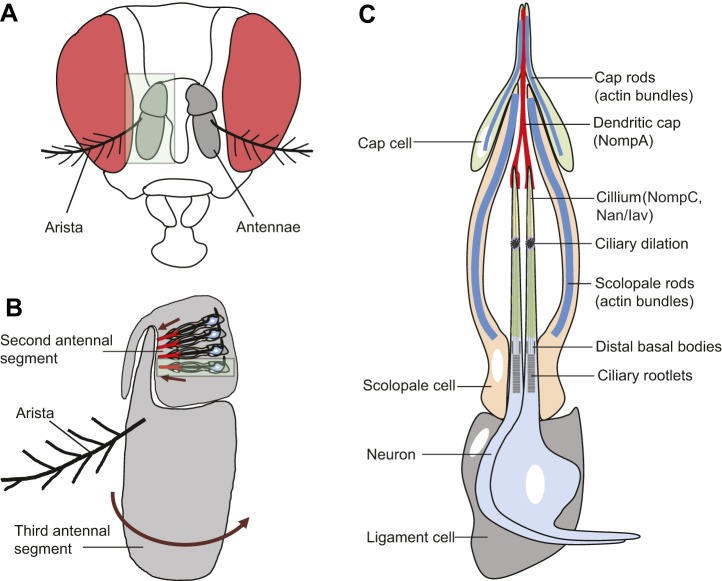
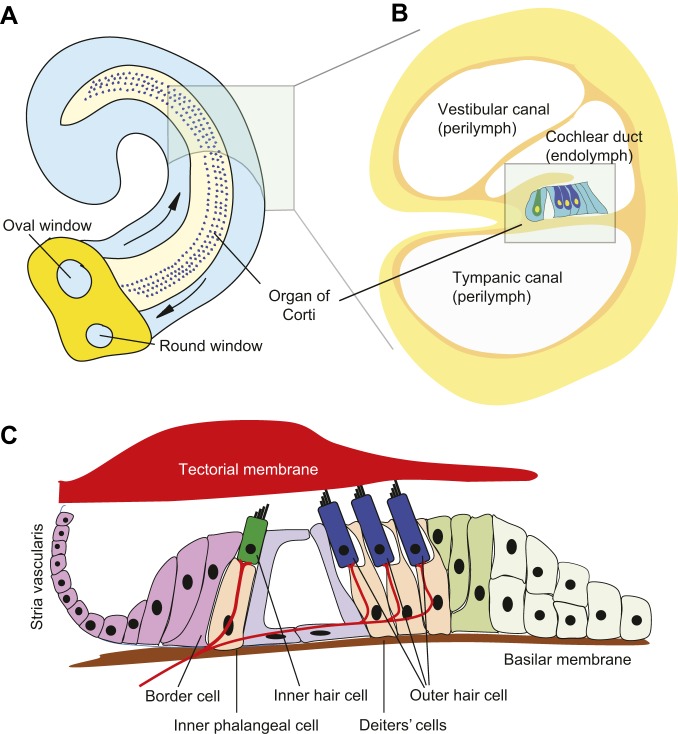
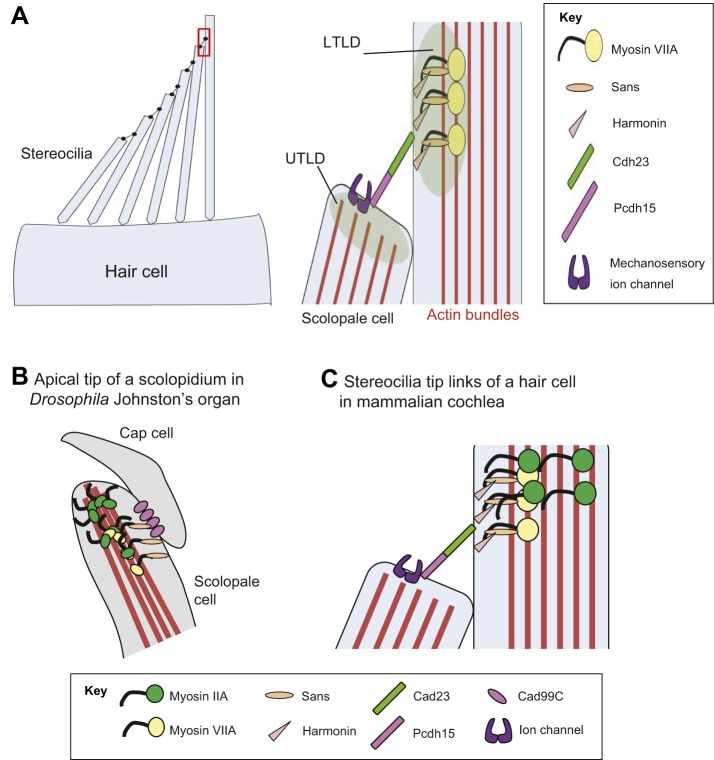
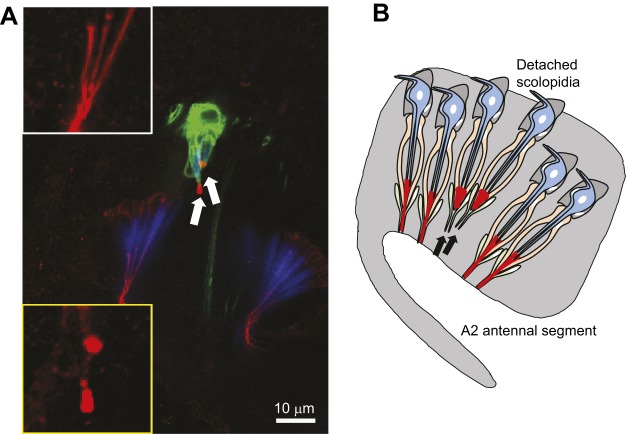
Johnston's organ - the hearing organ of - has a very different structure and morphology to that of the hearing organs of vertebrates. Nevertheless, it is becoming clear that vertebrate and invertebrate auditory organs share many physiological, molecular and genetic similarities. Here, we compare the molecular and cellular features of hearing organs in with those of vertebrates, and discuss recent evidence concerning the functional conservation of Usher proteins between flies and mammals. Mutations in Usher genes cause Usher syndrome, the leading cause of human deafness and blindness. In , some Usher syndrome proteins appear to physically interact in protein complexes that are similar to those described in mammals. This functional conservation highlights a rational role for as a model for studying hearing, and for investigating the evolution of auditory organs, with the aim of advancing our understanding of the genes that regulate human hearing and the pathogenic mechanisms that lead to deafness.
约翰斯顿氏器—— 的听觉器官——与脊椎动物的听觉器官在结构和形态上有很大的不同。然而,越来越明显的是,脊椎动物和无脊椎动物的听觉器官在生理、分子和遗传上有许多相似之处。在这里,我们比较了 和脊椎动物听觉器官的分子和细胞特征,并讨论了关于蝇类和哺乳动物之间 Usher 蛋白功能保守性的最新证据。Usher 基因突变会导致 Usher 综合征,这是人类耳聋和失明的主要原因。在 中,一些 Usher 综合征蛋白似乎在蛋白质复合物中相互作用,这些复合物与哺乳动物中描述的复合物相似。这种功能保守性突出了 作为研究听觉和研究听觉器官进化的合理模型的作用,目的是增进我们对调节人类听力的基因和导致耳聋的致病机制的理解。