Ji Quanbo, Qi Dengbin, Xu Xiaojie, Xu Yameng, Goodman Stuart B, Kang Lei, Song Qi, Fan Zhongyi, Maloney William J, Wang Yan
Department of Orthopaedics, General Hospital of Chinese People's Liberation Army, Beijing 100853, China; Department of Orthopaedic Surgery, Stanford University, Stanford, CA 94305, USA.
Department of Orthopaedics, General Hospital of Chinese People's Liberation Army, Beijing 100853, China.
Mol Ther Nucleic Acids. 2018 Jun 1;11:170-179. doi: 10.1016/j.omtn.2018.02.001. Epub 2018 Feb 8.
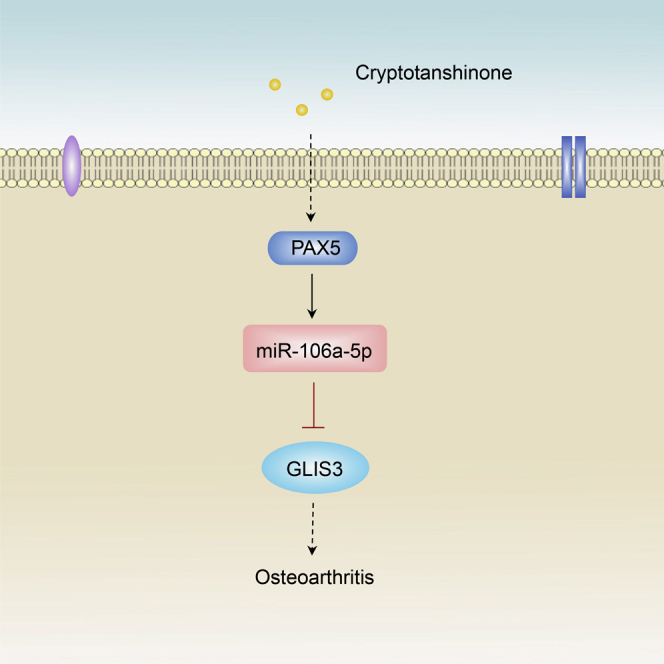
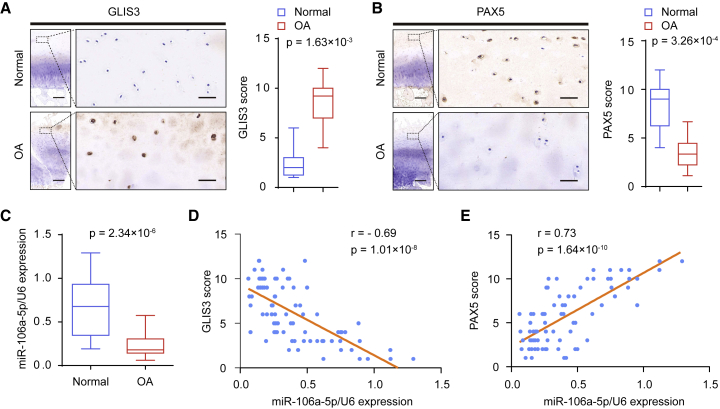
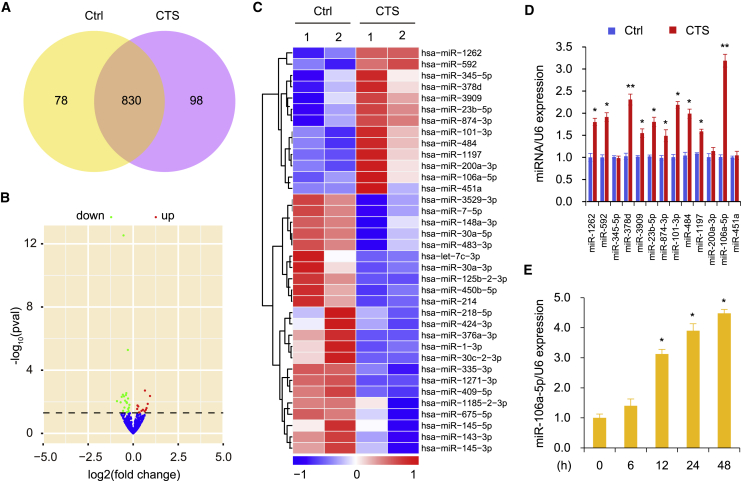
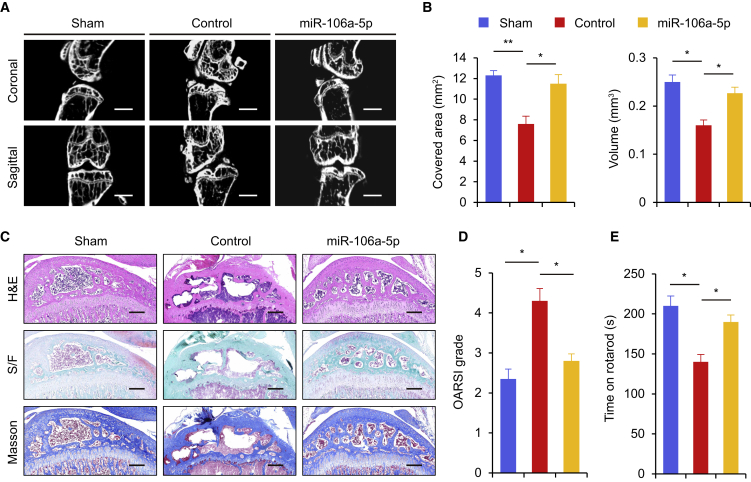
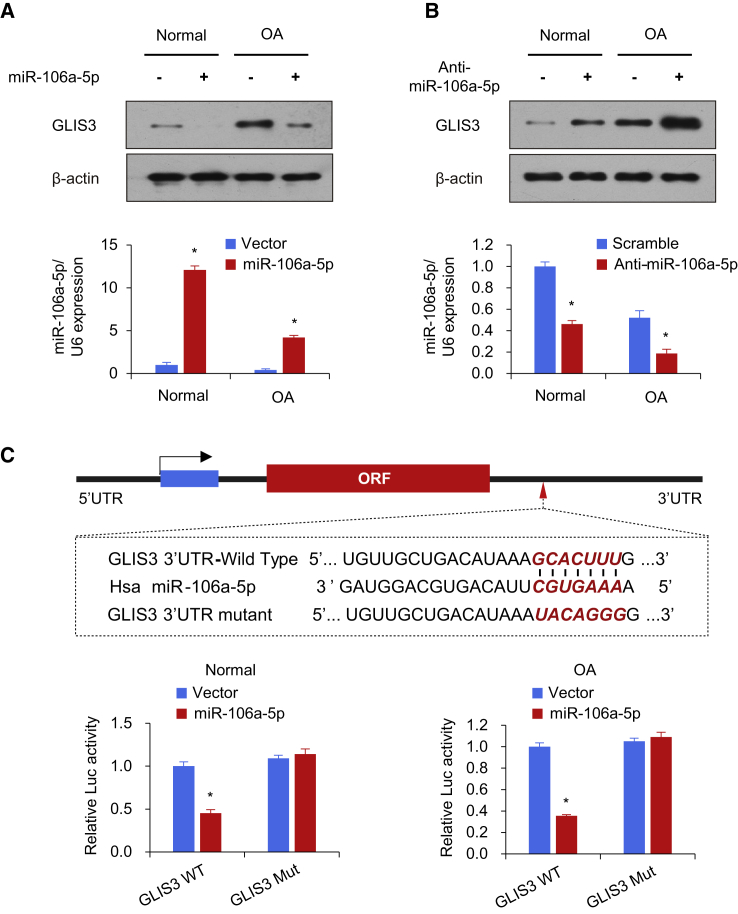
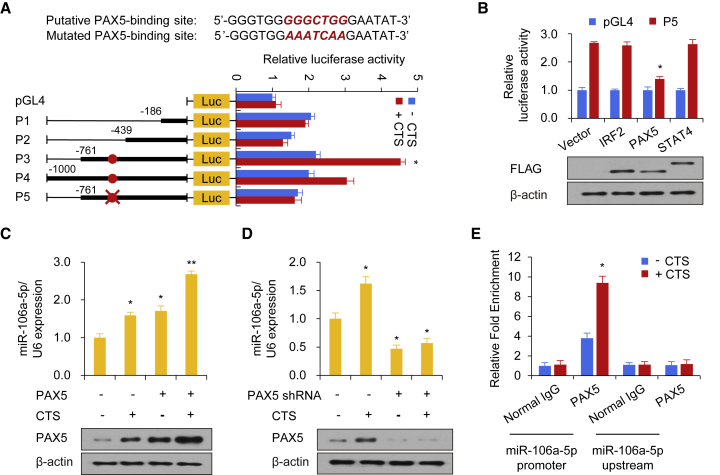
Cryptotanshinone (CTS) has emerged as an anti-inflammatory agent in osteoarthritis (OA). However, the molecular mechanism underlying its potent therapeutic effect on OA remains largely unknown. MicroRNAs (miRNAs) act as crucial regulators in maintaining cartilage homeostasis. To investigate whether CTS protects against developing OA through regulation of miRNAs, we examined the potential CTS-mediated miRNA molecules using microarray analysis. We found that CTS significantly promoted miR-106a-5p expression in chondrocytes. Using the OA mouse model created by anterior cruciate ligament transection, we revealed that intra-articular injection of miR-106a-5p agomir attenuated OA. In addition, miR-106a-5p inhibited GLI-similar 3 (GLIS3) production by directly targeting the 3' untranslated region. CTS promoted miR-106a-5p expression through recruitment of a member of the paired box (PAX) family of transcription factors, PAX5, to the miR-106a-5p promoter. Inhibition of PAX5 mimicked the effect of miR-106a-5p and abolished the CTS ability to regulate miR-106a-5p expression. In OA patients, miR-106-5p is downregulated which is accompanied by downregulation of PAX5 and upregulation of GLIS3. Collectively, these data highlight that the PAX5/miR-106a-5p/GLIS3 axis acts as a novel pleiotropic regulator in CTS-mediated OA cartilage protection, suggesting that miR-106a-5p and PAX5 activation and GLIS3 inhibition might be useful and attractive for therapeutic strategies to treat OA patients.
隐丹参酮(CTS)已成为骨关节炎(OA)中的一种抗炎剂。然而,其对OA有效治疗作用的分子机制仍 largely未知。微小RNA(miRNA)在维持软骨稳态中起关键调节作用。为了研究CTS是否通过调节miRNA来预防OA的发生,我们使用微阵列分析检测了潜在的CTS介导的miRNA分子。我们发现CTS显著促进软骨细胞中miR-106a-5p的表达。使用前交叉韧带横断创建的OA小鼠模型,我们发现关节内注射miR-106a-5p激动剂可减轻OA。此外,miR-106a-5p通过直接靶向3'非翻译区抑制GLI样3(GLIS3)的产生。CTS通过将配对盒(PAX)转录因子家族的成员PAX5招募到miR-106a-5p启动子来促进miR-106a-5p的表达。抑制PAX5模拟了miR-106a-5p的作用,并消除了CTS调节miR-106a-5p表达的能力。在OA患者中,miR-106-5p下调,同时伴有PAX5下调和GLIS3上调。总体而言,这些数据表明PAX5/miR-106a-5p/GLIS3轴在CTS介导的OA软骨保护中作为一种新的多效调节因子发挥作用,提示miR-106a-5p和PAX5的激活以及GLIS3的抑制可能对治疗OA患者的治疗策略有用且具有吸引力。