Department of Agricultural and Environmental Science, University of Bari Aldo Moro, Via Amendola 165/A, 70126 Bari, Italy.
Department of Soil, Plant and Food Science, University of Bari Aldo Moro, Via Amendola 165/A, 70126 Bari, Italy.
Nutrients. 2018 May 26;10(6):675. doi: 10.3390/nu10060675.
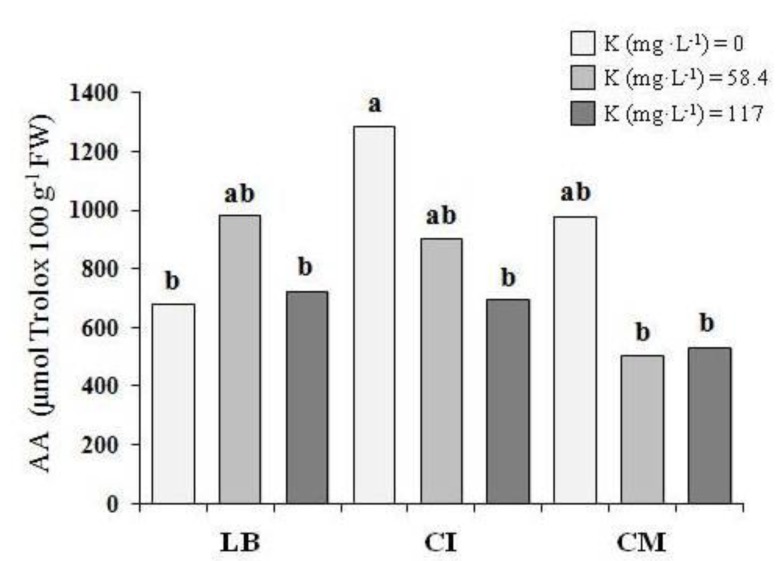
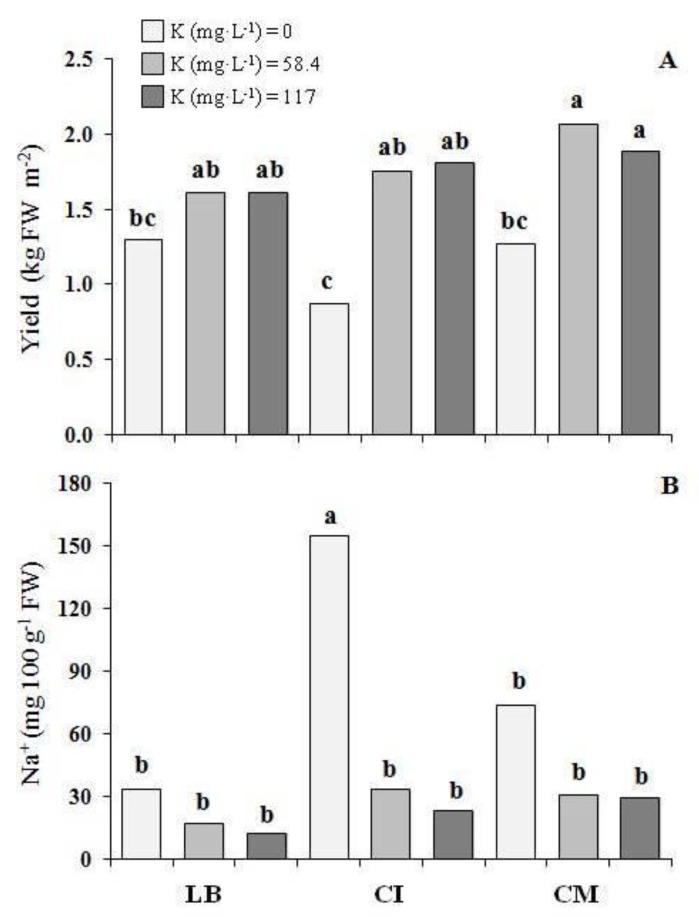
Chronic kidney disease represents a global problem together with other so-called 'lifestyle-related diseases'. Unlike the healthy population, for the patients with impaired kidney function, it is of course prudent to recommend a restriction of high-potassium foods. Thus, it is suggested to limit the consumption of vegetables, because they generally contain high concentrations of potassium. At the same time, a lower consumption of vegetables reduces the intake of healthy compounds such as vitamins, fibers, and antioxidants, which also reduces the vegetables' potential benefit in chronic kidney disease patients. Microgreens are an emerging class of specialty crop that represent a nutritious and refined food. In this study, for the first time, some chicory (local variety 'Molfetta' and cultivar 'Italico a costa rossa') and lettuce (cultivar 'Bionda da taglio') genotypes were grown using a hydroponic system with different potassium (K) levels (0, 29.1, 58.4, and 117 mg L) in order to produce microgreens with a low potassium content. The crop performances, cations content, proximate composition, and antioxidant activity were analyzed. Independent of the genotype, the K content in the microgreens was successfully reduced using a nutrient solution (NS), without K or with 29.1 mg K L, which supplied between 103 and 129 mg of K 100 g FW (about 7.7⁻8.6% of the K daily intake that was recommended for the patients that were affected by chronic kidney disease). Whereas, 100 g of microgreens that were grown by using an NS with 58.4 or 117 mg K L supply between 225 and 250 mg of K (about 15.8⁻16.5% of the K daily intake recommended for patients affected by chronic kidney disease). No differences were observed in terms of the shoot height, dry matter, proximate composition, and visual quality. A slightly lower yield was observed using an NS with a K concentration.
慢性肾脏病是一个全球性问题,与其他所谓的“生活方式相关疾病”共同存在。与健康人群不同,对于肾功能受损的患者,建议限制高钾食物的摄入是谨慎的。因此,建议限制蔬菜的食用,因为蔬菜通常含有高浓度的钾。同时,蔬菜摄入量减少会降低维生素、纤维和抗氧化剂等有益化合物的摄入,这也降低了蔬菜在慢性肾脏病患者中的潜在益处。芽苗菜是一种新兴的特种作物,代表了一种营养丰富且精致的食品。在这项研究中,首次使用水培系统种植不同钾(K)水平(0、29.1、58.4 和 117 mg L)的菊苣(本地品种“Molfetta”和品种“意大利红边”)和生菜(品种“Bionda da taglio”)基因型,以生产低钾含量的芽苗菜。分析了作物表现、阳离子含量、近似成分和抗氧化活性。无论基因型如何,使用营养液(NS)成功降低了芽苗菜中的 K 含量,无 K 或 29.1 mg K L 的 NS 分别提供 103 至 129 mg K 100 g FW(约为受慢性肾脏病影响的患者每日推荐钾摄入量的 7.7⁻8.6%)。然而,用含有 58.4 或 117 mg K L 的 NS 种植的 100 g 芽苗菜供应 225 至 250 mg K(约为受慢性肾脏病影响的患者每日推荐钾摄入量的 15.8⁻16.5%)。在芽苗菜的茎高、干物质、近似成分和视觉质量方面没有观察到差异。使用 K 浓度较低的 NS 会导致产量略低。