Berndt Carsten, Schwenn Jens-Dirk, Lillig Christopher Horst
From the Department of Neurology , Medical Faculty , Heinrich-Heine Universität , Merowingerplatz 1a , 40225 Düsseldorf , Germany.
Biochemistry of Plants , Ruhr-Universität Bochum , Universitätsstraße 150 , 44780 Bochum , Germany.
Chem Sci. 2015 Dec 1;6(12):7049-7058. doi: 10.1039/c5sc01501d. Epub 2015 Sep 9.
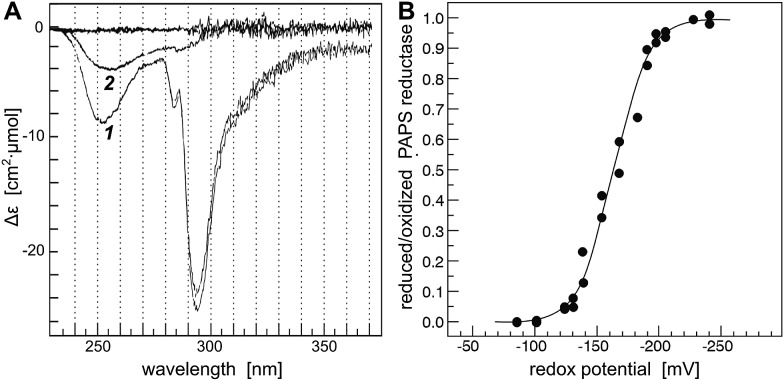
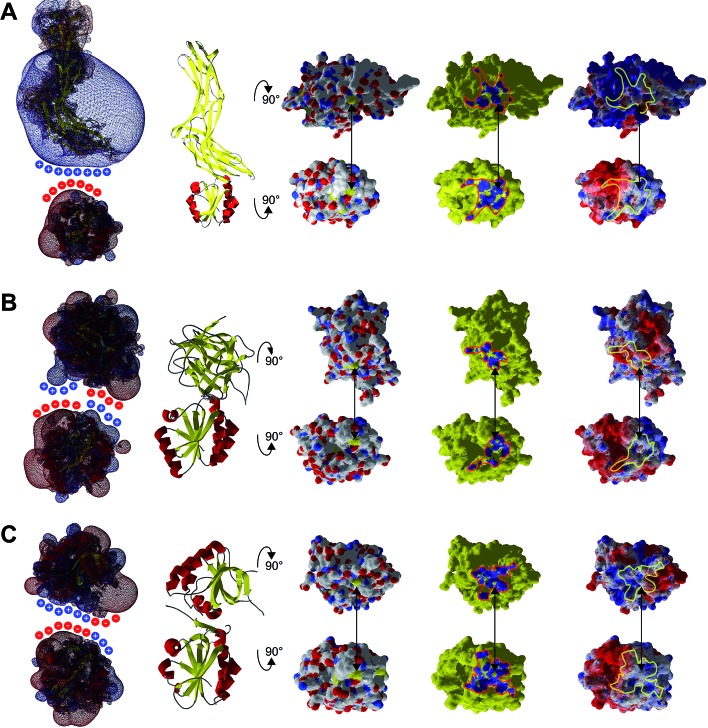
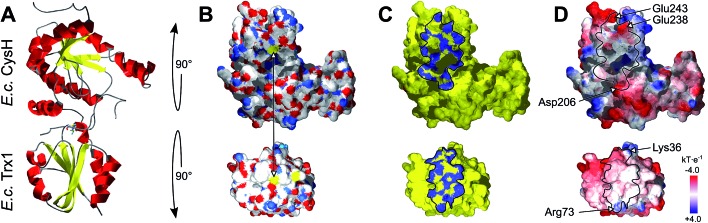
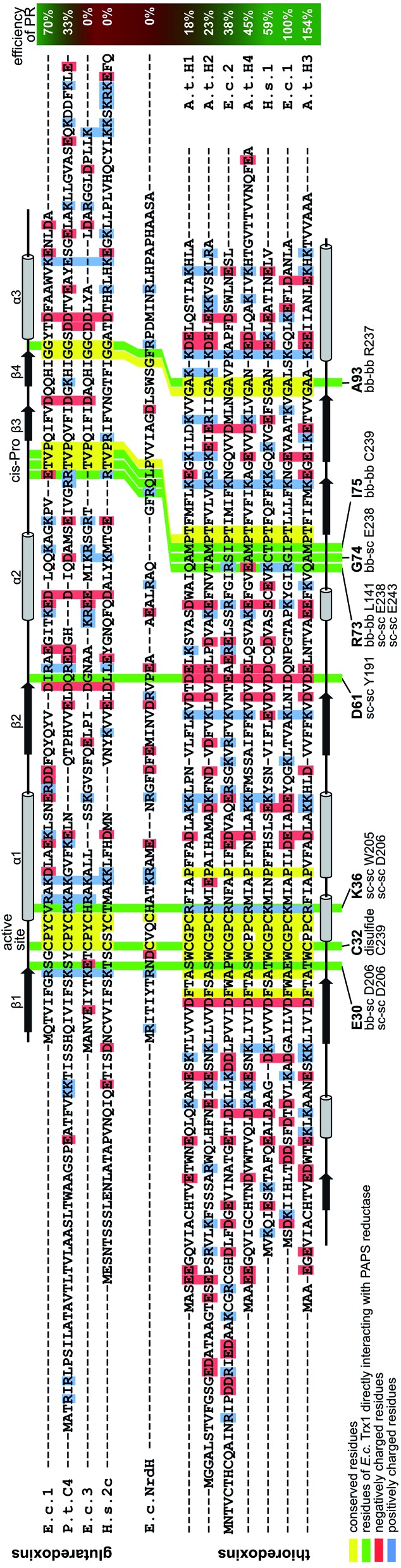
Thiol-disulfide oxidoreductases from the thioredoxin (Trx) family of proteins have a broad range of well documented functions and possess distinct substrate specificities. The mechanisms and characteristics that control these specificities are key to the understanding of both the reduction of catalytic disulfides as well as allosteric disulfides (thiol switches). Here, we have used the catalytic disulfide of 3'-phosphoadenosine 5'-phosphosulfate (PAPS) reductase (PR) that forms between the single active site thiols of two monomers during the reaction cycle as a model system to investigate the mechanisms of Trx and Grx protein specificity. Enzyme kinetics, Δ' determination, and structural analysis of various Trx and Grx family members suggested that the redox potential does not determine specificity nor efficiency of the redoxins as reductant for PR. Instead, the efficiency of PR with various redoxins correlated strongly to the extent of a negative electric field of the redoxins reaching into the solvent outside the active site, and electrostatic and geometric complementary contact surfaces. These data suggest that, in contrast to common assumption, the composition of the active site motif is less important for substrate specificity than other amino acids in or even outside the immediate contact area.
硫氧还蛋白(Trx)家族的硫醇 - 二硫键氧化还原酶具有广泛且有充分文献记载的功能,并具有独特的底物特异性。控制这些特异性的机制和特征是理解催化二硫键以及变构二硫键(硫醇开关)还原的关键。在这里,我们使用了3'-磷酸腺苷5'-磷酸硫酸酯(PAPS)还原酶(PR)的催化二硫键作为模型系统来研究Trx和Grx蛋白特异性的机制,该二硫键在反应循环中于两个单体的单个活性位点硫醇之间形成。各种Trx和Grx家族成员的酶动力学、Δ'测定和结构分析表明,氧化还原电位既不能决定氧化还原蛋白作为PR还原剂的特异性,也不能决定其效率。相反,PR与各种氧化还原蛋白的效率与氧化还原蛋白伸向活性位点外溶剂的负电场程度以及静电和几何互补接触表面密切相关。这些数据表明,与通常的假设相反,活性位点基序的组成对于底物特异性而言,不如紧邻接触区域内甚至区域外的其他氨基酸重要。