Li Jialu, Fu Chunxiao, Speed Terence P, Wang Wenyi, Symmans W Fraser
Department of Bioinformatics and Computational Biology, The University of Texas MD Anderson Cancer Center, Houston, Texas, USA.
Departments of Pathology and Translational Molecular Pathology, The University of Texas MD Anderson Cancer Center, Houston, Texas, USA.
JCO Precis Oncol. 2018;2018. doi: 10.1200/PO.17.00091. Epub 2018 Jan 26.
Accurate transcriptional sequencing (RNA-seq) from formalin-fixation and paraffin-embedding (FFPE) tumor samples presents an important challenge for translational research and diagnostic development. In addition, there are now several different protocols to prepare a sequencing library from total RNA. We evaluated the accuracy of RNA-seq data generated from FFPE samples in terms of expression profiling.
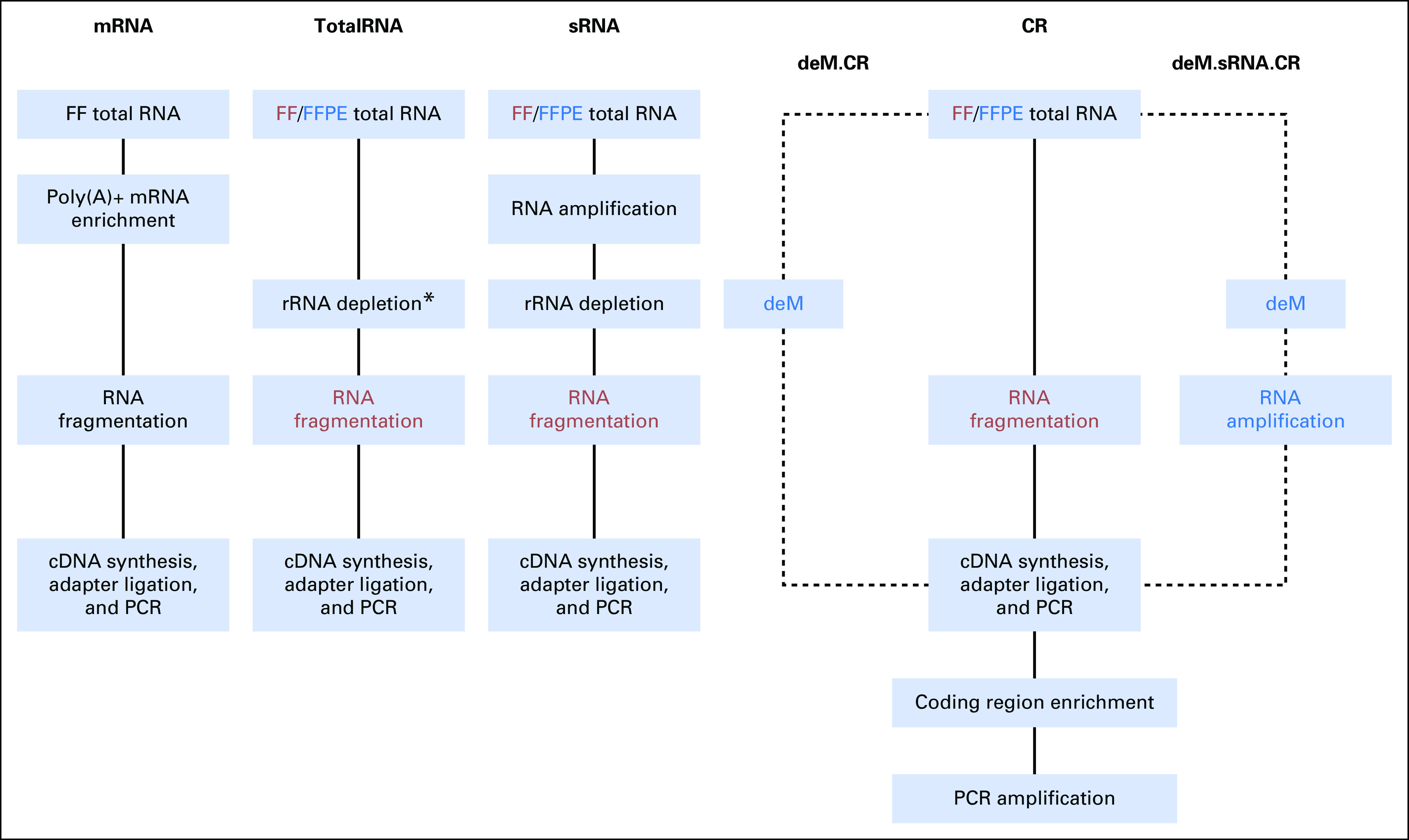
We designed a biospecimen study to directly compare gene expression results from different protocols to prepare libraries for RNA-seq from human breast cancer tissues, with randomization to fresh-frozen (FF) or FFPE conditions. The protocols were compared using multiple computational methods to assess alignment of reads to reference genome, and the uniformity and continuity of coverage; as well as the variance and correlation, of overall gene expression and patterns of measuring coding sequence, phenotypic patterns of gene expression, and measurements from representative multigene signatures.
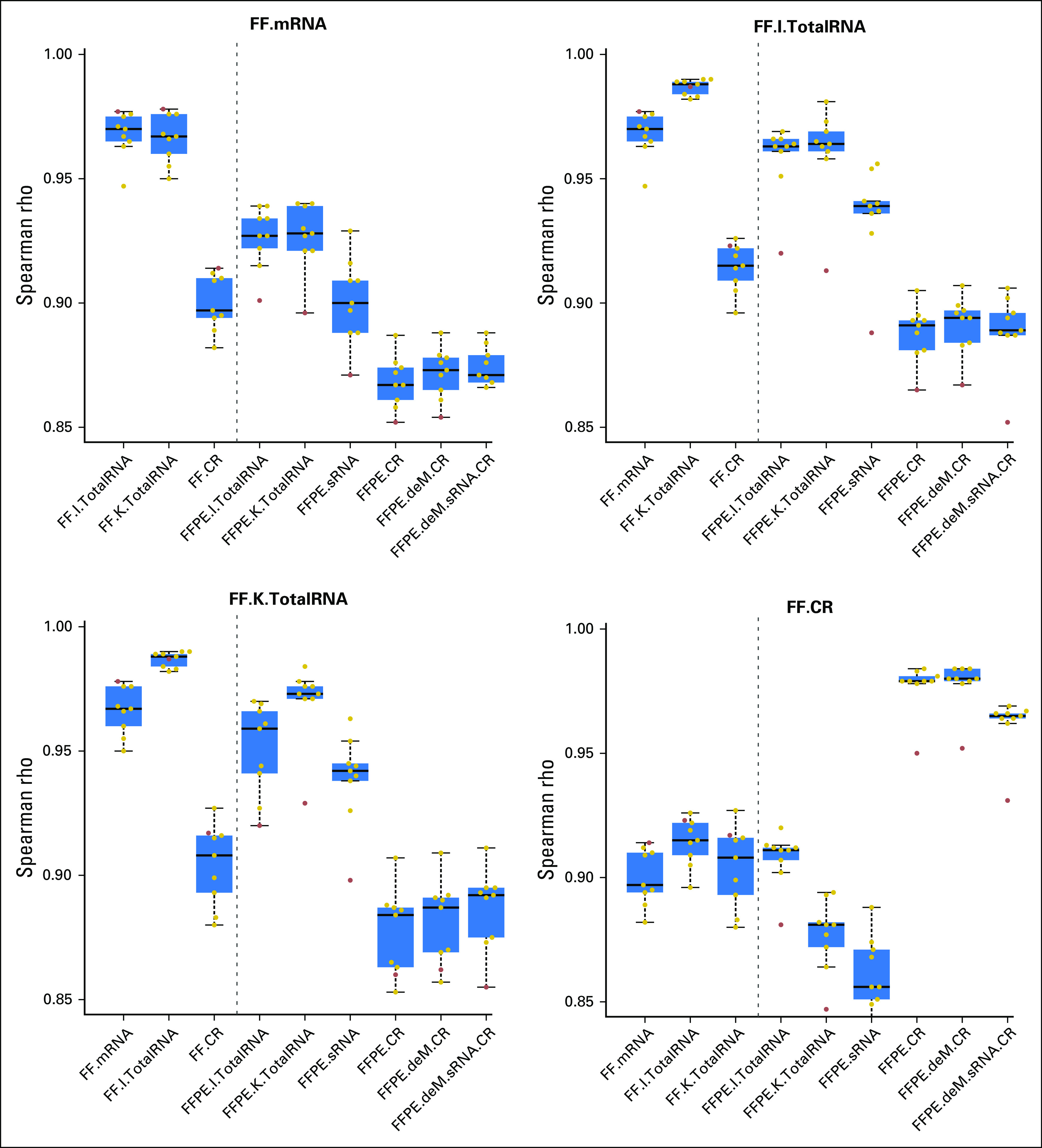
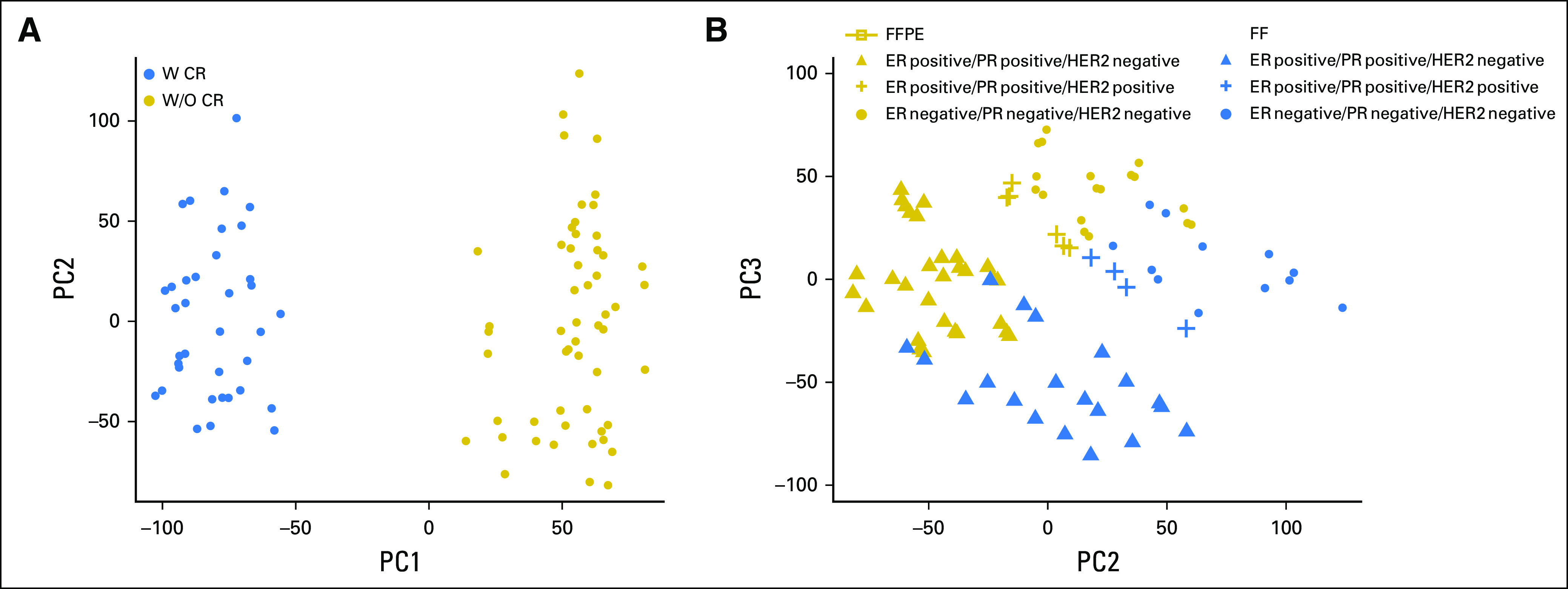
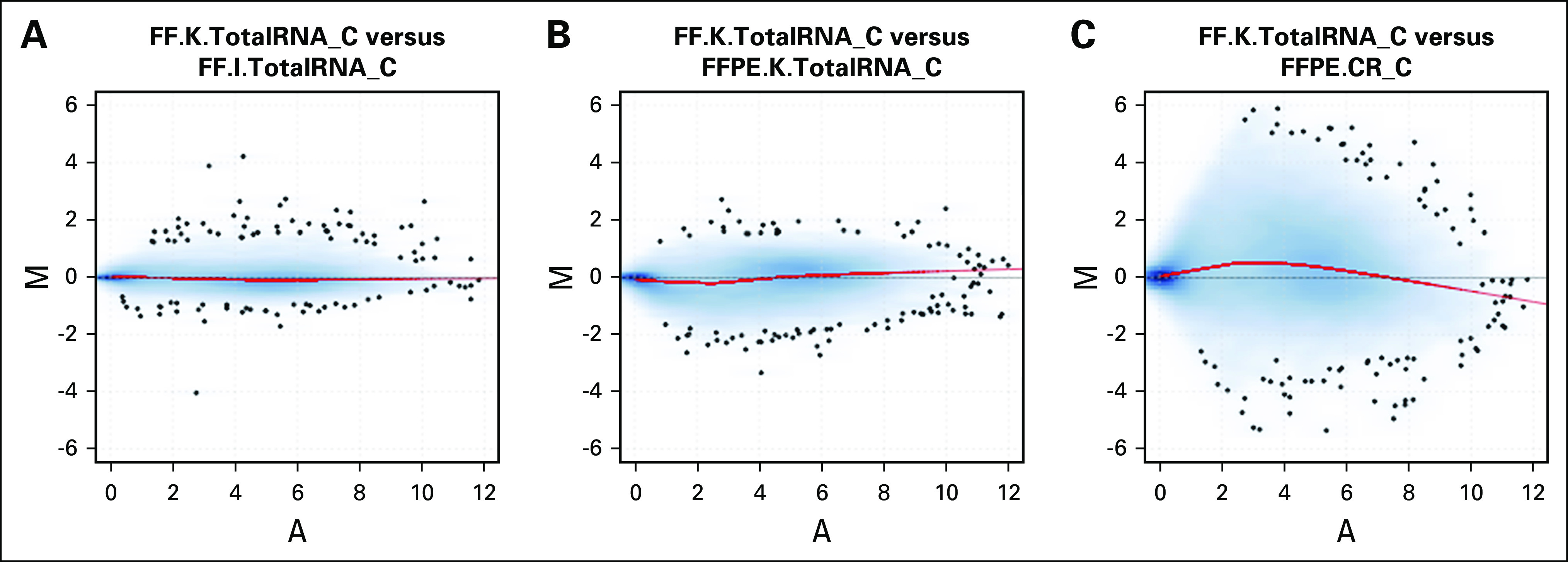
The principal determinant of variance in gene expression was use of exon capture probes, followed by the conditions of preservation (FF versus FFPE), and phenotypic differences between breast cancers. One protocol, with RNase H-based rRNA depletion, exhibited least variability of gene expression measurements, strongest correlation between FF and FFPE samples, and was generally representative of the transcriptome from standard FF RNA-seq protocols.
Method of RNA-seq library preparation from FFPE samples had marked effect on the accuracy of gene expression measurement compared to matched FF samples. Nevertheless, some protocols produced highly concordant expression data from FFPE RNA-seq data, compared to RNA-seq results from matched frozen samples.
从福尔马林固定石蜡包埋(FFPE)肿瘤样本中进行准确的转录组测序(RNA-seq)对转化研究和诊断开发而言是一项重大挑战。此外,目前有几种不同的方案可用于从总RNA制备测序文库。我们从表达谱分析的角度评估了FFPE样本生成的RNA-seq数据的准确性。
我们设计了一项生物样本研究,直接比较不同方案用于制备人乳腺癌组织RNA-seq文库的基因表达结果,随机分为新鲜冷冻(FF)或FFPE条件。使用多种计算方法比较各方案,以评估 reads 与参考基因组的比对情况、覆盖的均匀性和连续性;以及总体基因表达的方差和相关性、编码序列测量模式、基因表达的表型模式和代表性多基因特征的测量结果。
基因表达差异的主要决定因素是外显子捕获探针的使用,其次是保存条件(FF与FFPE)以及乳腺癌之间的表型差异。一种基于核糖核酸酶H的rRNA去除方案,其基因表达测量的变异性最小,FF和FFPE样本之间的相关性最强,并且总体上代表了标准FF RNA-seq方案的转录组。
与匹配的FF样本相比,从FFPE样本制备RNA-seq文库的方法对基因表达测量的准确性有显著影响。然而,与匹配的冷冻样本的RNA-seq结果相比,一些方案从FFPE RNA-seq数据中产生了高度一致的表达数据。