Peking University Sixth Hospital; Peking University Institute of Mental Health; Key Laboratory of Mental Health, Ministry of Health (Peking University); National Clinical Research Center for Mental Disorders (Peking University Sixth Hospital), Beijing, China.
Beijing Chaoyang District Mental Disease Prevention and Control Center, The Third Hospital of Chaoyang District, Beijing, China.
BMC Psychiatry. 2018 Jun 4;18(1):170. doi: 10.1186/s12888-018-1763-2.
Peer support services for patients with severe mental illness (SMI) originated from Western countries and have become increasingly popular during the past twenty years. The aim of this paper is to describe a peer service model and its implementation in China, including the model's feasibility and sustainability.
A peer support service was developed in four Chinese communities. Implementation, feasibility and sustainability were assessed across five domains: Service process, service contents, peer training and supervision, service satisfaction, and service perceived benefit.
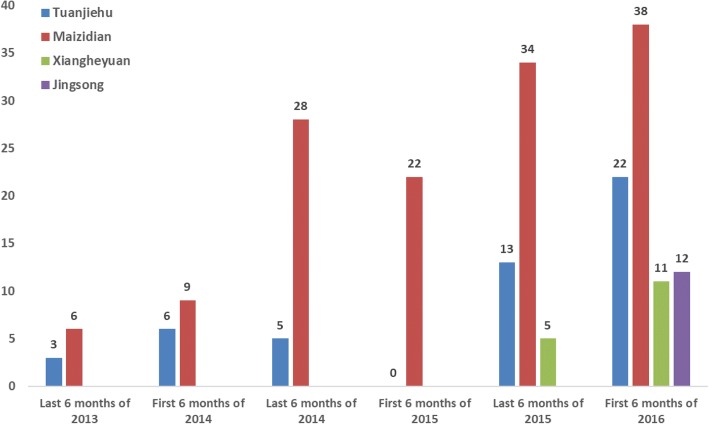
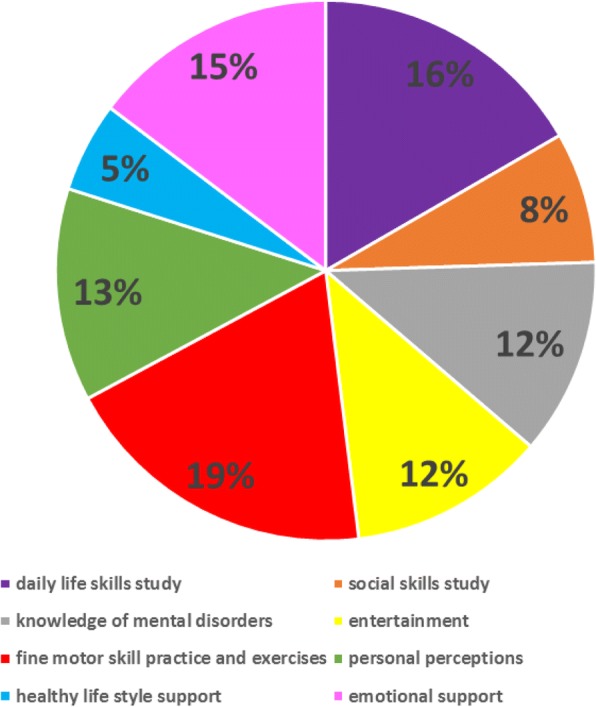
Service process: 214 peer support activities were held between July 2013 and June 2016. No adverse events occurred during three years. Each activity ranged from 40 to 120 min; most were conducted in a community rehabilitation center or community health care center. Service content: Activities focused on eight primary topics-daily life skills, social skills, knowledge of mental disorders, entertainment, fine motor skill practice, personal perceptions, healthy life style support, emotional support. Peer training and supervision: Intensive training was provided for all peers before they started to provide services. Regular supervision and continued training were provided thereafter; online supervision supplemented face to face meetings. Service satisfaction: Nineteen consumers (79.2%) (χ(1) = 12.76, p < 0.001) were satisfied with the peers and 17 consumers (70.8%) (χ(1) = 8.05, p = 0.005) expressed a strong desire to continue to participate in the service. Fourteen caregivers (93.3%) (χ(1) = 11.27, p = 0.001) wanted the patients to continue to organize or participate in the service. Service perceived benefit: Six peers (85.7%) (χ(1) = 3.57, p = 0.059) reported an improvement of working skills. Ten consumers (41.7%) (χ(1) = 0.05, p = 0.827) reported better social communication skills. Six caregivers (40%) (χ(1) = 1.67, p = 0.197) observed patients' increase in social communication skills, five (33.3%) (χ(1) = 1.67, p = 0.197) found their own mood had been improved.
Peer support services for patients with SMI can be sustainably implemented within Chinese communities without adverse events that jeopardize safety and patient stability. Suggestions for future service development include having professionals give increased levels of support to peers at the beginning of a new program. A culturally consistent peer service manual, including peer role definition, peer training curriculum, and supervision methods, should be developed to help implement the service smoothly.
同伴支持服务起源于西方国家,针对严重精神障碍患者,在过去二十年中变得越来越流行。本文旨在描述一种同伴服务模式及其在中国的实施情况,包括该模式的可行性和可持续性。
在中国的四个社区中开发了同伴支持服务。从服务过程、服务内容、同伴培训和监督、服务满意度和服务感知收益五个方面评估了实施、可行性和可持续性。
服务过程:2013 年 7 月至 2016 年 6 月共举办 214 次同伴支持活动。三年中未发生任何不良事件。每次活动持续 40-120 分钟;大部分活动在社区康复中心或社区卫生服务中心进行。服务内容:活动重点关注八个主要主题——日常生活技能、社交技能、精神障碍知识、娱乐、精细运动练习、个人认知、健康生活方式支持、情感支持。同伴培训和监督:所有同伴在开始提供服务之前都接受了强化培训。此后,提供定期监督和持续培训;在线监督补充面对面会议。服务满意度:19 名消费者(79.2%)(χ²(1)=12.76,p<0.001)对同伴表示满意,17 名消费者(70.8%)(χ²(1)=8.05,p=0.005)强烈希望继续参与服务。14 名照顾者(93.3%)(χ²(1)=11.27,p=0.001)希望患者继续组织或参与服务。服务感知收益:6 名同伴(85.7%)(χ²(1)=3.57,p=0.059)报告工作技能有所提高。10 名消费者(41.7%)(χ²(1)=0.05,p=0.827)报告社交沟通技能有所改善。6 名照顾者(40%)(χ²(1)=1.67,p=0.197)观察到患者社交沟通技能的提高,5 名照顾者(33.3%)(χ²(1)=1.67,p=0.197)发现自己的情绪有所改善。
在中国社区中,可以安全稳定地持续实施针对严重精神障碍患者的同伴支持服务,不会发生任何危及安全和患者稳定的不良事件。对未来服务发展的建议包括在新项目开始时为同伴提供更多专业支持。应制定文化一致的同伴服务手册,包括同伴角色定义、同伴培训课程和监督方法,以帮助顺利实施服务。