Section on Molecular Signal Transduction, Program for Developmental Neuroscience, Eunice Kennedy Shriver National Institute of Child Health and Human Development, NIH, Bethesda, MD 20892, USA.
Section on Cellular Signaling, Eunice Kennedy Shriver National Institute of Child Health and Human Development, NIH, Bethesda, MD 20892, USA.
Cell Rep. 2018 Jun 5;23(10):2881-2890. doi: 10.1016/j.celrep.2018.05.019.
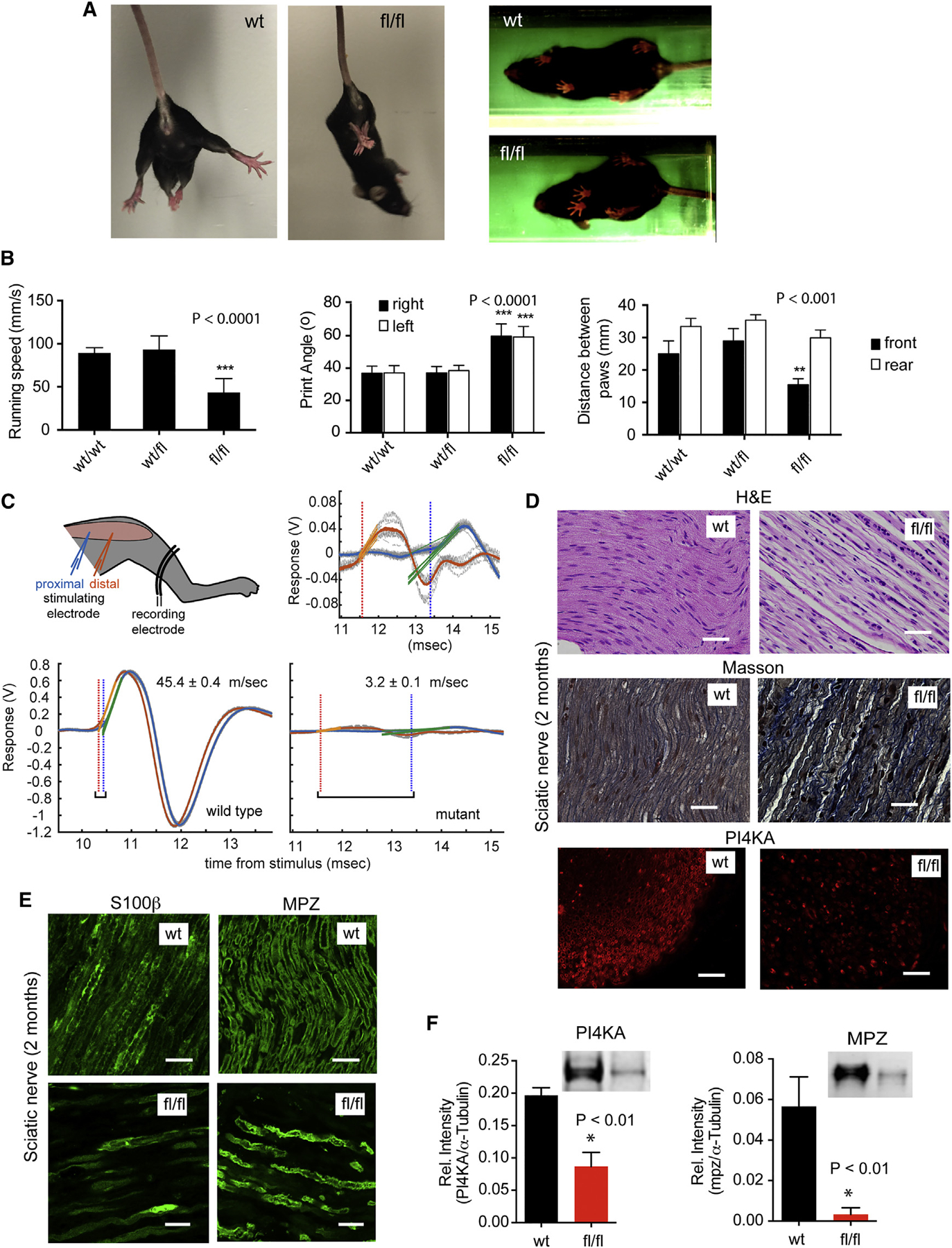
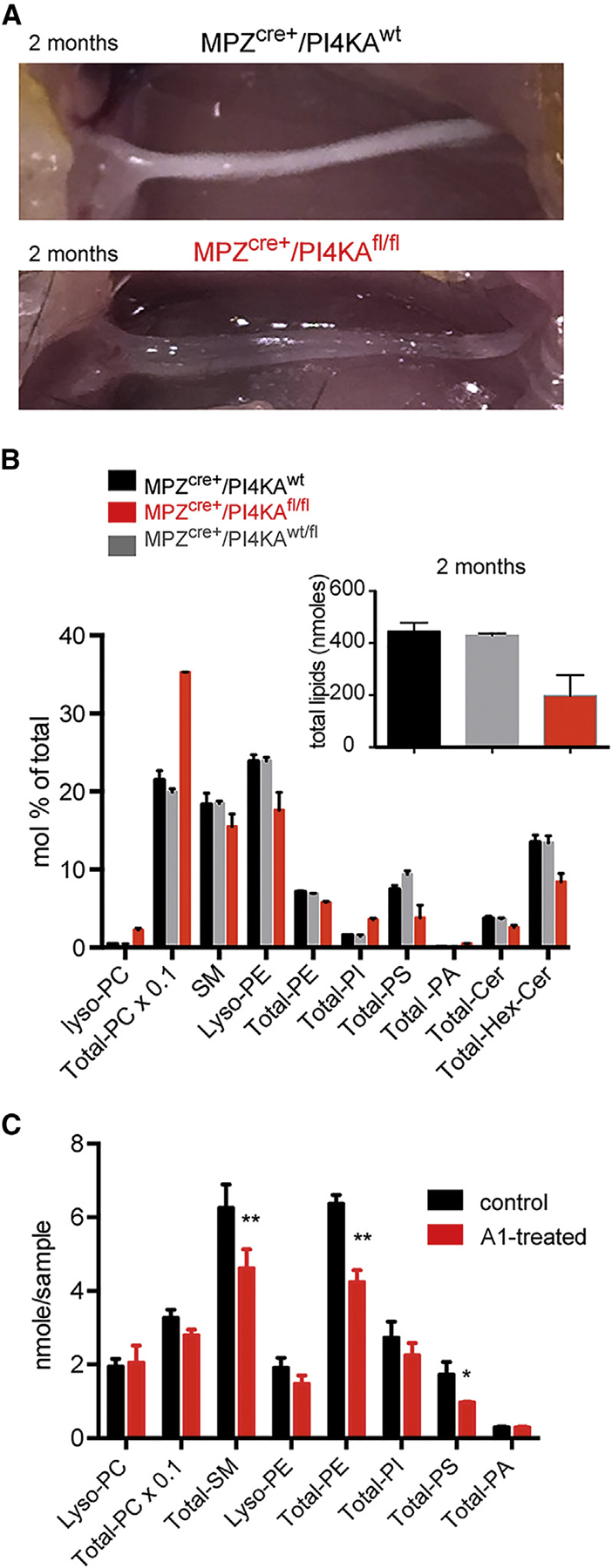
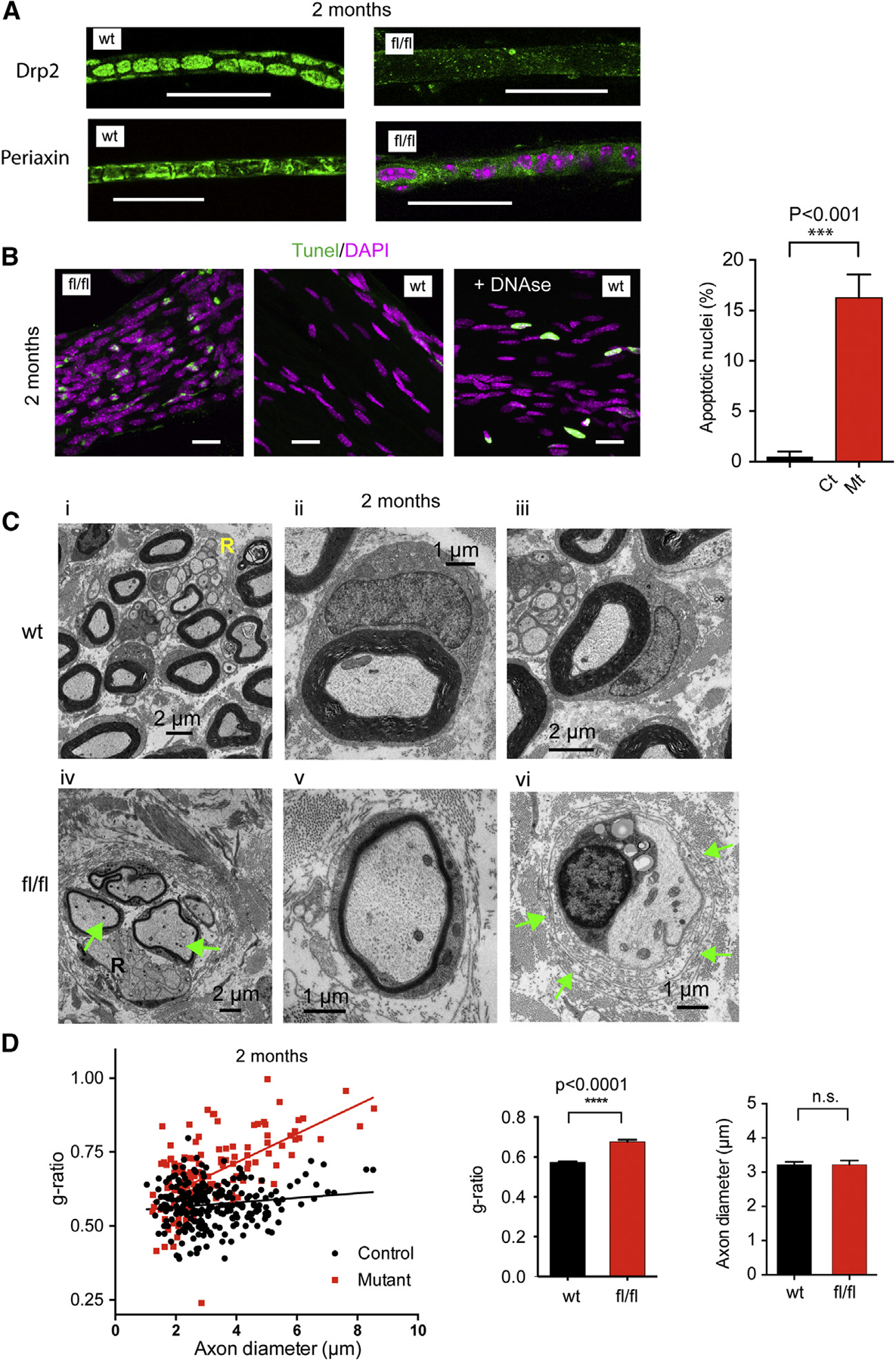
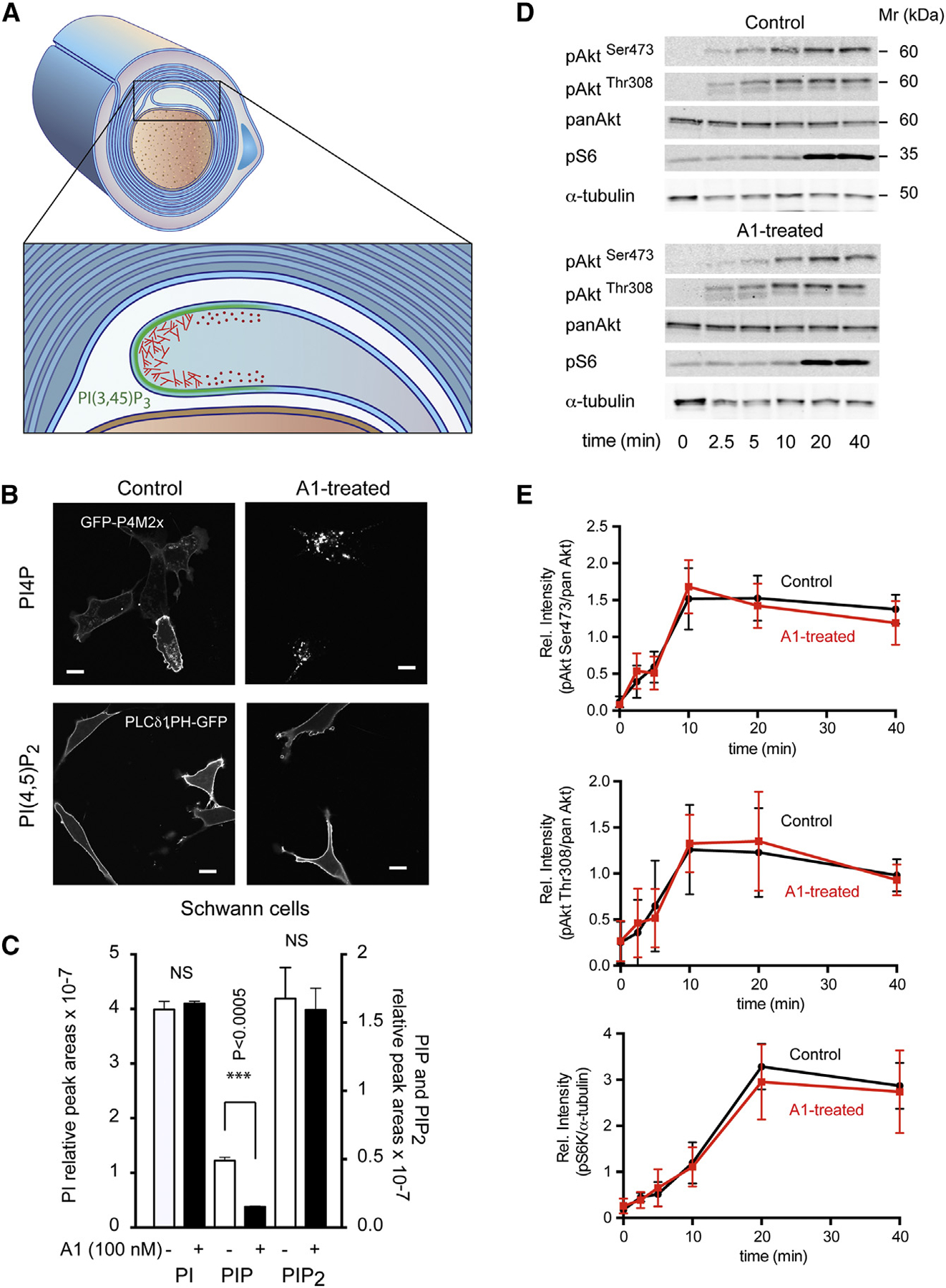
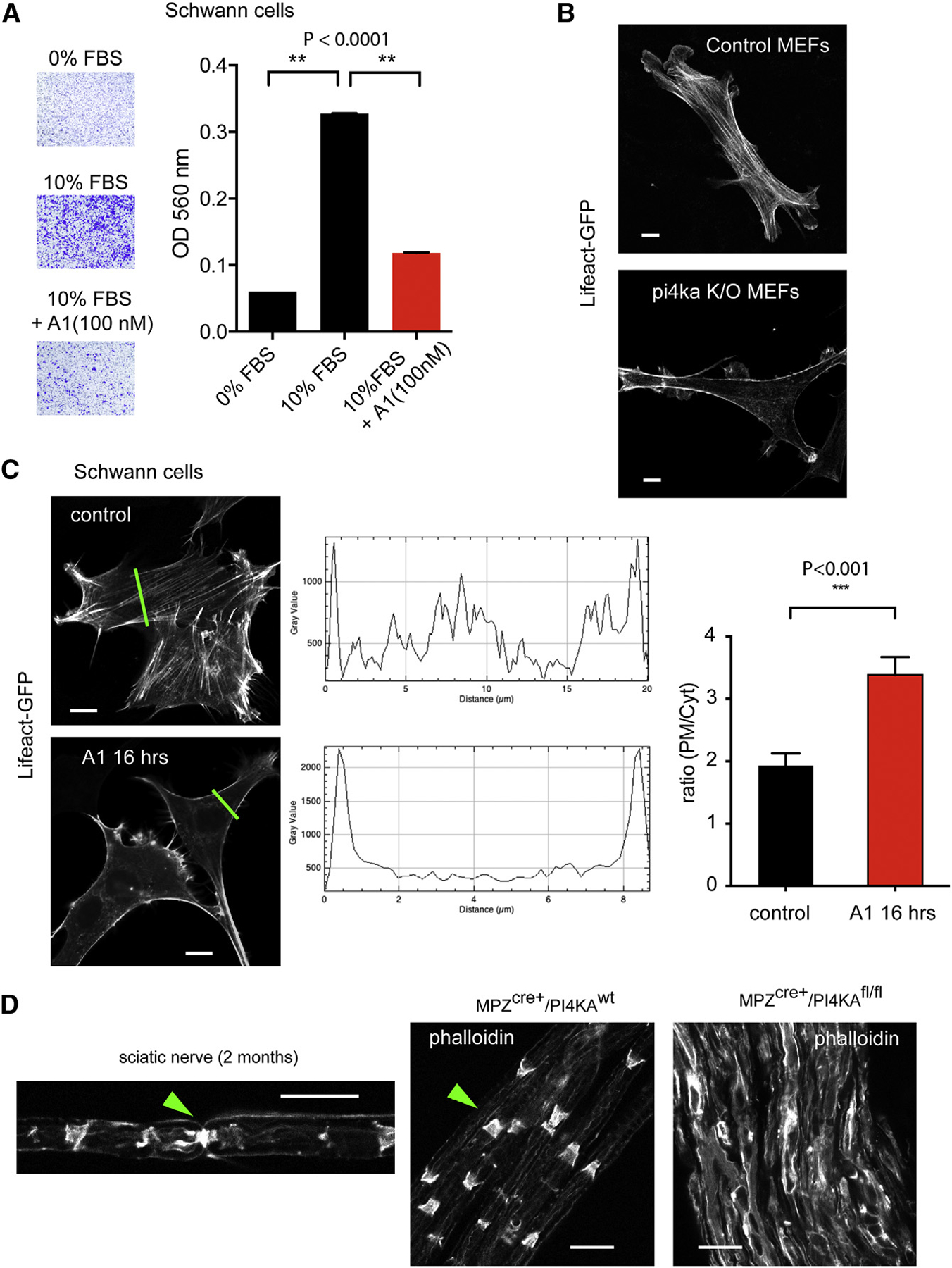
Active membrane remodeling during myelination relies on phospholipid synthesis and membrane polarization, both of which are known to depend on inositol phospholipids. Here, we show that sciatic nerves of mice lacking phosphatidylinositol 4-kinase alpha (PI4KA) in Schwann cells (SCs) show substantially reduced myelin thickness with grave consequences on nerve conductivity and motor functions. Surprisingly, prolonged inhibition of PI4KA in immortalized mouse SCs failed to decrease plasma membrane phosphatidylinositol 4,5-bisphosphate (PI(4,5)P) levels or PI 3-kinase (PI3K) activation, in spite of large reductions in plasma membrane PI4P levels. Instead, it caused rearrangements of the actin cytoskeleton, which was also observed in sciatic nerves of knockout animals. PI4KA inactivation disproportionally reduced phosphatidylserine, phosphatidylethanolamine, and sphingomyelin content in mutant nerves, with similar changes observed in SCs treated with a PI4KA inhibitor. These studies define a role for PI4KA in myelin formation primarily affecting metabolism of key phospholipids and the actin cytoskeleton.
髓鞘形成过程中的主动膜重塑依赖于磷脂合成和膜极化,这两者都已知依赖于肌醇磷脂。在这里,我们表明,施万细胞(SCs)中缺乏磷脂酰肌醇 4-激酶α(PI4KA)的小鼠坐骨神经显示出明显减少的髓鞘厚度,对神经传导性和运动功能有严重影响。令人惊讶的是,尽管质膜磷脂酰肌醇 4,5-二磷酸(PI(4,5)P)水平或 PI3-激酶(PI3K)的激活大量减少,但在永生化的小鼠 SC 中延长抑制 PI4KA 未能降低 PI4KA 的水平。相反,它导致肌动蛋白细胞骨架的重排,在敲除动物的坐骨神经中也观察到这种重排。PI4KA 失活不成比例地降低了突变神经中的磷脂酰丝氨酸、磷脂酰乙醇胺和神经鞘磷脂含量,在用 PI4KA 抑制剂处理的 SC 中也观察到类似的变化。这些研究定义了 PI4KA 在髓鞘形成中的作用,主要影响关键磷脂和肌动蛋白细胞骨架的代谢。