
创伤后应激障碍中对创伤自愿回忆的心血管和心理反应。
Cardiovascular and psychological responses to voluntary recall of trauma in posttraumatic stress disorder.
作者信息
Chou Chia-Ying, La Marca Roberto, Steptoe Andrew, Brewin Chris R
机构信息
Department of Clinical, Educational & Health Psychology, University College London, London, UK.
Department of Psychology, Universität Zürich, Zürich, Switzerland.
出版信息
Eur J Psychotraumatol. 2018 Jun 4;9(1):1472988. doi: 10.1080/20008198.2018.1472988. eCollection 2018.
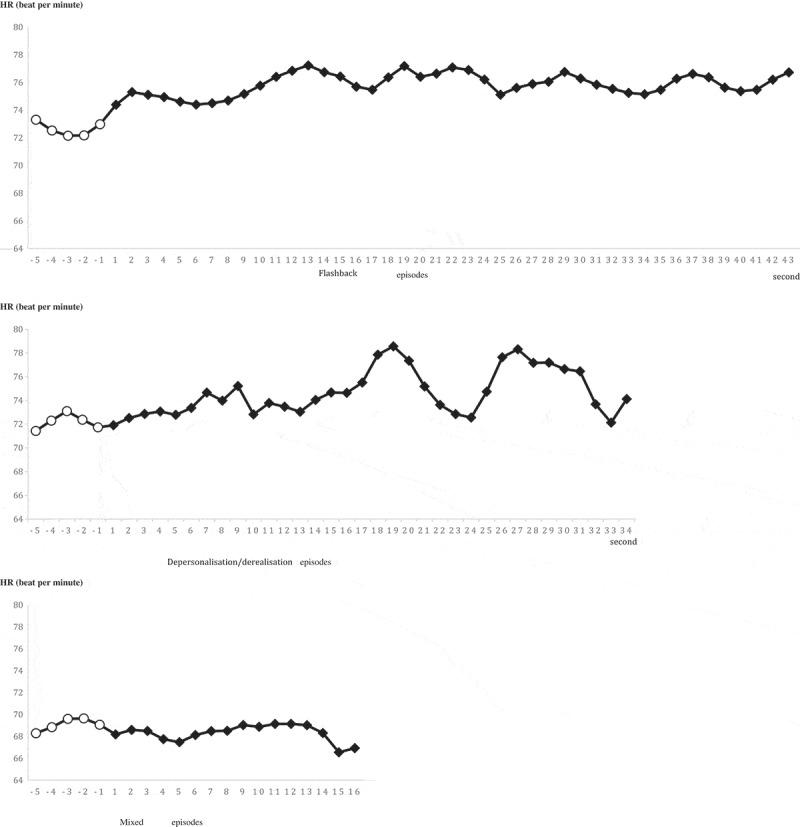
Voluntary recall of trauma is a key element in exposure-based psychotherapies and can trigger spontaneous dissociative responses such as flashbacks, depersonalisation, and derealisation. In order to examine the associations between cardiovascular and psychological responses to voluntary recollection of trauma, individuals with PTSD recalled a traumatic memory. Heart rate and heart rate variability were recorded continuously and the episodes when different forms of dissociation were experienced during the recall were identified. A significant increase in parasympathetic activity was found during trauma recall, with greater parasympathetic dominance being indicative of greater state depersonalisation/derealisation. Whereas overall decreases in heart rate during trauma recall were associated with increased fear and perceived threat, flashbacks were accompanied by short-term increases in heart rate. These findings demonstrate different types of cardiovascular responses associated with different psychological experiences during trauma recall. Future research directions were discussed.
自愿回忆创伤是基于暴露的心理治疗中的一个关键要素,并且可能引发诸如闪回、人格解体和现实解体等自发性解离反应。为了研究对创伤自愿回忆的心血管反应与心理反应之间的关联,创伤后应激障碍患者回忆了一段创伤记忆。连续记录心率和心率变异性,并识别出回忆过程中经历不同形式解离的时段。研究发现,在创伤回忆期间副交感神经活动显著增加,副交感神经占主导地位的程度越高表明人格解体/现实解体状态越严重。虽然创伤回忆期间心率总体下降与恐惧增加和感知到的威胁有关,但闪回伴随着心率的短期上升。这些发现表明,在创伤回忆期间,不同类型的心血管反应与不同的心理体验相关。文中还讨论了未来的研究方向。


 Zotero 插件