Obstetrical Department, Beijing Obstetrics and Gynecology Hospital, Capital Medical University, Beijing 100026, China.
Biomed Res Int. 2018 May 17;2018:3478925. doi: 10.1155/2018/3478925. eCollection 2018.
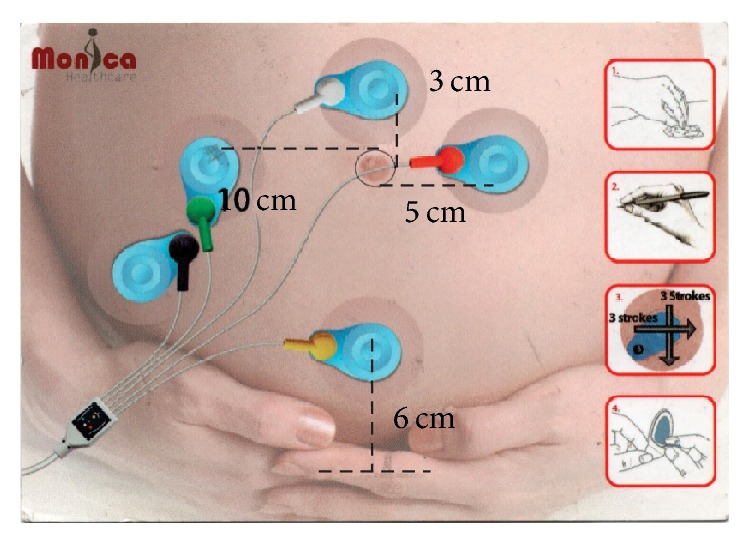
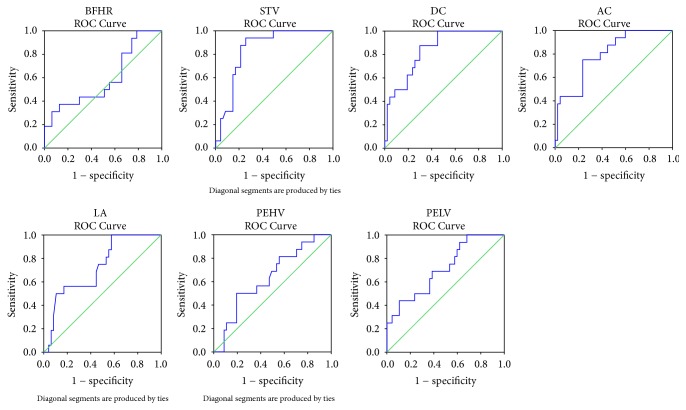
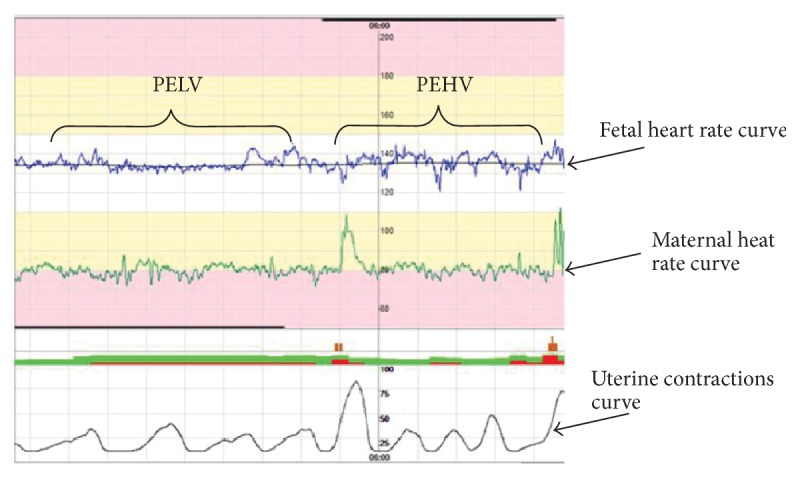
This study aimed to identify cardiotocography patterns that discriminate fetal acidemia newborns by comprehensively evaluating the parameters obtained from Holter monitoring during delivery. Between June 1, 2015, and August 1, 2016, a prospective observational study of 85 patients was conducted using fetal Holter monitoring at the Beijing Obstetrics and Gynecology Hospital, Capital Medical University, China. Umbilical cord blood was sampled immediately after delivery and fetal acidemia was defined as umbilical cord arterial blood pH < 7.20. Fetal electrocardiogram- (FECG-) derived parameters, including basal fetal heart rate (BFHR), short-term variation (STV), large acceleration (LA), deceleration capacity (DC), acceleration capacity (AC), proportion of episodes of high variation (PEHV), and proportion of episodes of low variation (PELV), were compared between 16 fetuses with acidemia and 47 without. The areas under the curve (AUC) of receiver operating characteristics (ROC) were calculated. Although all the computerized parameters showed predictive values for acidemia (all AUC > 0.50), STV (AUC = 0.84, < 0.001), DC (AUC = 0.84, < 0.001), AC (AUC = 0.80, < 0.001), and PELV (AUC = 0.71, = 0.012) were more strongly associated with fetal acidemia. Our institutional experience suggests that FECG-derived parameters from Holter monitoring are beneficial in reducing the incidence of neonatal acidemia.
本研究旨在通过综合评估分娩期间 Holter 监测获得的参数,确定能够鉴别胎儿酸中毒新生儿的胎心监护图形。2015 年 6 月 1 日至 2016 年 8 月 1 日,在中国首都医科大学附属北京妇产医院进行了一项前瞻性观察性研究,对 85 例患者使用胎儿 Holter 监测。分娩后立即采集脐动脉血,脐动脉血 pH<7.20 定义为胎儿酸中毒。比较了 16 例酸中毒胎儿和 47 例无酸中毒胎儿的胎儿心电图衍生参数,包括基础胎心率(BFHR)、短期变异(STV)、大加速(LA)、减速能力(DC)、加速能力(AC)、高变异期比例(PEHV)和低变异期比例(PELV)。计算受试者工作特征曲线(ROC)的曲线下面积(AUC)。虽然所有计算机化参数均显示对酸中毒具有预测价值(所有 AUC>0.50),但 STV(AUC=0.84,<0.001)、DC(AUC=0.84,<0.001)、AC(AUC=0.80,<0.001)和 PELV(AUC=0.71,=0.012)与胎儿酸中毒的相关性更强。我们的机构经验表明,Holter 监测的胎儿心电图衍生参数有助于降低新生儿酸中毒的发生率。