Randesi Matthew, Zhou Yan, Mazid Sanoara, Odell Shannon C, Gray Jason D, Correa da Rosa J, McEwen Bruce S, Milner Teresa A, Kreek Mary Jeanne
The Laboratory of the Biology of Addictive Diseases, The Rockefeller University, 1230 York Avenue, New York, NY, 10065, United States.
Feil Family Brain and Mind Research Institute, Weill Cornell Medicine, 407 East 61st Street, New York, NY, 10065, United States.
Neurobiol Stress. 2018 Jan 11;8:33-41. doi: 10.1016/j.ynstr.2018.01.001. eCollection 2018 Feb.
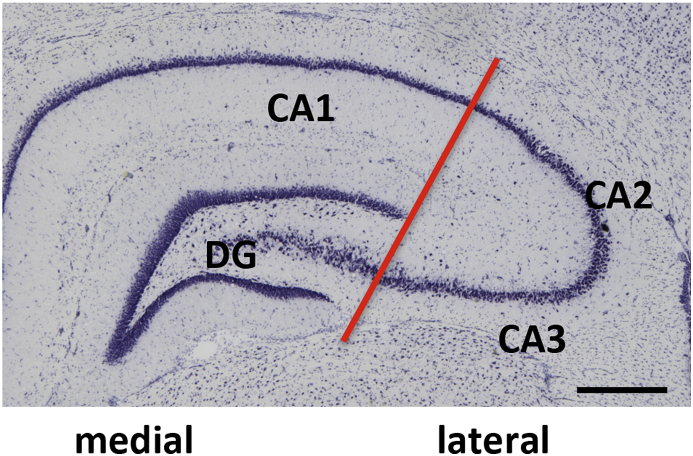
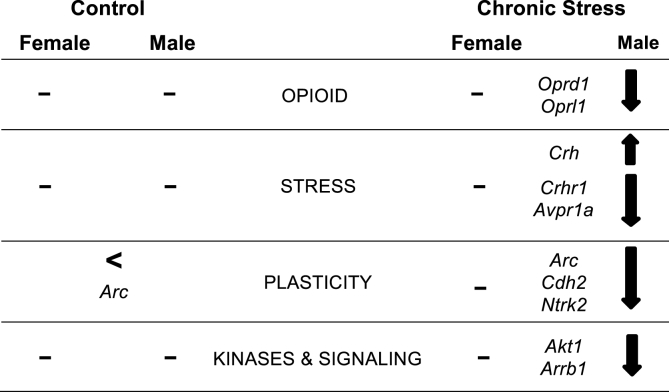
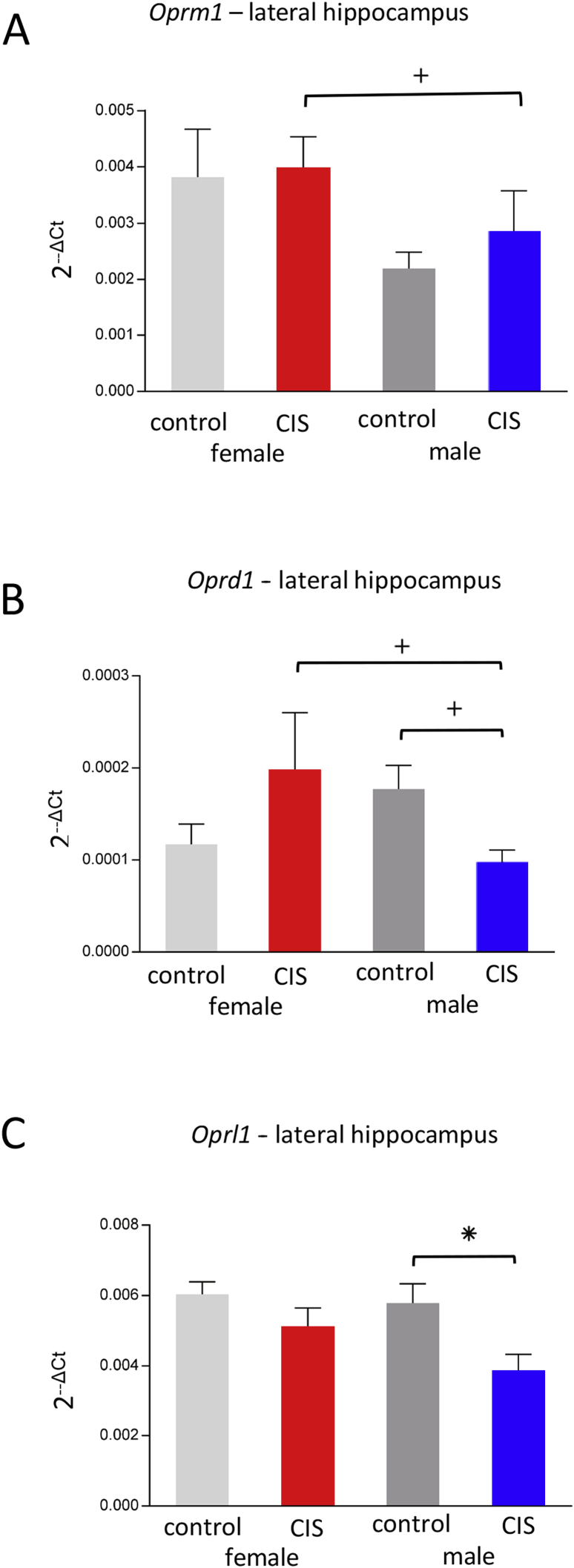
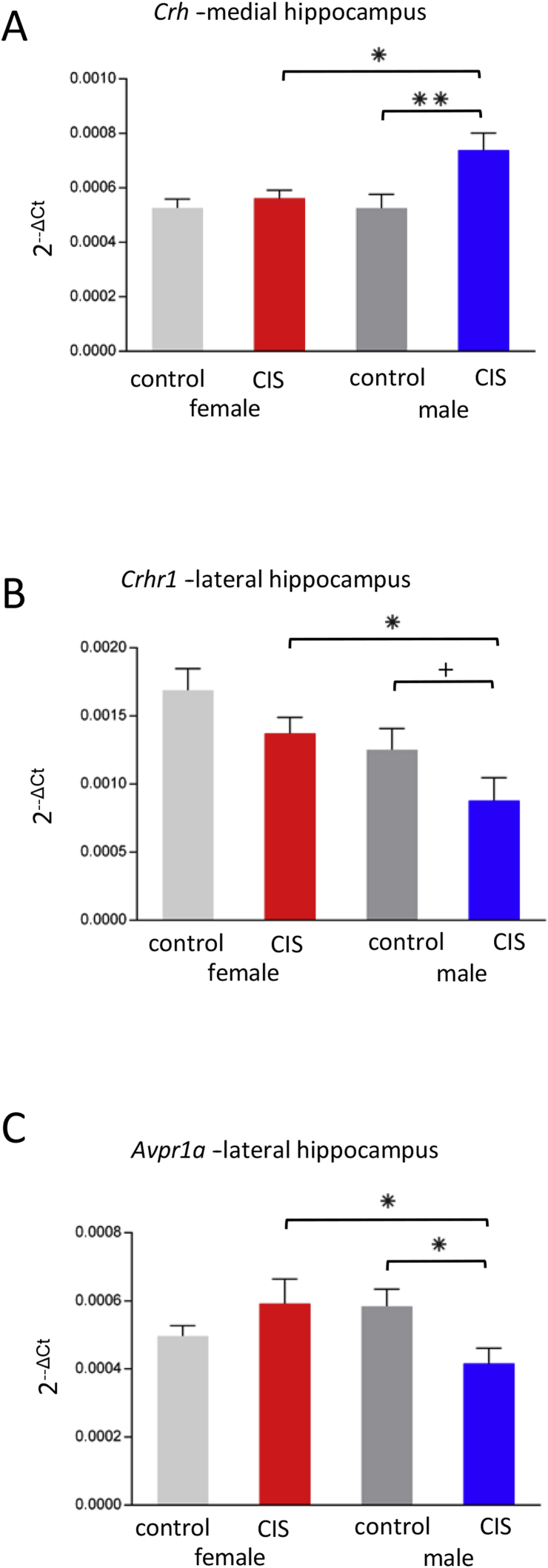
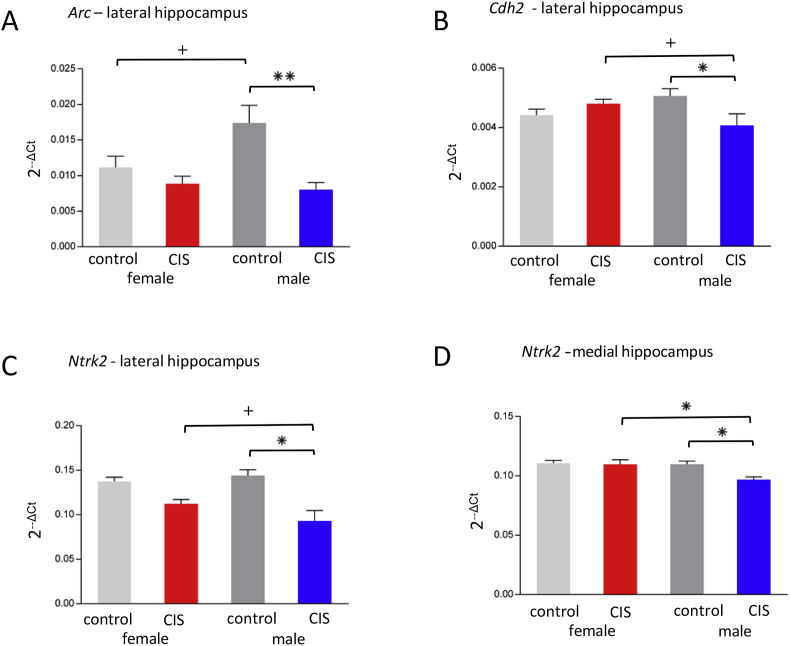
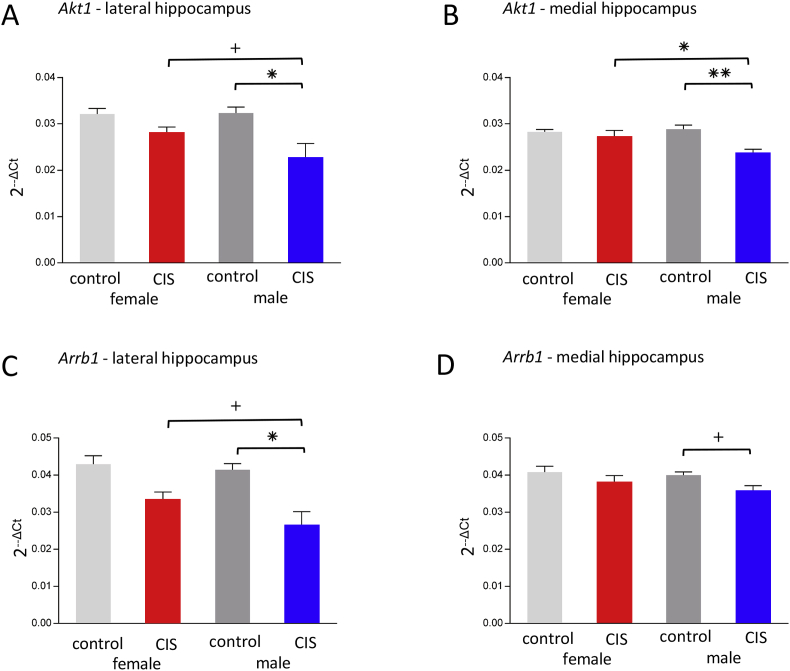
Opioid peptides and their receptors re-organize within hippocampal neurons of female, but not male, rats following chronic immobilization stress (CIS) in a manner that promotes drug-related learning. This study was conducted to determine if there are also sex differences in gene expression in the hippocampus following CIS. Adult female and male rats were subjected to CIS (30 min/day) for 10 days. Twenty-four hours after the last stressor, the rats were euthanized, the brains were harvested and the medial (dentate gyrus/CA1) and lateral (CA2/CA3) dorsal hippocampus were isolated. Following total RNA isolation, cDNA was prepared for gene expression analysis using a RT Profiler PCR expression array. This custom designed qPCR expression array contained genes for opioid peptides and receptors, as well as genes involved in stress-responses and candidate genes involved in synaptic plasticity, including those upregulated following oxycodone self-administration in mice. Few sex differences are seen in hippocampal gene expression in control (unstressed) rats. In response to CIS, gene expression in the hippocampus was altered in males but not females. In males, opioid, stress, plasticity and kinase/signaling genes were all down-regulated following CIS, except for the gene that codes for corticotropin releasing hormone, which was upregulated. Changes in opioid gene expression following chronic stress were limited to the CA2 and CA3 regions (lateral sample). In conclusion, modest sex- and regional-differences are seen in expression of the opioid receptor genes, as well as genes involved in stress and plasticity responses in the hippocampus following CIS.
在慢性固定应激(CIS)后,阿片肽及其受体在雌性大鼠而非雄性大鼠的海马神经元内重新组织,其方式促进了与药物相关的学习。本研究旨在确定CIS后海马体基因表达是否也存在性别差异。成年雌性和雄性大鼠接受CIS(每天30分钟),持续10天。在最后一次应激源刺激24小时后,将大鼠安乐死,取出大脑并分离内侧(齿状回/CA1)和外侧(CA2/CA3)背侧海马体。提取总RNA后,使用RT Profiler PCR表达芯片制备cDNA用于基因表达分析。这种定制设计的qPCR表达芯片包含阿片肽及其受体的基因,以及参与应激反应的基因和参与突触可塑性的候选基因,包括那些在小鼠羟考酮自我给药后上调的基因。在对照(未应激)大鼠的海马基因表达中几乎未见性别差异。对CIS的反应中,雄性大鼠海马体中的基因表达发生改变,而雌性大鼠则未改变。在雄性大鼠中,CIS后阿片类、应激、可塑性和激酶/信号基因均下调,但编码促肾上腺皮质激素释放激素的基因上调。慢性应激后阿片类基因表达的变化仅限于CA2和CA3区域(外侧样本)。总之,在CIS后,阿片受体基因以及海马体中参与应激和可塑性反应的基因的表达存在适度的性别和区域差异。