Frommlet Jörg C, Wangpraseurt Daniel, Sousa Maria L, Guimarães Bárbara, Medeiros da Silva Mariana, Kühl Michael, Serôdio João
Department of Biology and Centre for Environmental and Marine Studies (CESAM), University of Aveiro, Aveiro, Portugal.
Marine Biological Section, Department of Biology, University of Copenhagen, Helsingør, Denmark.
Front Microbiol. 2018 May 17;9:998. doi: 10.3389/fmicb.2018.00998. eCollection 2018.
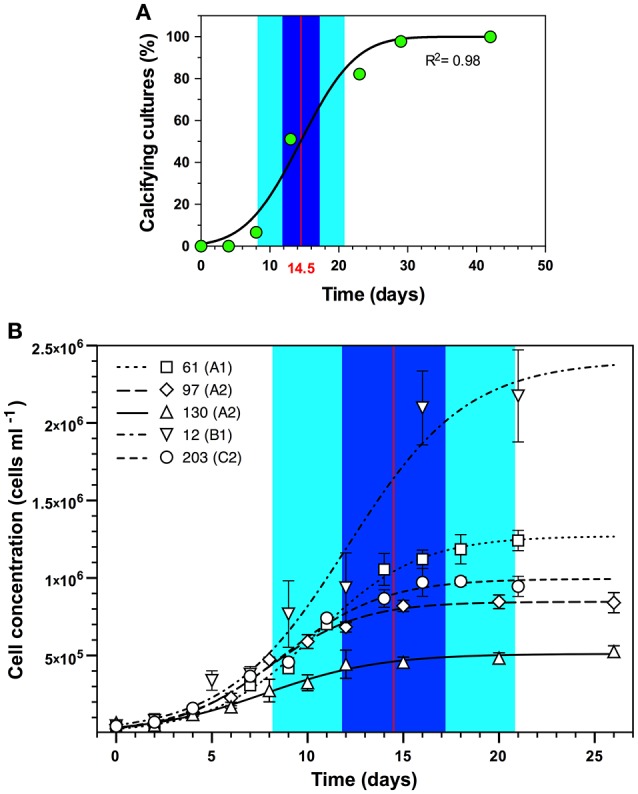
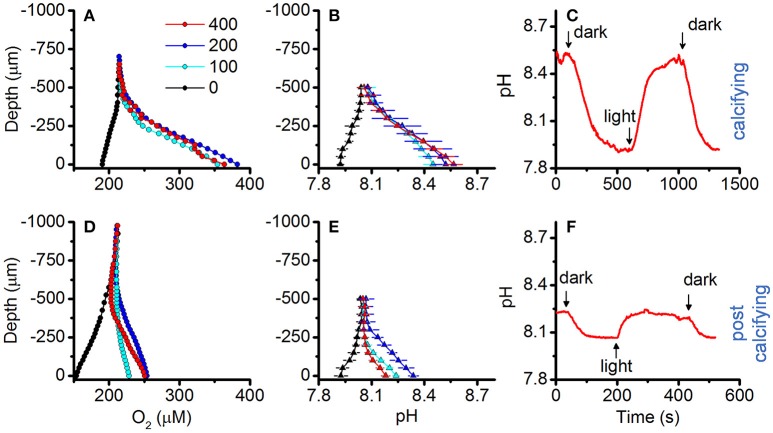
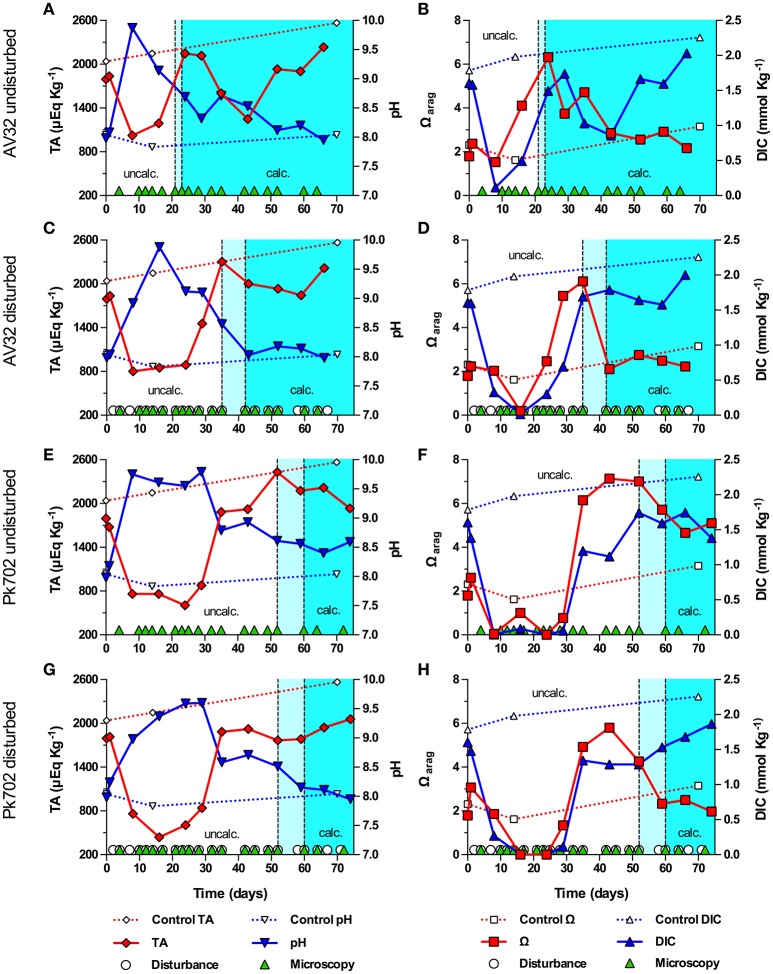
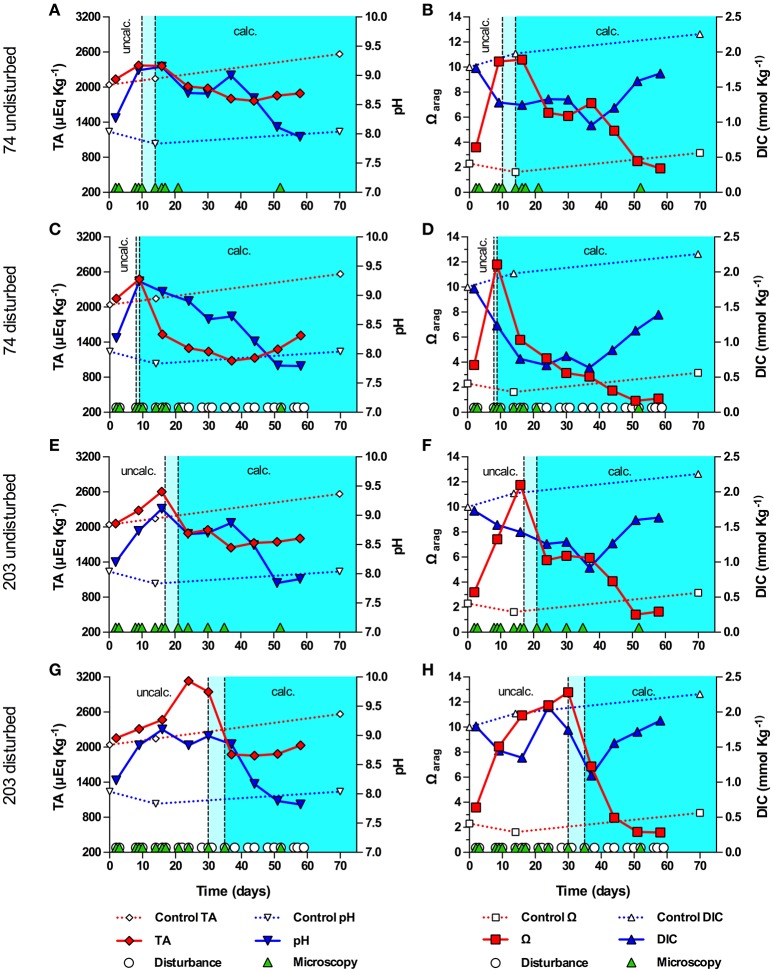
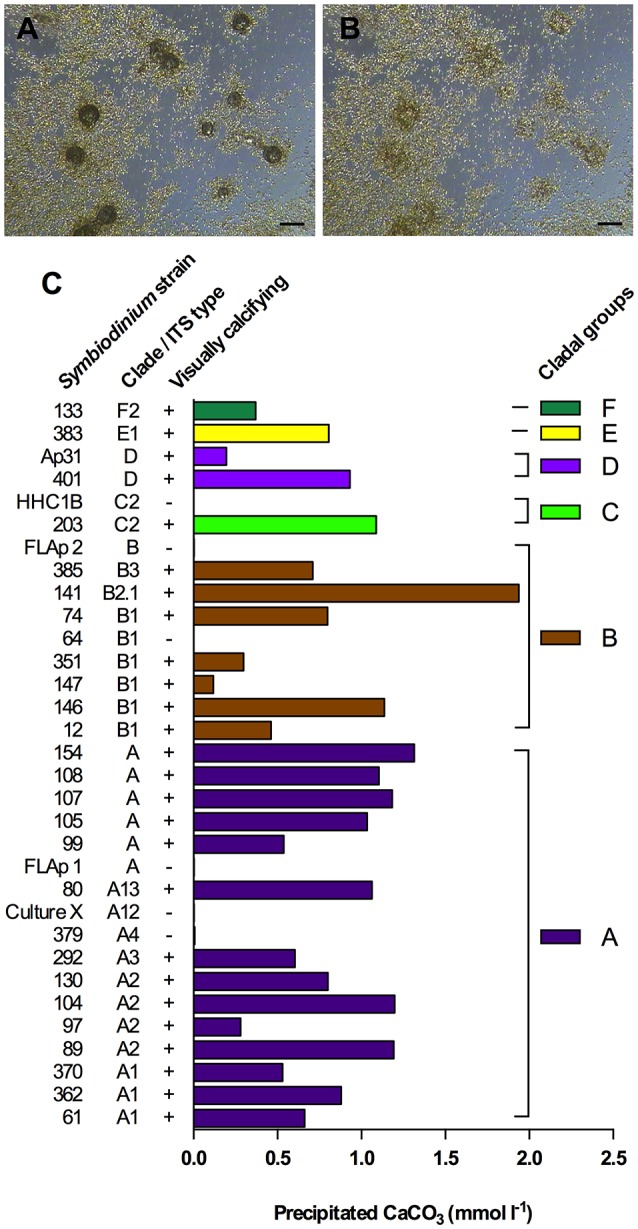
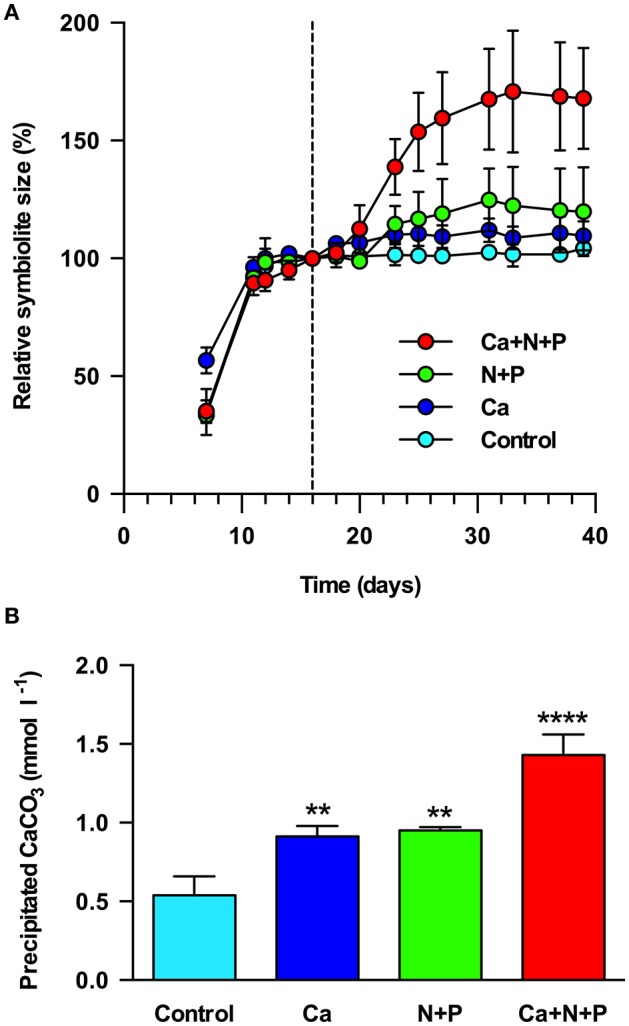
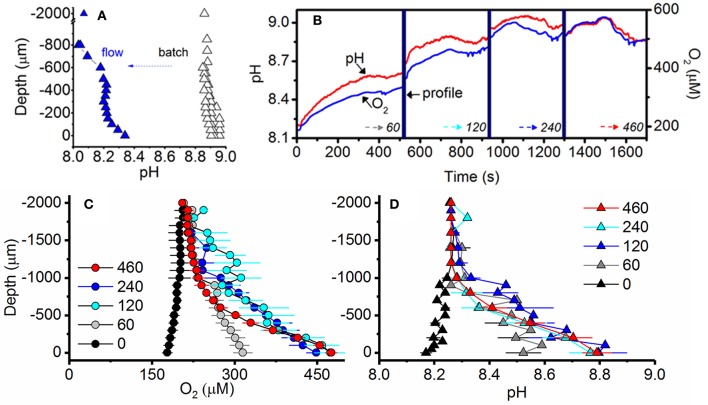
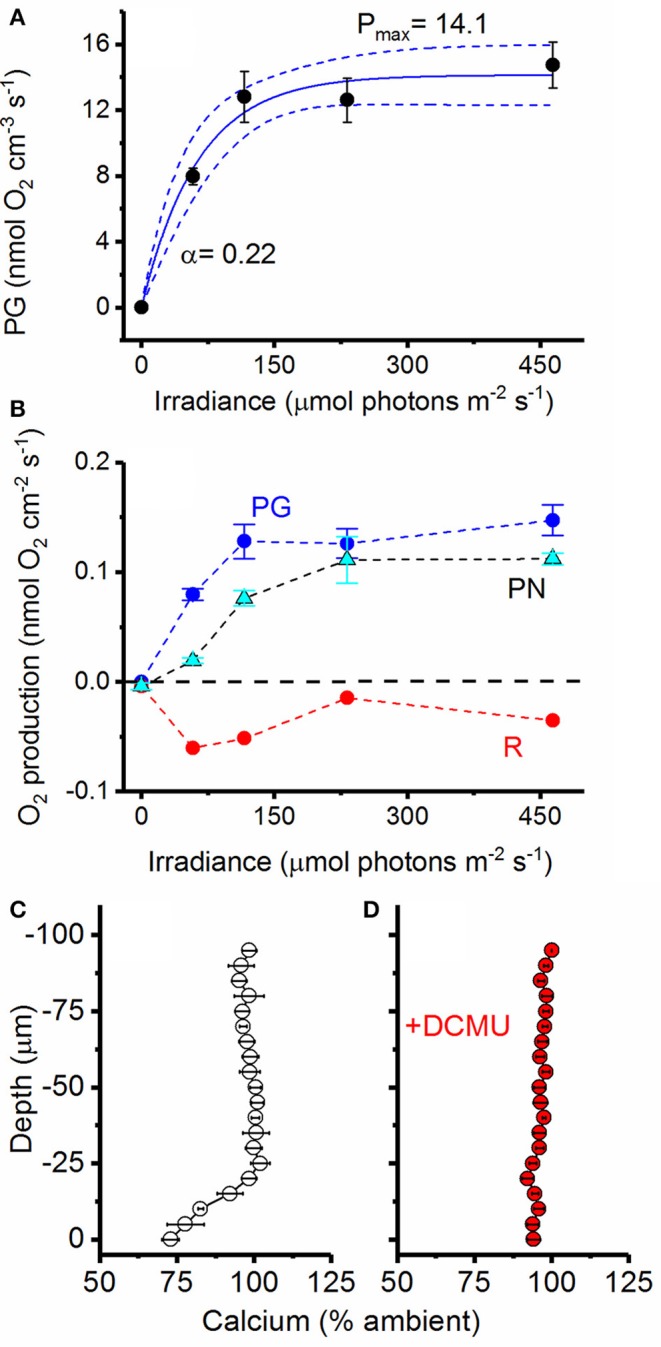
Dinoflagellates in the genus exhibit a variety of life styles, ranging from mutualistic endosymbioses with animal and protist hosts to free-living life styles. In culture, spp. and naturally associated bacteria are known to form calcifying biofilms that produce so-called symbiolites, i.e., aragonitic microbialites that incorporate as endolithic cells. In this study, we investigated (i) how algal growth and the combined physiological activity of these bacterial-algal associations affect the physicochemical macroenvironment in culture and the microenvironment within bacterial-algal biofilms, and (ii) how these interactions induce the formation of symbiolites. In batch culture, calcification typically commenced when spp. growth approached stationary phase and when photosynthetic activity and its influence on pH and the carbonate system of the culture medium had already subsided, indicating that symbiolite formation is not simply a function of photosynthetic activity in the bulk medium. Physical disturbance of bacteria-algal biofilms, via repeated detaching and dispersing of the developing biofilm, generally impeded symbiolite formation, suggesting that the structural integrity of biofilms plays an important role in generating conditions conducive to calcification. Microsensor measurements of pH and O revealed a biofilm microenvironment characterized by high photosynthetic rates and by dynamic changes in photosynthesis and respiration with light intensity and culture age. Ca microsensor measurements confirmed the significance of the biofilm microenvironment in inducing calcification, as photosynthesis within the biofilm induced calcification without the influence of batch culture medium and under environmentally relevant flow conditions. Furthermore, first quantitative data on calcification from 26 calcifying cultures enabled a first broad comparison of -induced bacterial-algal calcification with other calcification processes. Our findings support the idea that symbiolite formation is a typical, photosynthesis-induced, bacterial-algal calcification process that is likely to occur under natural conditions.
属的甲藻表现出多种生活方式,从与动物和原生生物宿主的互利共生内共生到自由生活方式。在培养物中,已知甲藻属物种和天然相关细菌会形成钙化生物膜,产生所谓的共生岩,即包含甲藻作为内石细胞的文石微生物岩。在本研究中,我们调查了:(i)藻类生长以及这些细菌 - 藻类联合体的综合生理活性如何影响培养中的物理化学宏观环境以及细菌 - 藻类生物膜内的微环境;(ii)这些相互作用如何诱导共生岩的形成。在分批培养中,钙化通常在甲藻属物种生长接近稳定期且光合活性及其对培养基pH值和碳酸盐系统的影响已经减弱时开始,这表明共生岩形成不仅仅是大量培养基中光合活性的函数。通过反复分离和分散正在形成的生物膜对细菌 - 藻类生物膜进行物理干扰,通常会阻碍共生岩的形成,这表明生物膜的结构完整性在产生有利于钙化的条件方面起着重要作用。对pH值和氧气的微传感器测量揭示了一个生物膜微环境,其特征是光合速率高,并且光合作用和呼吸作用随光照强度和培养时间而动态变化。钙微传感器测量证实了生物膜微环境在诱导钙化方面的重要性,因为生物膜内的光合作用在没有分批培养基影响的情况下以及在与环境相关的流动条件下诱导了钙化。此外,来自26个钙化培养物的关于钙化的首批定量数据使得能够首次对甲藻诱导的细菌 - 藻类钙化与其他钙化过程进行广泛比较。我们的研究结果支持这样一种观点,即共生岩形成是一种典型的、光合作用诱导的细菌 - 藻类钙化过程,很可能在自然条件下发生。