Laboratory of Immunobiology, Department of Microbiology and Immunology, Rega Institute for Medical Research, University of Leuven, KU Leuven, Leuven, Belgium.
Department of Respiratory Disease, University Hospital of Gasthuisberg, Leuven, Belgium.
Front Immunol. 2018 May 28;9:1154. doi: 10.3389/fimmu.2018.01154. eCollection 2018.
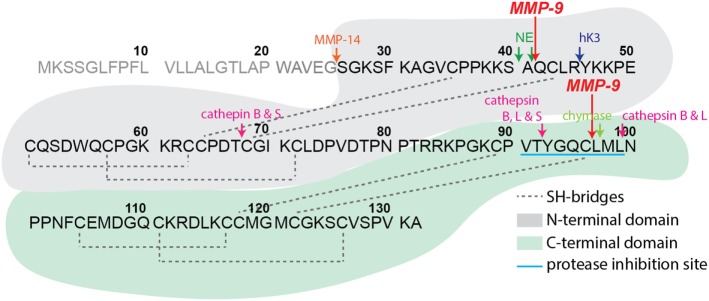
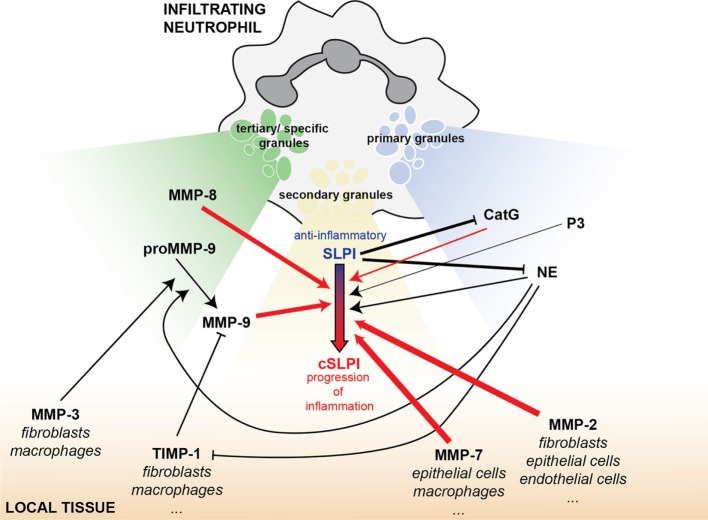
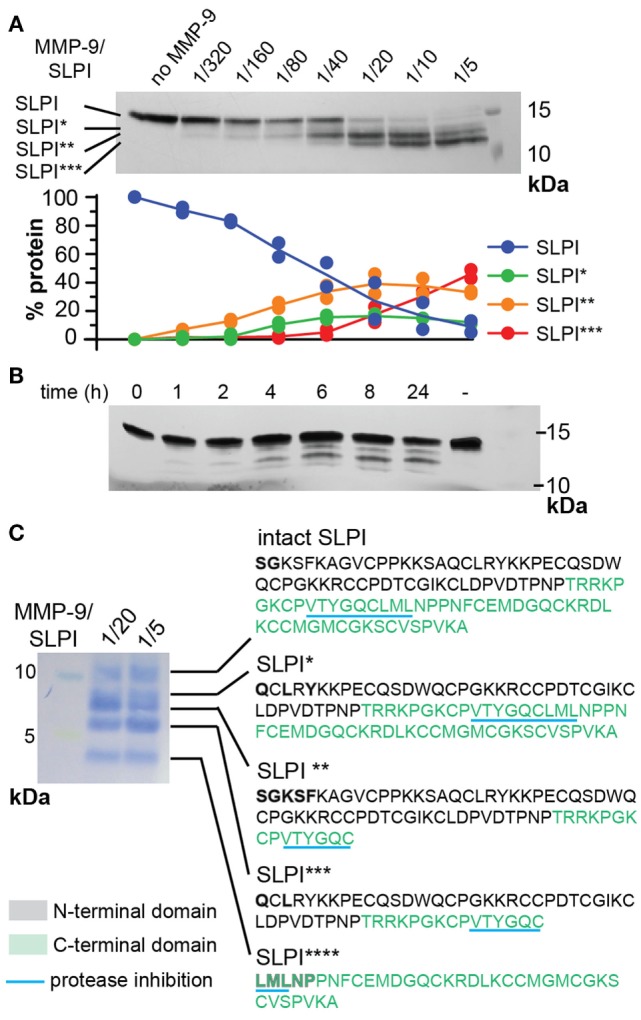
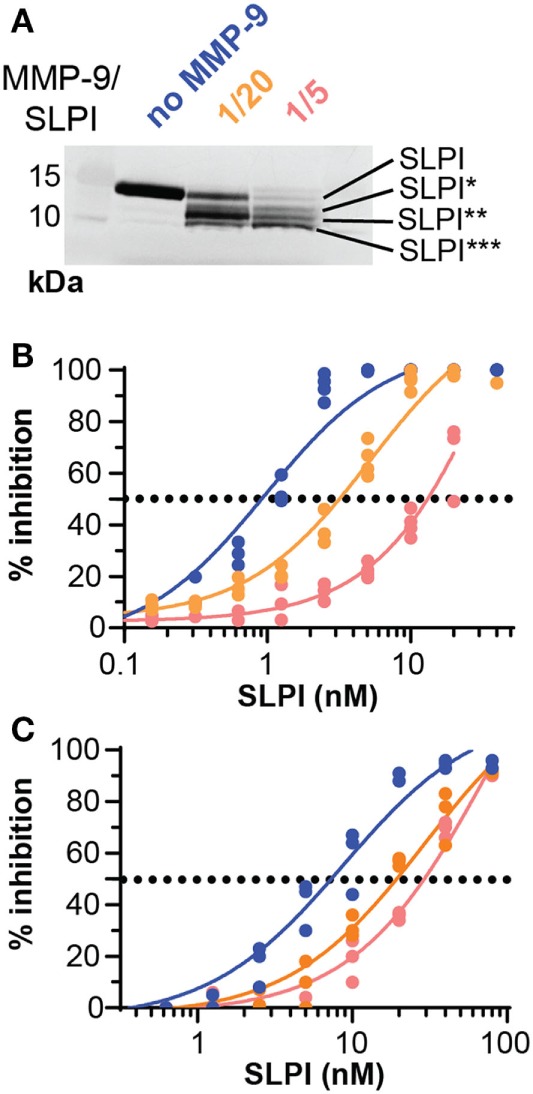
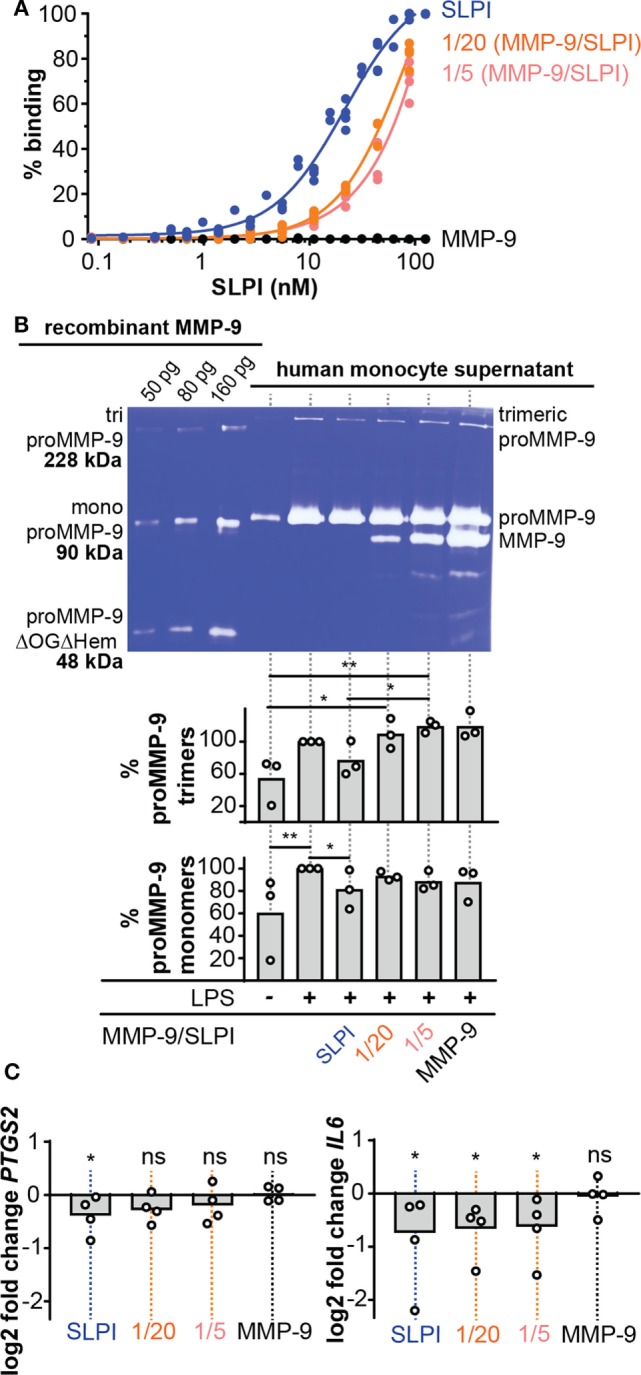
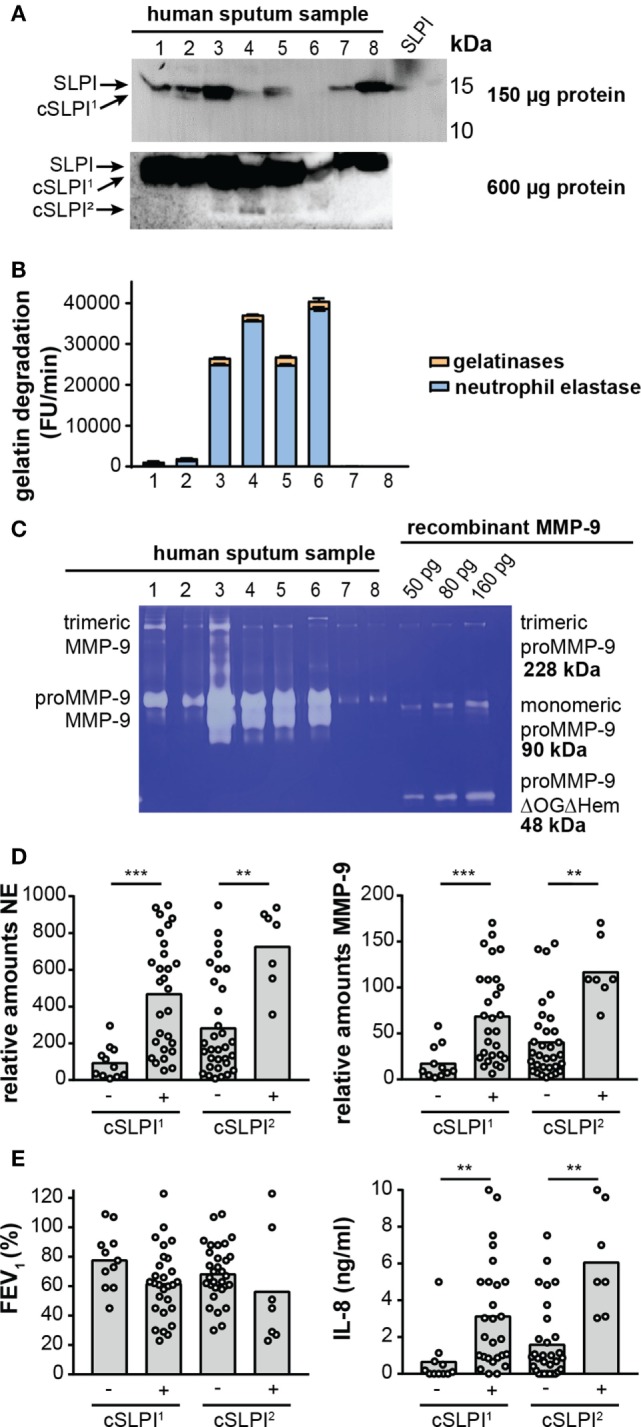
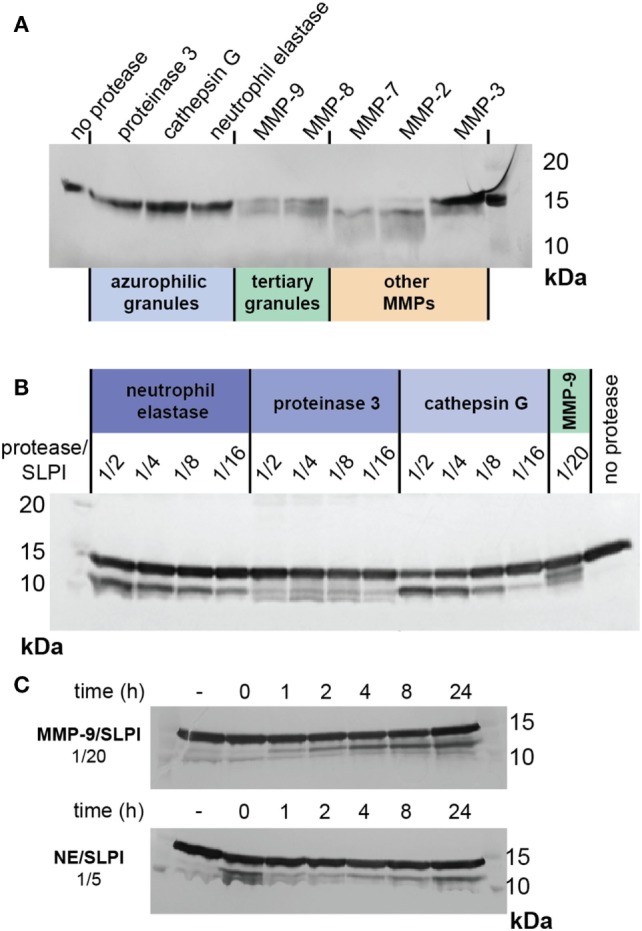
Antileukoproteinase or secretory leukocyte peptidase inhibitor is a small protein which protects the mucosal linings against excessive proteolysis, inflammation, and microbial infection. We discovered that gelatinase B or matrix metalloproteinase (MMP)-9, a secreted zinc-dependent endopeptidase typically found at sites of inflammation, destroys antileukoproteinase by cleavages within both of its two functional domains: the anti-microbial N-terminal and the anti-proteolytic C-terminal domains. Cleaved antileukoproteinase possessed a significantly lower ability to bind lipopolysaccharides (LPS) and a reduced capacity to inhibit neutrophil elastase (NE) activity. Whereas intact antileukoproteinase repressed proinflammatory transcript [prostaglandin-endoperoxide synthase 2 () and ] synthesis and protein secretion [e.g., of MMP-9] in human CD14 blood monocytes stimulated with LPS, this effect was reduced or lost for cleaved antileukoproteinase. We demonstrated the presence of antileukoproteinase cleavage fragments in lower airway secretions of non-cystic fibrosis bronchiectasis patients with considerable levels of neutrophils and, hence, elastase and MMP-9 activity. As a comparison, other MMPs (MMP-2, MMP-7, and MMP-8) and serine proteases (NE, cathepsin G, and proteinase 3) were also able to cleave antileukoproteinase with similar or reduced efficiency. In conclusion, in specific mucosal pathologies, such as bronchiectasis, neutrophils, and macrophage subsets control local immune reactions by proteolytic regulation, here described as the balance between MMPs (in particular MMP-9), serine proteases and local tissue inhibitors.
抗白细胞蛋白酶或分泌白细胞肽酶抑制剂是一种小蛋白,可保护黏膜免受过度蛋白水解、炎症和微生物感染。我们发现明胶酶 B 或基质金属蛋白酶(MMP)-9,一种通常在炎症部位发现的分泌型锌依赖性内肽酶,通过在其两个功能域内的切割来破坏抗白细胞蛋白酶:抗微生物的 N 端和抗蛋白水解的 C 端。裂解的抗白细胞蛋白酶结合脂多糖(LPS)的能力显著降低,抑制中性粒细胞弹性蛋白酶(NE)活性的能力降低。完整的抗白细胞蛋白酶抑制了人类 CD14 血液单核细胞中 LPS 刺激下的促炎转录物[前列腺素-内过氧化物合酶 2()和]的合成和蛋白分泌[例如,MMP-9],但对于裂解的抗白细胞蛋白酶,这种作用降低或丧失。我们证明了在非囊性纤维化支气管扩张症患者的下呼吸道分泌物中存在抗白细胞蛋白酶裂解片段,这些患者有大量的中性粒细胞,因此有弹性蛋白酶和 MMP-9 活性。作为比较,其他 MMP(MMP-2、MMP-7 和 MMP-8)和丝氨酸蛋白酶(NE、组织蛋白酶 G 和蛋白酶 3)也能够以相似或降低的效率裂解抗白细胞蛋白酶。总之,在特定的黏膜病理学中,如支气管扩张症,中性粒细胞和巨噬细胞亚群通过蛋白水解调节控制局部免疫反应,这里描述为 MMP(特别是 MMP-9)、丝氨酸蛋白酶和局部组织抑制剂之间的平衡。