Department of Biological Sciences, Tokyo Metropolitan University, Hachioji, Tokyo, Japan.
Research Center for Genomics and Bioinformatics, Tokyo Metropolitan University, Hachioji, Tokyo, Japan.
Mol Biol Evol. 2018 Jul 1;35(7):1770-1782. doi: 10.1093/molbev/msy044.
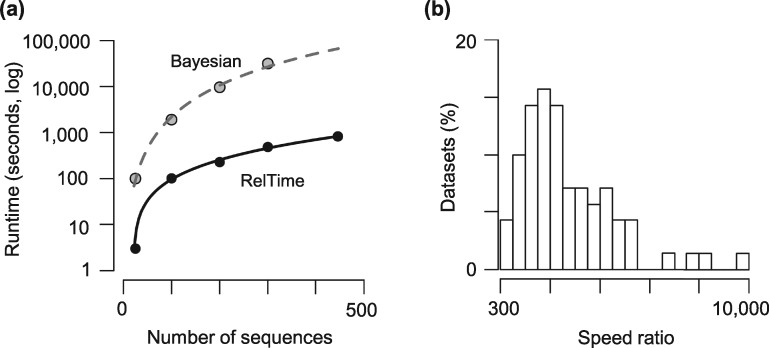
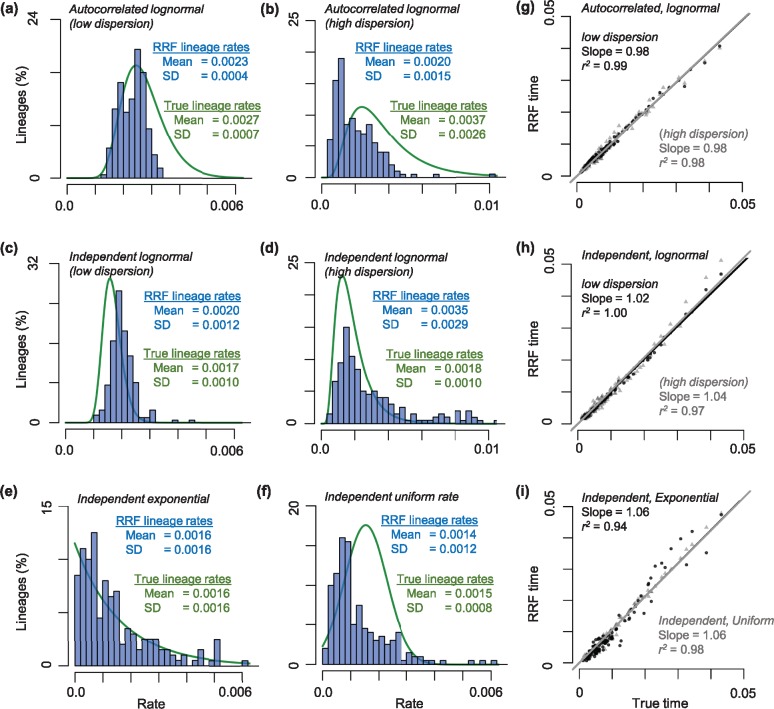
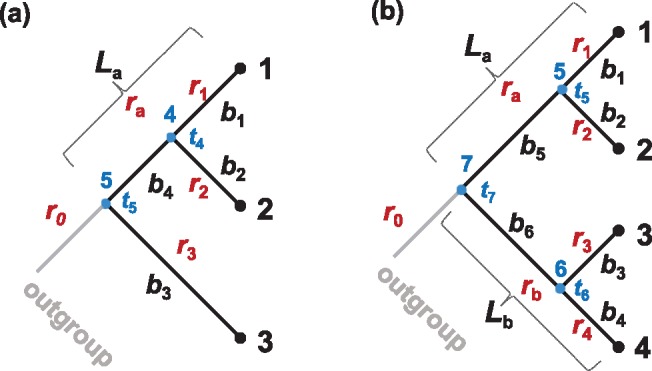
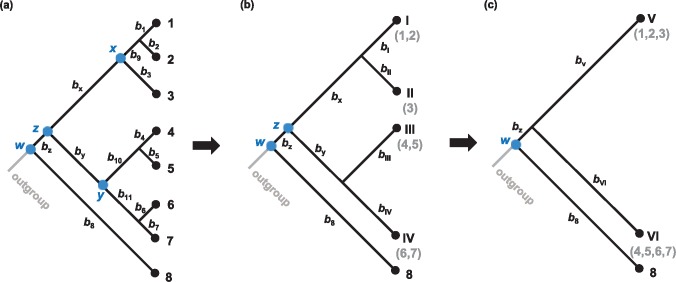
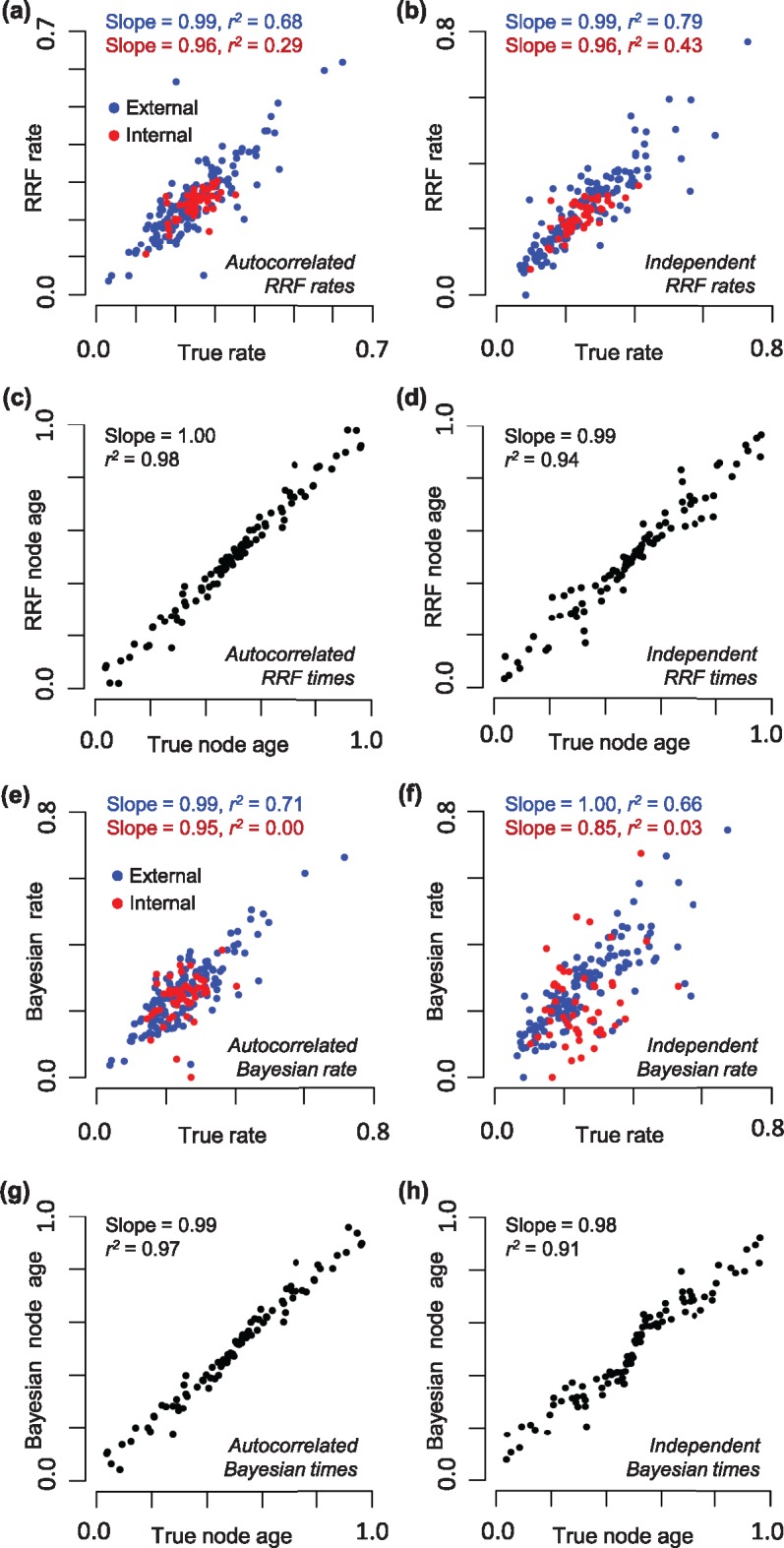
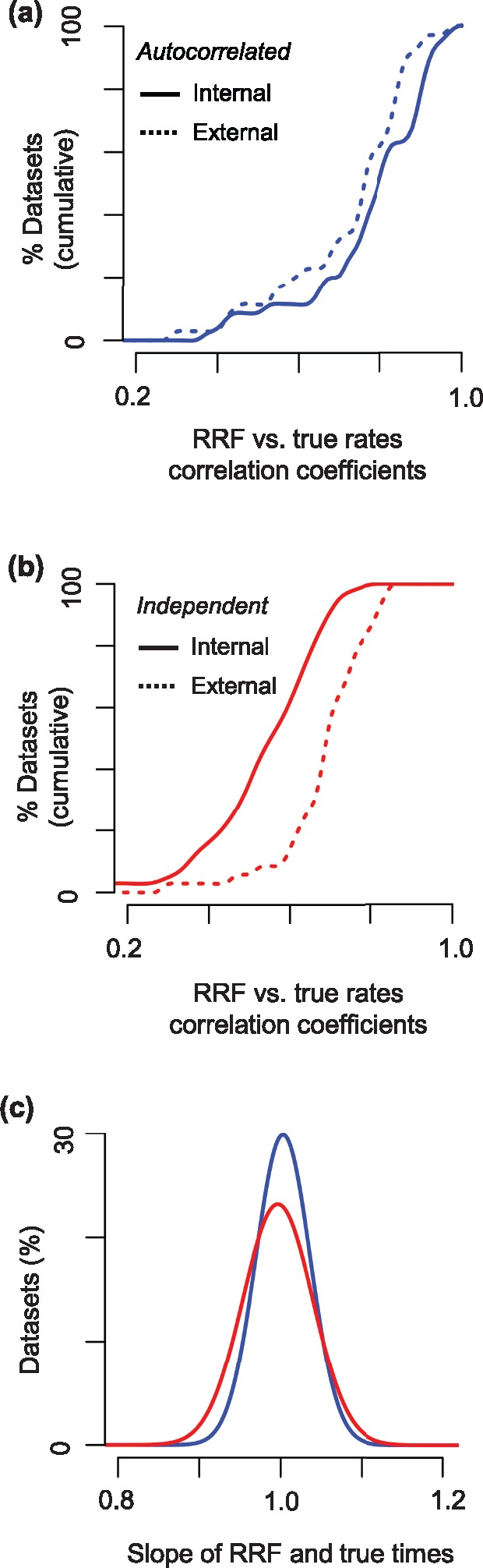
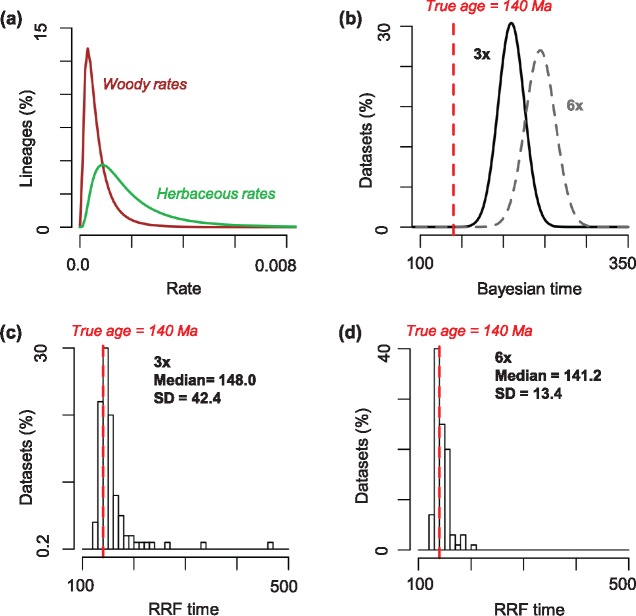
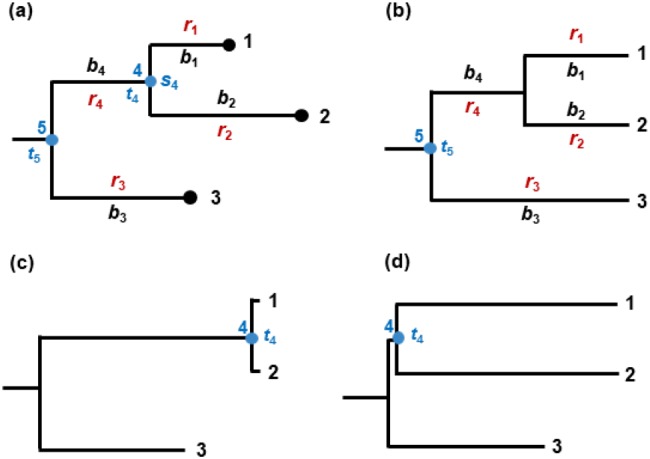
RelTime estimates divergence times by relaxing the assumption of a strict molecular clock in a phylogeny. It shows excellent performance in estimating divergence times for both simulated and empirical molecular sequence data sets in which evolutionary rates varied extensively throughout the tree. RelTime is computationally efficient and scales well with increasing size of data sets. Until now, however, RelTime has not had a formal mathematical foundation. Here, we show that the basis of the RelTime approach is a relative rate framework (RRF) that combines comparisons of evolutionary rates in sister lineages with the principle of minimum rate change between evolutionary lineages and their respective descendants. We present analytical solutions for estimating relative lineage rates and divergence times under RRF. We also discuss the relationship of RRF with other approaches, including the Bayesian framework. We conclude that RelTime will be useful for phylogenies with branch lengths derived not only from molecular data, but also morphological and biochemical traits.
RelTime 通过放宽系统发育中严格分子钟的假设来估计分歧时间。它在估计模拟和经验分子序列数据集的分歧时间方面表现出色,其中进化率在整个树中广泛变化。RelTime 在计算上效率高,并且随着数据集规模的增加而很好地扩展。然而,到目前为止,RelTime 还没有正式的数学基础。在这里,我们表明 RelTime 方法的基础是相对速率框架 (RRF),它将姐妹谱系中的进化率比较与进化谱系与其各自后代之间的最小速率变化原则相结合。我们提出了在 RRF 下估计相对谱系率和分歧时间的解析解。我们还讨论了 RRF 与包括贝叶斯框架在内的其他方法的关系。我们得出的结论是,RelTime 将有助于不仅从分子数据,而且从形态和生化特征得出分支长度的系统发育。