
通过激活 Ly6C 单核细胞增加前列腺素 E2 的产生来负调控阳离子纳米颗粒诱导的炎症毒性。
Negative regulation of cationic nanoparticle-induced inflammatory toxicity through the increased production of prostaglandin E2 via mitochondrial DNA-activated Ly6C monocytes.
机构信息
Lab of Aging Research and Nanotoxicology, State Key Laboratory of Biotherapy, West China Hospital, Sichuan University and Collaborative Innovation Center, No. 17, Block 3, Southern Renmin Road, Chengdu, Sichuan 610041, PR China.
出版信息
Theranostics. 2018 May 6;8(11):3138-3152. doi: 10.7150/thno.21693. eCollection 2018.
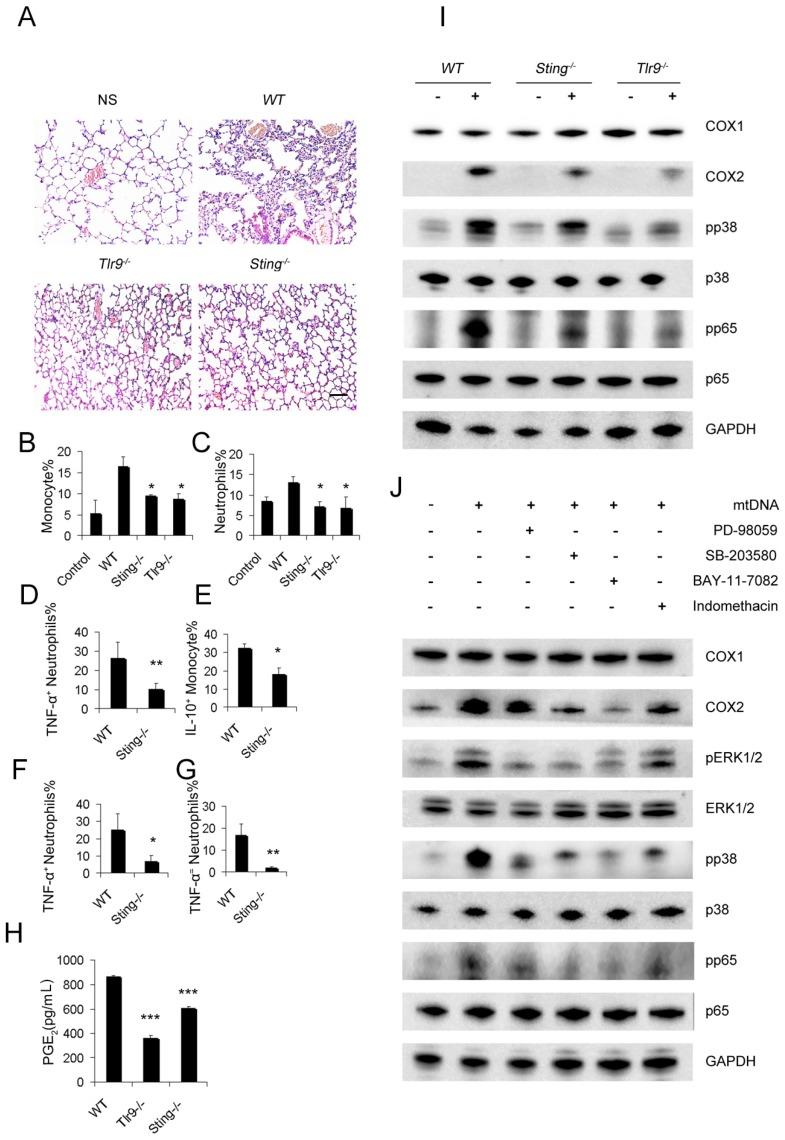
Cationic nanocarriers present with well-known toxicities, including inflammatory toxicity, which limit their clinical application. How the cationic nanocarrier-induced inflammatory response is negatively regulated is unknown. Herein, we found that following a sublethal dose of cationic nanocarriers, the induced inflammatory response is characterized by early neutrophil infiltration and spontaneous resolution within 1 week. C57BL/6 mice were intravenously injected with a dosage of 1-100 mg/kg cationic DOTAP liposomes as well as other cationic materials. Cell necrosis was detected by flow cytometry. Release of mitochondrial DNA was quantified by qPCR via Taqman probes. Signal proteins were detected by Western blotting. PGE production in the supernatant was quantitated using an enzyme immunoassay (EIA). The infiltrated inflammatory cells were observed in mice, mice, mice and mice. The early stage (24-48 h) inflammatory neutrophil infiltration was followed by an increasing percentage of monocytes; and, compared with mice, mice presented with more severe pulmonary inflammation. A previously uncharacterized population of regulatory monocytes expressing both inflammatory and immunosuppressive cytokines was identified in this model. The alteration in monocyte phenotype was directly induced by mtDNA release from cationic nanocarrier-induced necrotic cells via a STING- or TLR9-dependent pathway. Neutrophil activation was specifically inhibited by PGE2 from Ly6C inflammatory monocytes, and intravenous injections of dual-phenotype monocytes beneficially modified the immune response; this inhibitory effect was abolished after treatment with indomethacin. Moreover, we provide clear evidence that mitochondrial DNA activated Ly6C monocytes and increased PGE2 production through TLR9- or STING-mediated MAPK-NF-κB-COX2 pathways. Our findings suggest that Ly6C monocytes and mtDNA-induced Ly6C monocyte PGE2 production may be part of a feedback mechanism that contributes to the resolution of cationic nanocarrier-induced inflammatory toxicity and may have important implications for understanding nanoparticle biocompatibility and designing better, safer drug delivery systems.
阳离子纳米载体具有众所周知的毒性,包括炎症毒性,这限制了它们的临床应用。阳离子纳米载体诱导的炎症反应如何被负调控尚不清楚。在此,我们发现,在亚致死剂量的阳离子纳米载体处理后,诱导的炎症反应的特征是在 1 周内早期中性粒细胞浸润和自发消退。C57BL/6 小鼠静脉注射 1-100mg/kg 的阳离子 DOTAP 脂质体以及其他阳离子材料。通过流式细胞术检测细胞坏死。通过 Taqman 探针的 qPCR 定量测定线粒体 DNA 的释放。通过 Western blot 检测信号蛋白。使用酶免疫测定法(EIA)定量测定上清液中的 PGE 产量。在 、 、 、 小鼠中观察到浸润的炎症细胞。早期(24-48 小时)炎症性中性粒细胞浸润后,单核细胞的比例逐渐增加;与 小鼠相比, 小鼠表现出更严重的肺部炎症。在该模型中鉴定出一种以前未表征的表达炎症和免疫抑制细胞因子的调节性单核细胞群体。这种单核细胞表型的改变是由阳离子纳米载体诱导的坏死细胞中线粒体 DNA 的释放通过 STING 或 TLR9 依赖性途径直接诱导的。PGE2 从 Ly6C 炎症性单核细胞中特异性抑制中性粒细胞的激活,静脉注射双表型单核细胞有益地调节免疫反应;在用吲哚美辛治疗后,这种抑制作用被消除。此外,我们提供了明确的证据表明,线粒体 DNA 通过 TLR9 或 STING 介导的 MAPK-NF-κB-COX2 途径激活 Ly6C 单核细胞并增加 PGE2 的产生。我们的研究结果表明,Ly6C 单核细胞和 mtDNA 诱导的 Ly6C 单核细胞 PGE2 产生可能是参与阳离子纳米载体诱导的炎症毒性消退的反馈机制的一部分,并且可能对理解纳米颗粒的生物相容性和设计更好、更安全的药物递送系统具有重要意义。


 Zotero 插件