Liu Ruxiu, Li Jie, Liu Yu, Peng Jie, Guan Xuanke
Department of Cardiology, Guang'anmen Hospital, China Academy of Chinese Medical Sciences, Beijing, China.
Front Pharmacol. 2018 May 30;9:551. doi: 10.3389/fphar.2018.00551. eCollection 2018.
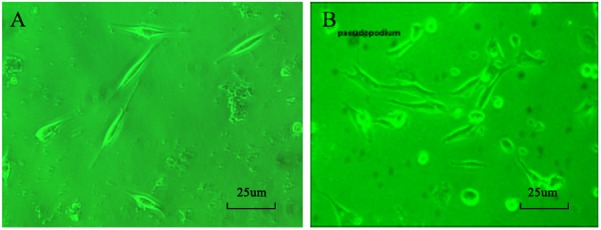
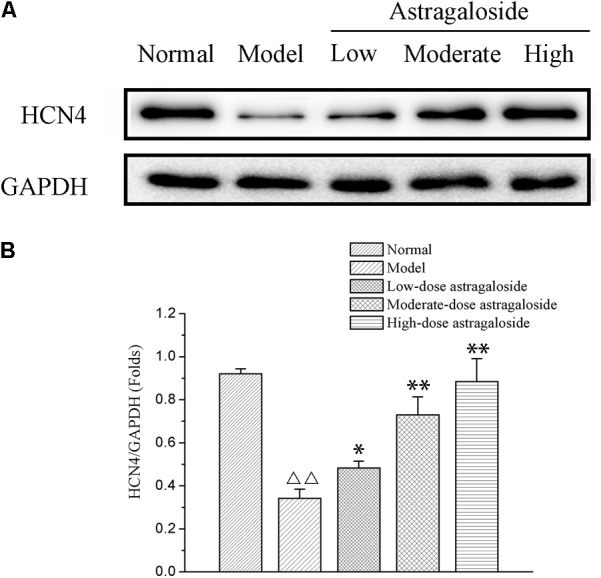
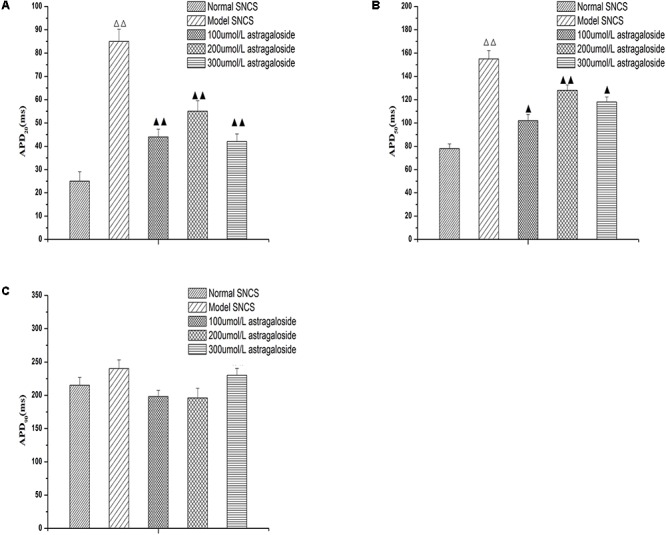
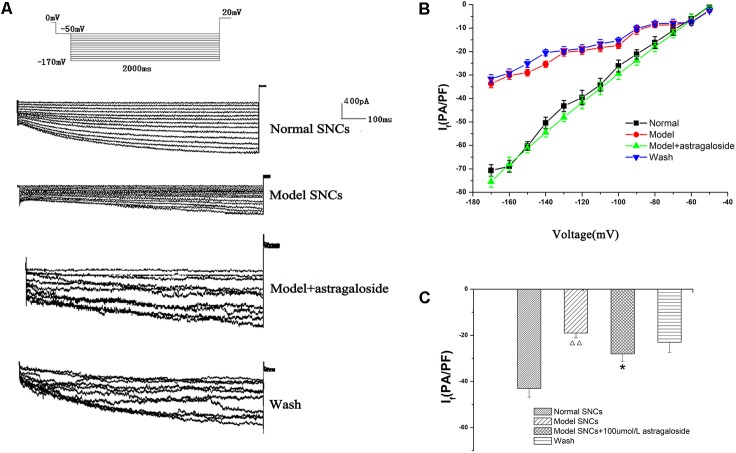
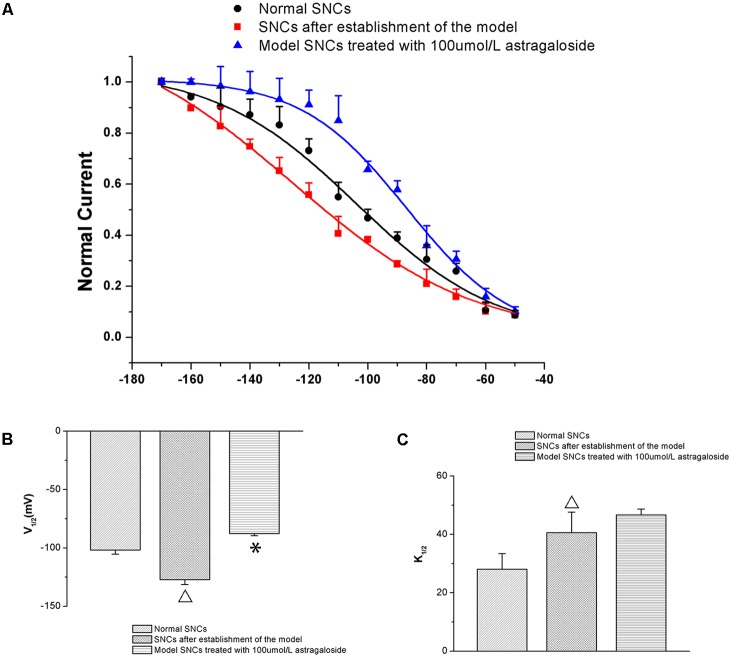
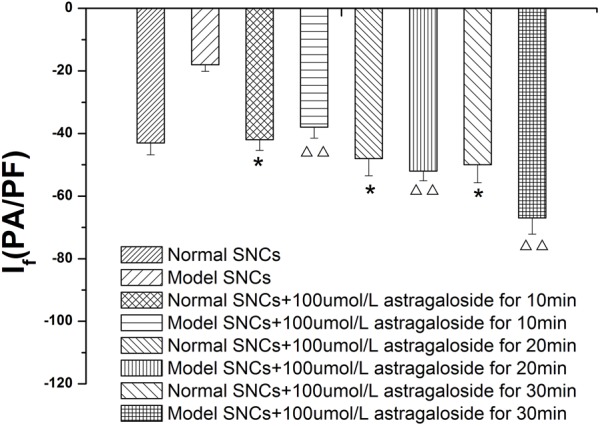
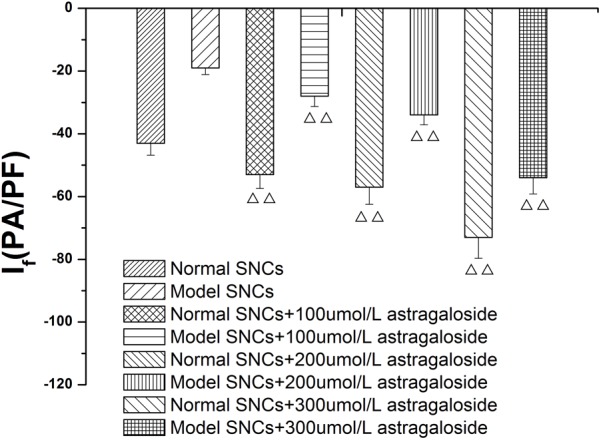
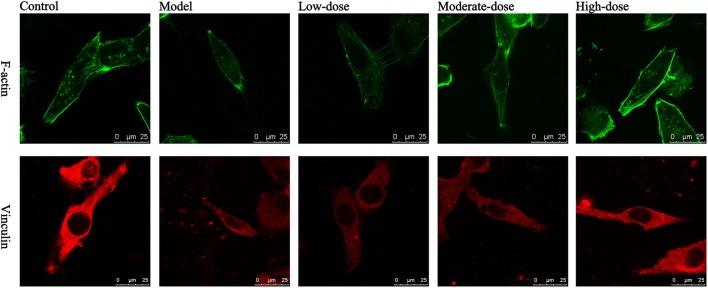
We investigated the role of astragaloside in the treatment of sick sinus syndrome (SSS). Neonatal New Zealand rabbits were selected for the study. Rabbit sinoatrial node (SAN) cells were isolated by the method of dual enzymatic digestion and differential adherence. The injury model was prepared through simulated ischemia and reperfusion (I/R), and changes in the pacemaker current () were recorded using the whole-cell patch-clamp technique. The proteins F-actin and vinculin were examined between various groups of SAN cells using a microplate reader and laser scanning confocal microscopy. The mRNA level and protein expression of hyperpolarization-activated cyclic nucleotide gated potassium channel 4 (HCN4) were assessed by q-PCR and western blot method. The peak current density of was decreased to -19.64 ± 2.14 pA/pF in SAN cells after simulated I/R, and the difference was highly significant ( < 0.01). Following simulated I/R, 100, 200, or 300 μmol L astragaloside was added to the extracellular solution of SAN cells; the peak current density of the increased to -30.43 ± 1.98, -34.83 ± 1.6, and -52.72 ± 1.7 pA/pF, respectively ( < 0.01). Adding 100 μmol L astragaloside to normal SAN cells also led to an enhanced peak current density of the ( < 0.05). In a concentration-dependent manner, especially at 300 μmol/L, astragaloside was capable of increasing the expression of HCN4 and protecting the structural stability of F-actin and vinculin in the damaged SAN cells. We estimated that astragaloside could shorten the action potential duration 20 (APD20) and APD50 in damaged SAN cells of neonatal rabbits, thereby increasing the expression of HCN4 and the current density in damaged SAN cells of neonatal rabbits in a voltage-dependent manner, accelerating the steady-state activation of the channels, and protecting damaged cytoskeleton.
我们研究了黄芪甲苷在治疗病态窦房结综合征(SSS)中的作用。选取新生新西兰兔进行研究。采用双酶消化和差速贴壁法分离兔窦房结(SAN)细胞。通过模拟缺血再灌注(I/R)制备损伤模型,采用全细胞膜片钳技术记录起搏电流()的变化。使用酶标仪和激光扫描共聚焦显微镜检测不同组SAN细胞中F-肌动蛋白和纽蛋白的表达。采用q-PCR和蛋白质印迹法评估超极化激活环核苷酸门控钾通道4(HCN4)的mRNA水平和蛋白表达。模拟I/R后,SAN细胞中 的峰值电流密度降至-19.64±2.14 pA/pF,差异具有高度统计学意义(<0.01)。模拟I/R后,分别向SAN细胞的细胞外溶液中加入100、`200或300 μmol/L黄芪甲苷; 的峰值电流密度分别增加至-30.43±1.98、-34.83±1.6和-52.72±1.7 pA/pF(<0.01)。向正常SAN细胞中加入100 μmol/L黄芪甲苷也导致 的峰值电流密度增加(<0.05)。黄芪甲苷能够以浓度依赖的方式,尤其是在300 μmol/L时,增加受损SAN细胞中HCN4的表达,并保护F-肌动蛋白和纽蛋白的结构稳定性。我们估计黄芪甲苷可以缩短新生兔受损SAN细胞的动作电位时程20(APD20)和APD50,从而以电压依赖的方式增加新生兔受损SAN细胞中HCN4的表达和 电流密度,加速 通道的稳态激活,并保护受损的细胞骨架。