Section of Preventive Medicine and Epidemiology, Department of Medicine, Boston University School of Medicine, Boston, MA 02118, USA.
Nutrients. 2018 Jun 14;10(6):770. doi: 10.3390/nu10060770.
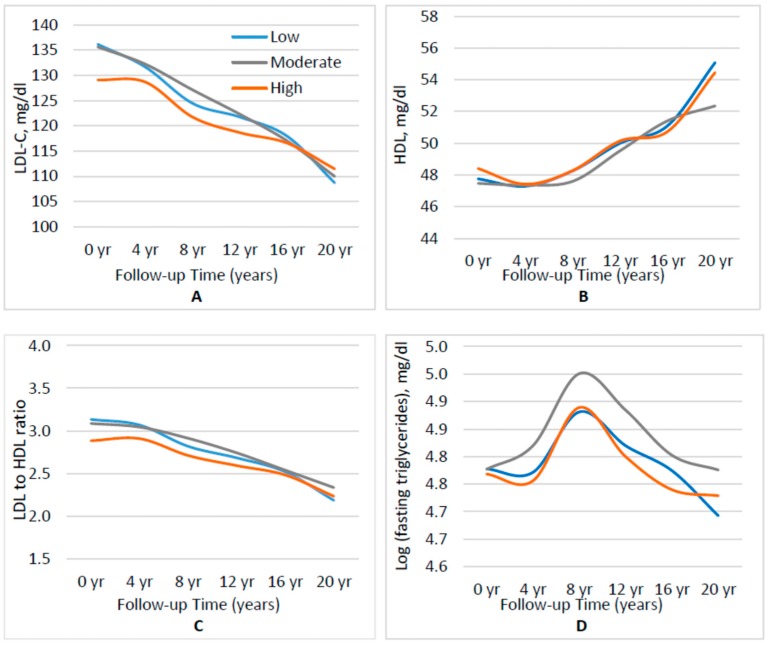
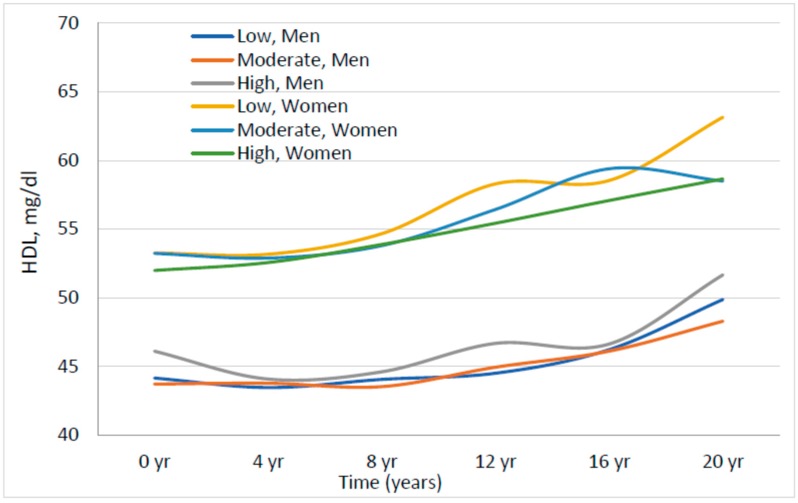
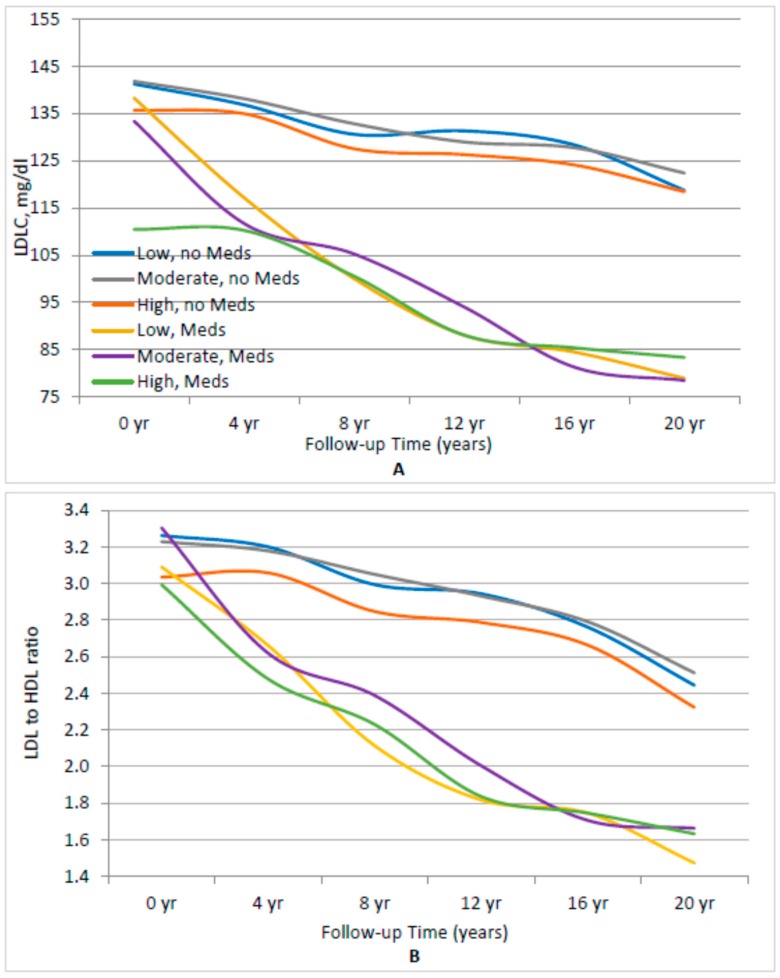
Previous recommendations to limit dietary cholesterol intake have been eliminated for most adults. Questions remain about whether dietary cholesterol has adverse cardiovascular effects among individuals with impaired fasting glucose or diabetes (IFG/T2DM). We used data for 993 adults (40.9% female), ages 35⁻<65 years, with prevalent IFG/T2DM in the prospective Framingham Offspring Study to address this question. Dietary cholesterol was assessed using 3-day diet records at exams 3 and 5 and used to classify subjects into sex-specific tertiles of mean cholesterol intake. Outcomes included fasting lipid levels over 20 years and incident cardiovascular disease (CVD). Statistical analyses included repeated measures mixed regression models and Cox proportional hazards models to adjust for confounding. Among adults with T2DM/IFG, there was no consistent association between dietary cholesterol intake and fasting low-density lipoprotein (LDL), high-density lipoprotein (HDL), LDL/HDL ratio, or triglycerides over 20 years of follow-up. In longitudinal analyses, the adjusted hazard ratio for CVD in the highest (vs. lowest) sex-specific tertile of cholesterol intake was 0.61 (95% CI: 0.41, 0.90). These analyses provide no evidence of an adverse association between dietary cholesterol and serum lipid levels or atherosclerotic CVD risk among adults with prevalent IFG/T2DM.
先前关于限制膳食胆固醇摄入量的建议已被大多数成年人所摒弃。目前仍存在疑问,即对于空腹血糖受损或糖尿病(IFG/T2DM)患者而言,膳食胆固醇是否会对心血管系统产生不良影响。我们利用前瞻性弗雷明汉后代研究中 993 名年龄在 35-<65 岁、存在显性 IFG/T2DM 的成年人的数据来解决这一问题。在第 3 次和第 5 次检查中使用 3 天饮食记录来评估膳食胆固醇,并用其将受试者按胆固醇摄入均值的性别特异性三分位数进行分类。研究结局包括 20 年的空腹血脂水平和心血管疾病(CVD)的发生情况。统计学分析包括重复测量混合回归模型和 Cox 比例风险模型来调整混杂因素。在 T2DM/IFG 成人中,膳食胆固醇摄入量与空腹低密度脂蛋白(LDL)、高密度脂蛋白(HDL)、LDL/HDL 比值或 20 年随访期间的甘油三酯之间不存在一致的关联。在纵向分析中,胆固醇摄入量最高(与最低)性别特异性三分位组的 CVD 校正风险比为 0.61(95%CI:0.41,0.90)。这些分析并未提供证据表明膳食胆固醇与血清脂质水平或存在显性 IFG/T2DM 的成年人的动脉粥样硬化性 CVD 风险之间存在不良关联。