UCL School of Pharmacy, University College London, London, WC1N 1AX, UK.
Neuroscience, Physiology and Pharmacology, University College London, WC1E 6BT, London, UK.
Mol Psychiatry. 2018 Sep;23(9):1851-1867. doi: 10.1038/s41380-018-0100-y. Epub 2018 Jun 14.
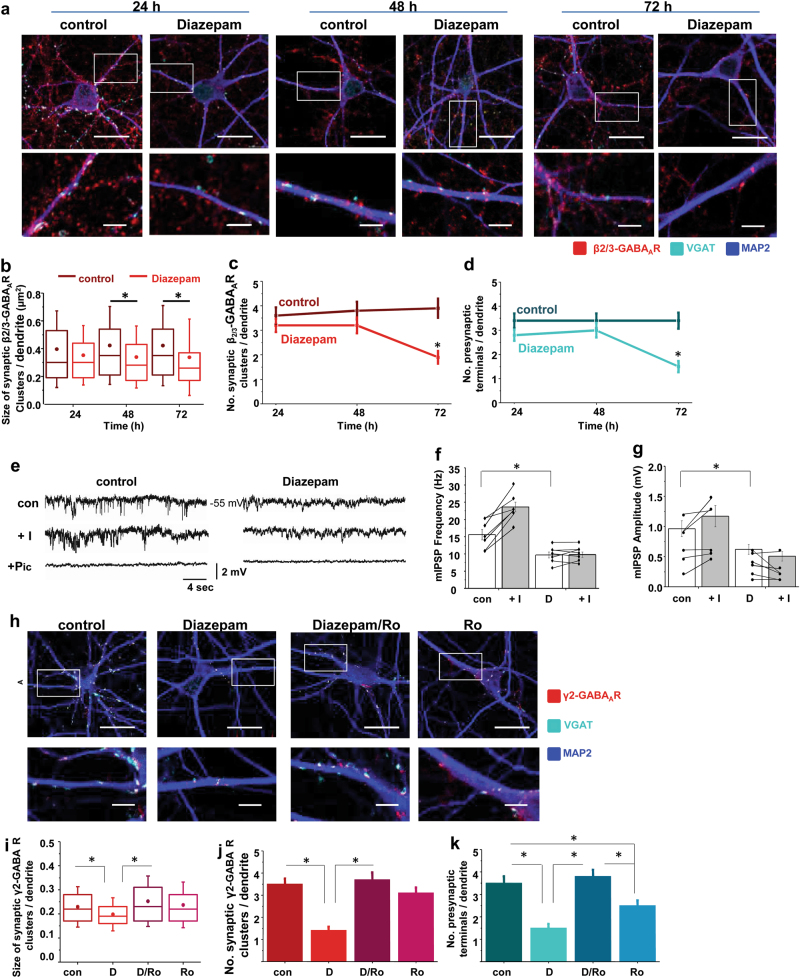
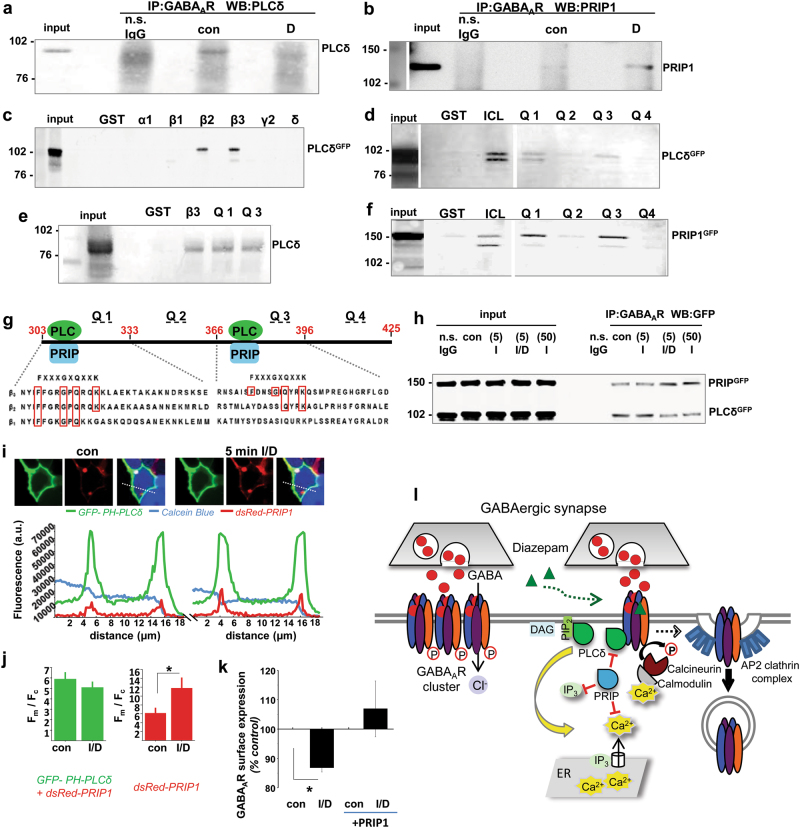
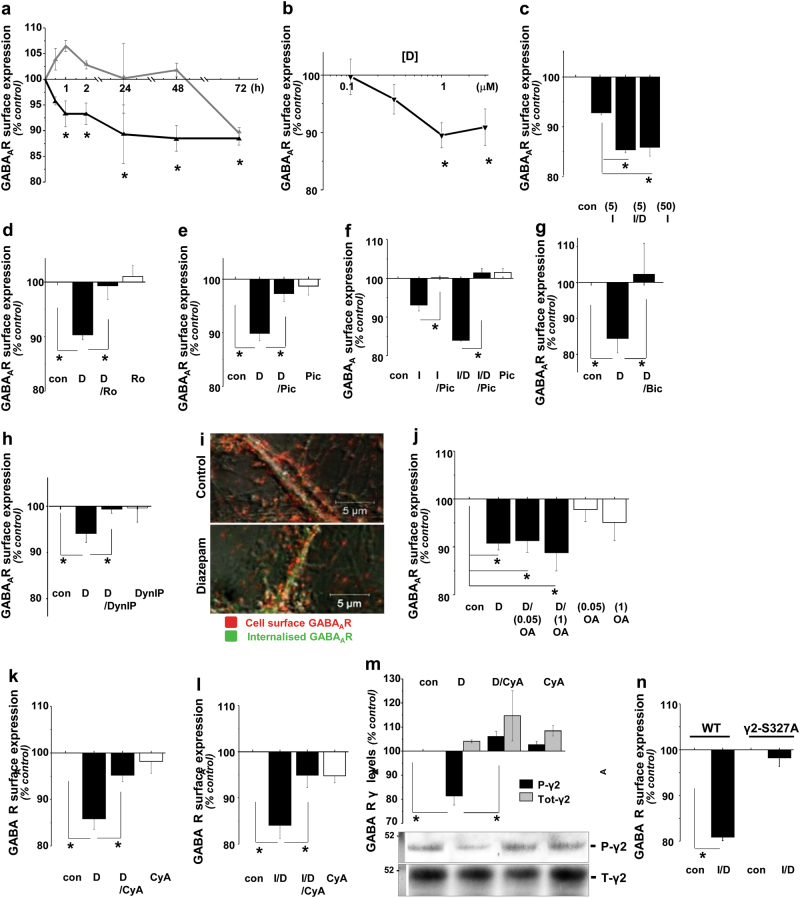
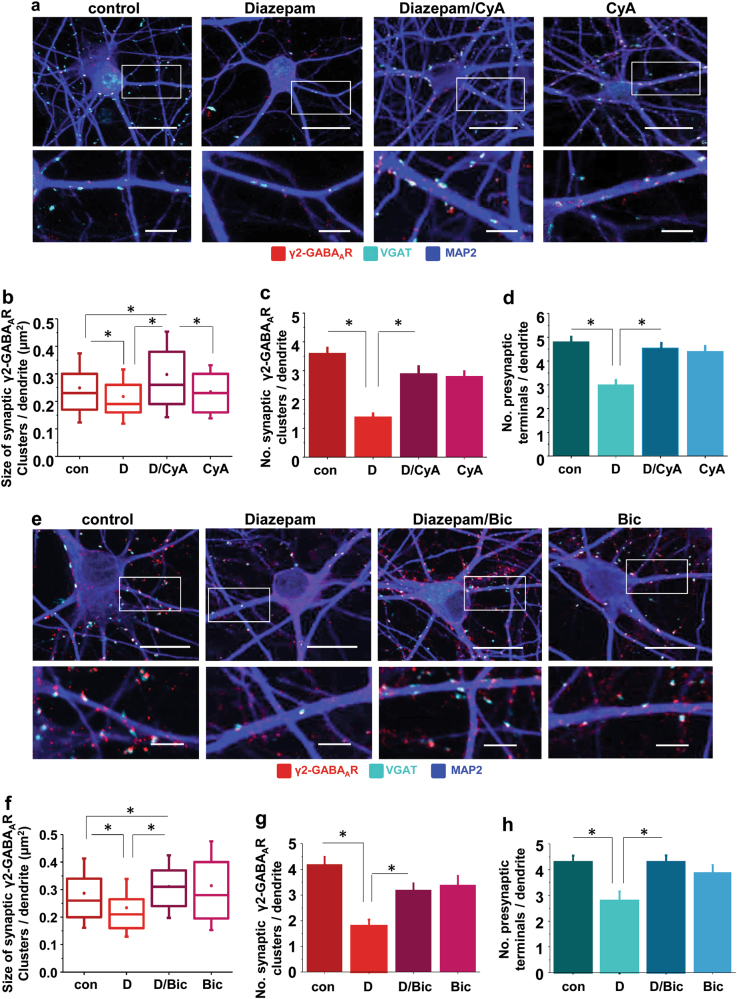
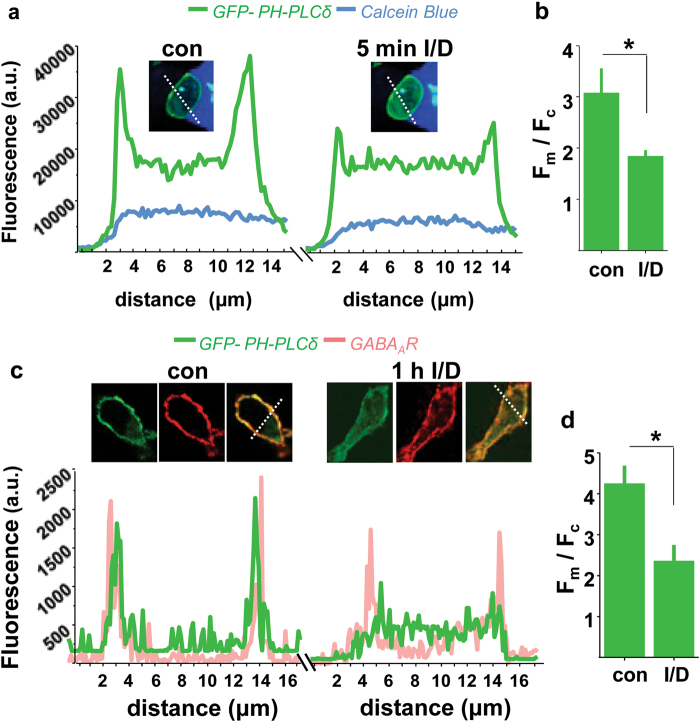
Benzodiazepines facilitate the inhibitory actions of GABA by binding to γ-aminobutyric acid type A receptors (GABARs), GABA-gated chloride/bicarbonate channels, which are the key mediators of transmission at inhibitory synapses in the brain. This activity underpins potent anxiolytic, anticonvulsant and hypnotic effects of benzodiazepines in patients. However, extended benzodiazepine treatments lead to development of tolerance, a process which, despite its important therapeutic implications, remains poorly characterised. Here we report that prolonged exposure to diazepam, the most widely used benzodiazepine in clinic, leads to a gradual disruption of neuronal inhibitory GABAergic synapses. The loss of synapses and the preceding, time- and dose-dependent decrease in surface levels of GABARs, mediated by dynamin-dependent internalisation, were blocked by Ro 15-1788, a competitive benzodiazepine antagonist, and bicuculline, a competitive GABA antagonist, indicating that prolonged enhancement of GABAR activity by diazepam is integral to the underlying molecular mechanism. Characterisation of this mechanism has revealed a metabotropic-type signalling downstream of GABARs, involving mobilisation of Ca from the intracellular stores and activation of the Ca/calmodulin-dependent phosphatase calcineurin, which, in turn, dephosphorylates GABARs and promotes their endocytosis, leading to disassembly of inhibitory synapses. Furthermore, functional coupling between GABARs and Ca stores was sensitive to phospholipase C (PLC) inhibition by U73122, and regulated by PLCδ, a PLC isoform found in direct association with GABARs. Thus, a PLCδ/Ca/calcineurin signalling cascade converts the initial enhancement of GABARs by benzodiazepines to a long-term downregulation of GABAergic synapses, this potentially underpinning the development of pharmacological and behavioural tolerance to these widely prescribed drugs.
苯二氮䓬类药物通过与 γ-氨基丁酸 A 型受体 (GABARs) 结合,促进 GABA 的抑制作用,GABARs 是大脑抑制性突触传递的关键介质。这种活性为苯二氮䓬类药物在患者中的抗焦虑、抗惊厥和催眠作用提供了基础。然而,长期使用苯二氮䓬类药物会导致耐受性的产生,尽管其具有重要的治疗意义,但这一过程仍未得到充分描述。在这里,我们报告说,长时间暴露于地西泮(临床上使用最广泛的苯二氮䓬类药物)会导致神经元抑制性 GABA 能突触逐渐中断。这种突触丢失以及之前的、时间和剂量依赖性的 GABARs 表面水平降低,是由动力蛋白依赖性内化介导的,这一过程被 Ro 15-1788(一种竞争性苯二氮䓬拮抗剂)和 Bicuculline(一种竞争性 GABA 拮抗剂)阻断,表明地西泮对 GABAR 活性的长期增强是潜在分子机制的一部分。对这种机制的特征描述表明,GABAR 下游存在一种代谢型信号转导,涉及细胞内储存的 Ca 动员和钙/钙调蛋白依赖性磷酸酶钙调神经磷酸酶的激活,钙调神经磷酸酶反过来使 GABARs 去磷酸化并促进其内化,导致抑制性突触解体。此外,GABARs 和 Ca 储存之间的功能偶联对 U73122 抑制 PLC(PLC)敏感,并且受 PLCδ 调节,PLCδ 是一种与 GABARs 直接相关的 PLC 同工型。因此,PLCδ/Ca/钙调神经磷酸酶信号级联将苯二氮䓬类药物对 GABARs 的最初增强转化为 GABA 能突触的长期下调,这可能为这些广泛应用的药物的药理学和行为学耐受性的发展提供了基础。