Gao Jianlian, Wu Nan, Liu Xiaohong, Xia Yuechong, Chen Ying, Li Shaoru, Deng Zhijian
Department of Pharmaceutics, The First Affiliated Hospital of Xinxiang Medical University, Weihui, Henan 453100, P.R. China.
Intensive Care Unit, The First Affiliated Hospital of Xinxiang Medical University, Weihui, Henan 453100, P.R. China.
Exp Ther Med. 2018 Jun;15(6):5205-5214. doi: 10.3892/etm.2018.6107. Epub 2018 Apr 27.
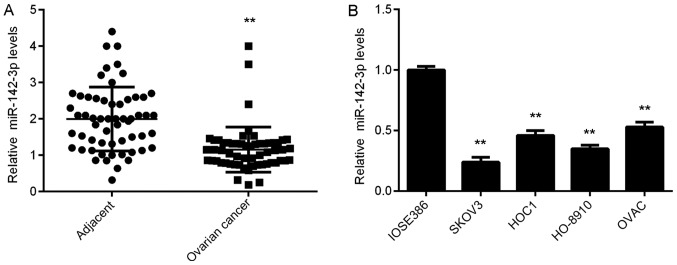
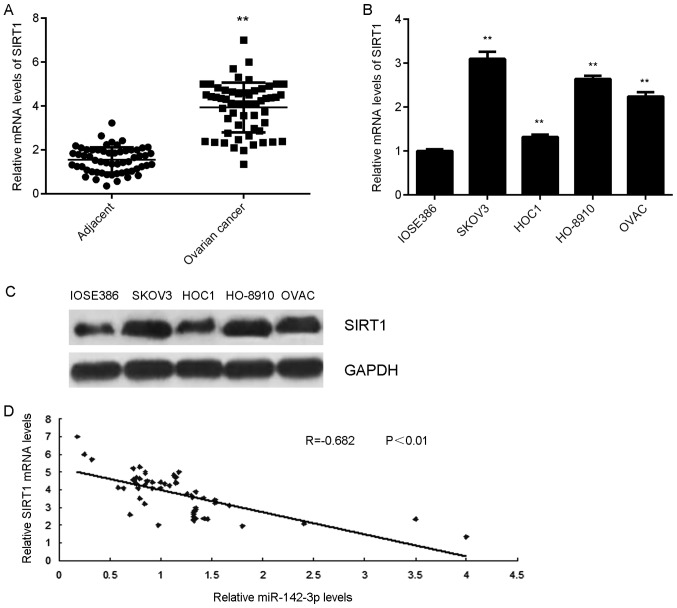
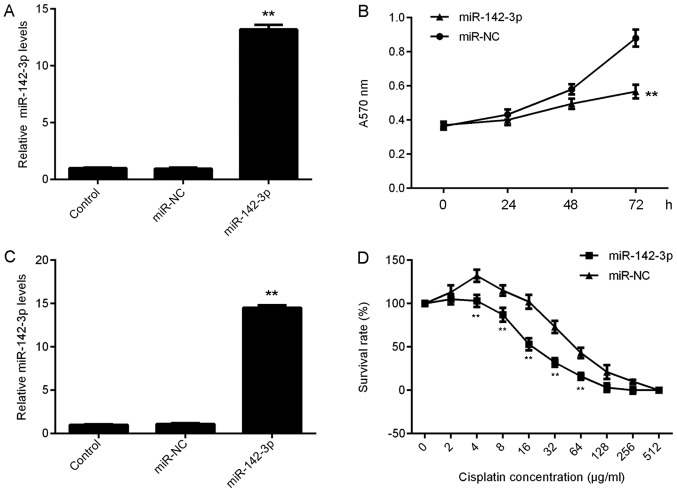
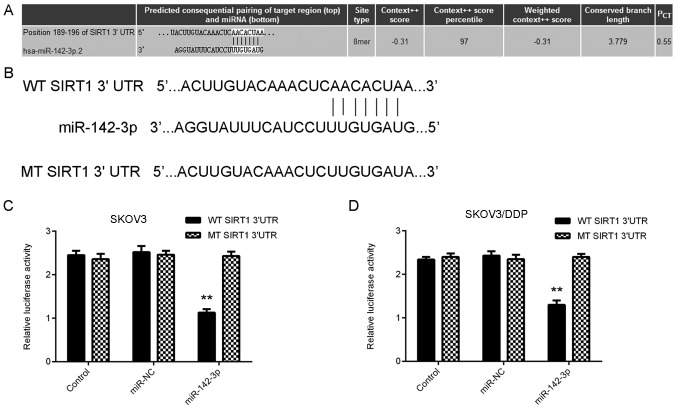
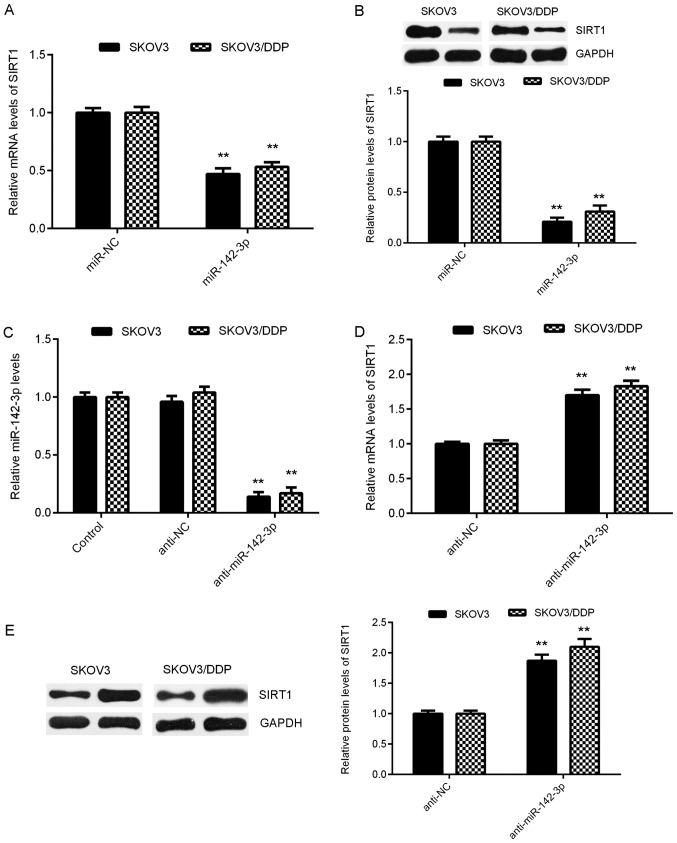
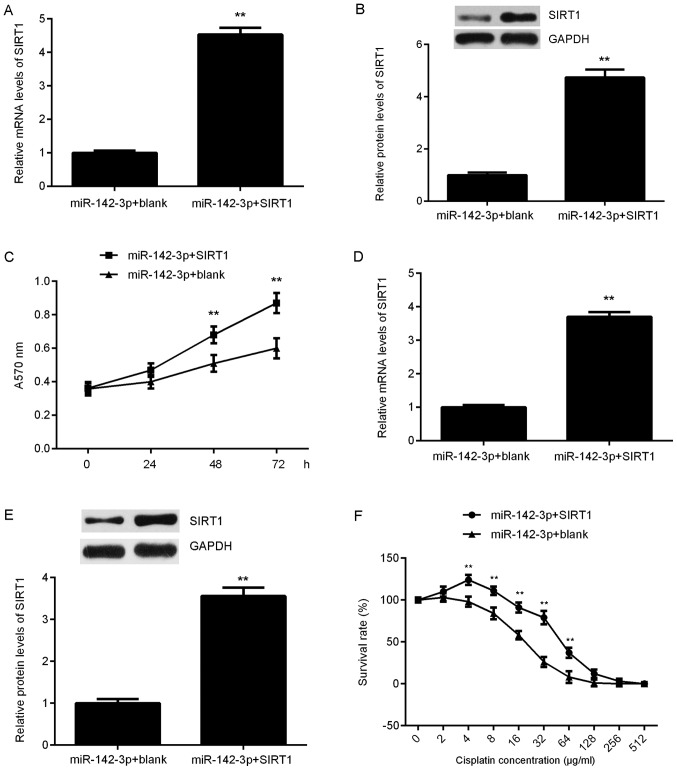
MicroRNAs (miRs) serve promoting or suppressive roles in various human cancer types, including ovarian cancer; however, the role of miR-142-3p in ovarian cancer growth and chemoresistance has not previously been studied. In the present study, reverse transcription-quantitative polymerase chain reaction and western blotting were used to examine miR and protein expression levels. An MTT assay was used to examine cell proliferation. A luciferase reporter gene assay was used to clarify the target gene of miR-142-3p. The present study reported that miR-142-3p expression levels were significantly lower in ovarian cancer tissues and cell lines, when compared with those in adjacent tissues and the normal human ovarian epithelial cell line IOSE386, respectively. The reduced expression of miR-142-3p was significantly associated with poor cell differentiation. Ectopic expression of miR-142-3p significantly inhibited the proliferation of ovarian cancer cells and increased the sensitivity of SKOV3/DDP cells to cisplatin. Sirtuin 1 (SIRT1) was identified as a target gene of miR-142-3p; SIRT1 expression was negatively regulated by miR-142-3p in ovarian cancer cells. Further investigation demonstrated that SIRT1 reversed the suppressive effects of miR-142-3p on the proliferation and chemoresistance of ovarian cancer cells. In addition, SIRT1 was significantly upregulated in ovarian cancer. A negative correlation between the expression of SIRT1 and miR-142-3p in ovarian cancer tissues was also observed. In summary, the present study indicated that miR-142-3p inhibits the proliferation and chemoresistance of ovarian cancer cells by targeting SIRT1. This suggests that miR-142-3p may be a promising therapeutic candidate for the treatment of ovarian cancer.
微小RNA(miR)在包括卵巢癌在内的多种人类癌症类型中发挥促进或抑制作用;然而,miR-142-3p在卵巢癌生长和化疗耐药性中的作用此前尚未得到研究。在本研究中,采用逆转录定量聚合酶链反应和蛋白质印迹法检测miR和蛋白质表达水平。采用MTT法检测细胞增殖。采用荧光素酶报告基因检测法明确miR-142-3p的靶基因。本研究报告称,与相邻组织和正常人卵巢上皮细胞系IOSE386相比,卵巢癌组织和细胞系中miR-142-3p的表达水平分别显著降低。miR-142-3p表达降低与细胞分化差显著相关。miR-142-3p的异位表达显著抑制卵巢癌细胞的增殖,并增加SKOV3/DDP细胞对顺铂的敏感性。沉默调节蛋白1(SIRT1)被确定为miR-1-42-3p的靶基因;在卵巢癌细胞中,SIRT1表达受miR-142-3p负调控。进一步研究表明,SIRT1可逆转miR-142-3p对卵巢癌细胞增殖和化疗耐药性的抑制作用。此外,SIRT1在卵巢癌中显著上调。在卵巢癌组织中也观察到SIRT1与miR-142-3p表达呈负相关。总之,本研究表明miR-142-3p通过靶向SIRT1抑制卵巢癌细胞的增殖和化疗耐药性。这表明miR-142-3p可能是治疗卵巢癌的一个有前景的治疗候选物。