School of Life Sciences, Keele University, Staffordshire, United Kingdom.
University of Southampton, Department of Child Health, Division of Clinical and Experimental Sciences, Sir Henry Wellcome Laboratories, Southampton General Hospital, Southampton, United Kingdom.
PLoS One. 2018 Jun 18;13(6):e0199175. doi: 10.1371/journal.pone.0199175. eCollection 2018.
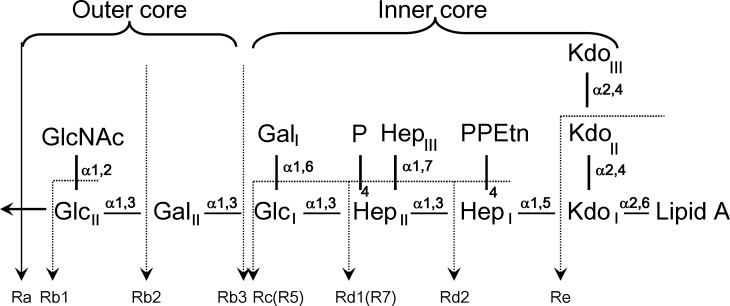
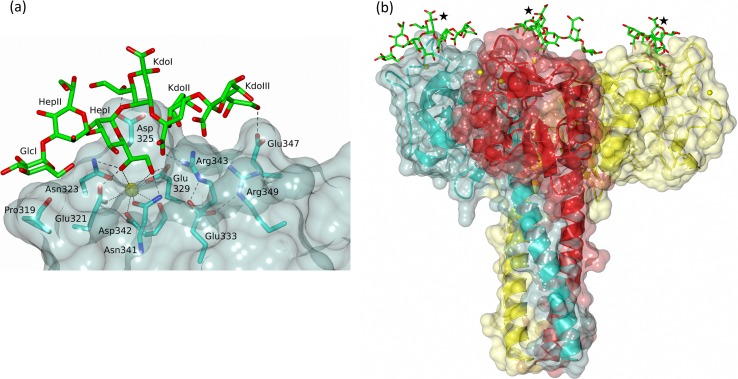
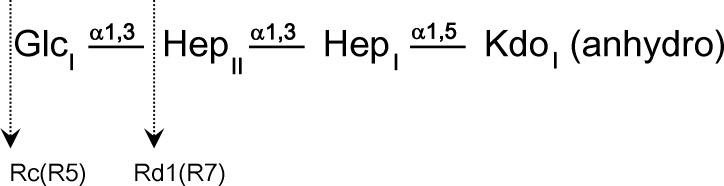
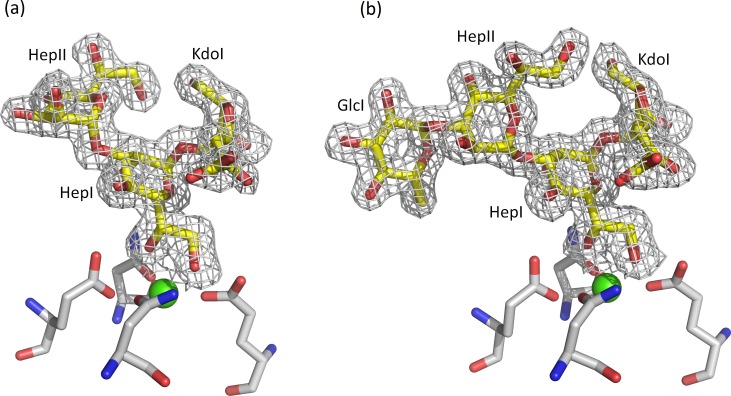
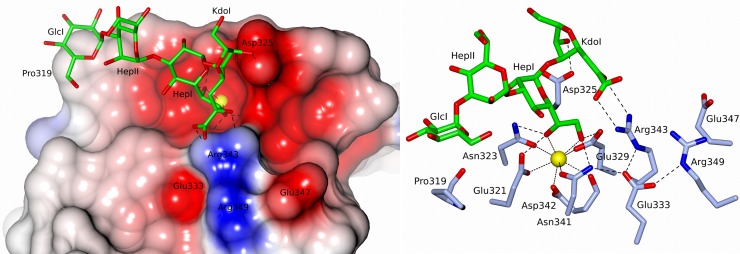
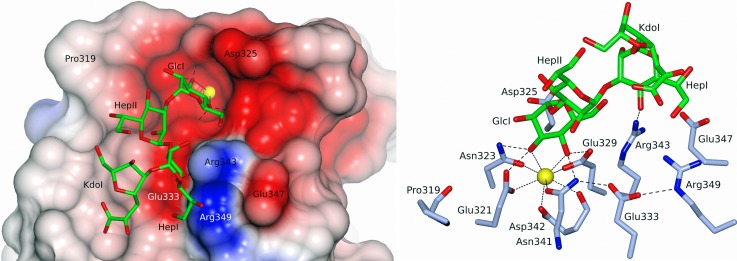
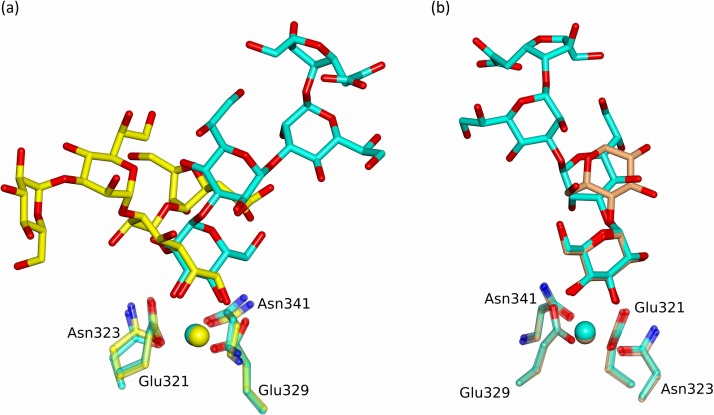
The crystal structures of a biologically and therapeutically active recombinant homotrimeric fragment of native human SP-D (hSP-D) complexed with the inner core oligosaccharide of the Salmonella enterica sv Minnesota rough strains R5 and R7 (rough mutant chemotypes Rc and Rd1) have been determined. The structures reveal that hSP-D specifically and preferentially targets the LPS inner core via the innermost conserved Hep-Kdo pair with the flexibility for alternative recognition when this preferred epitope is not available for binding. Hep-Kdo binding is achieved through calcium dependent recognition of the heptose dihydroxyethyl side chain coupled with specific interactions between the Kdo and the binding site flanking residues Arg343 and Asp325 with evidence for an extended binding site for LPS inner cores containing multiple Kdo residues. In one subunit of the R5-bound structure this preferred mode of binding is precluded by the crystal lattice and oligosaccharide is bound through the terminal inner core glucose. The structures presented here thus provide unique multiple insights into the recognition and binding of bacterial LPS by hSP-D. Not only is it demonstrated that hSP-D targets the highly conserved LPS proximal inner core Hep-Kdo motif, but also that hSP-D can recognise either terminal or non-terminal sugars and has the flexibility and versatility to adopt alternative strategies for bacterial recognition, utilising alternative LPS epitopes when the preferred inner core Hep-Kdo disaccharide is not available for binding.
天然人源 SP-D 重组同源三聚体片段与沙门氏菌 enterica sv Minnesota rough 菌株 R5 和 R7(粗糙突变型化学型 Rc 和 Rd1)的内核心寡糖复合物的生物和治疗活性的晶体结构已经确定。这些结构表明,hSP-D 特异性且优先通过最内层保守的 Hep-Kdo 对 LPS 内核心进行靶向,当不存在这种首选表位用于结合时,具有替代识别的灵活性。Hep-Kdo 结合是通过钙依赖性识别七糖二羟乙基侧链与 Kdo 之间的特异性相互作用以及与结合位点侧翼残基 Arg343 和 Asp325 实现的,证据表明 LPS 内核心含有多个 Kdo 残基的扩展结合位点。在结合 R5 的结构的一个亚基中,这种首选结合模式被晶格所排除,寡糖通过末端内核心葡萄糖结合。因此,这里呈现的结构提供了对 hSP-D 识别和结合细菌 LPS 的独特的多重视角。不仅证明 hSP-D 靶向高度保守的 LPS 近端内核心 Hep-Kdo 基序,而且 hSP-D 还可以识别末端或非末端糖,并且具有灵活性和多功能性,能够采用替代的细菌识别策略,当首选的内核心 Hep-Kdo 二糖不可用于结合时利用替代的 LPS 表位。