Candido Marcus Vinicius, Syrjä Pernilla, Kilpinen Susanne, Spillmann Thomas
Department of Equine and Small Animal Medicine, Faculty of Veterinary Medicine, University of Helsinki, P.O. Box 57, 00014, Helsinki, Finland.
Department of Veterinary Biosciences, Faculty of Veterinary Medicine, University of Helsinki, P.O. Box 66, 00014, Helsinki, Finland.
Acta Vet Scand. 2018 Jun 18;60(1):37. doi: 10.1186/s13028-018-0392-6.
Gastric carcinoma (GC) is a rather rare pathological finding in dogs, with the exception of some breeds which seem predisposed. The etiopathogenesis is largely unknown in dogs, whereas in humans GC often develops from gastric mucosal metaplasia and dysplasia. This study investigates whether dogs of certain breeds are more often subject to gastroduodenoscopy (GDS), and diagnosed with GC, mucosal metaplasia or dysplasia. A retrospective clinical database search was performed at the Veterinary Teaching Hospital at the University of Helsinki, Finland. The following inclusion criteria were applied to estimate relative risk for metaplasia/dysplasia and GC: dogs from pure breeds with at least five individuals subject to GDS with histopathology of gastric biopsies.
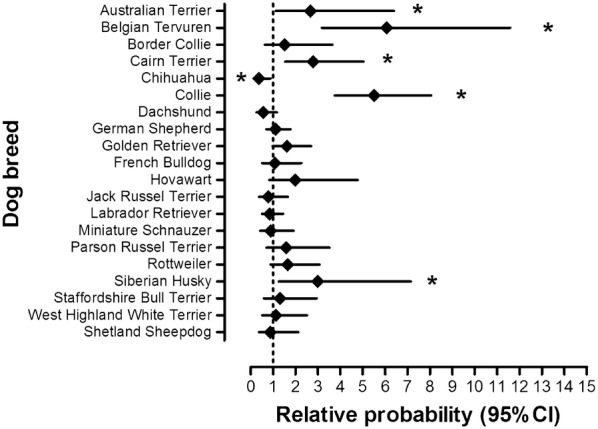
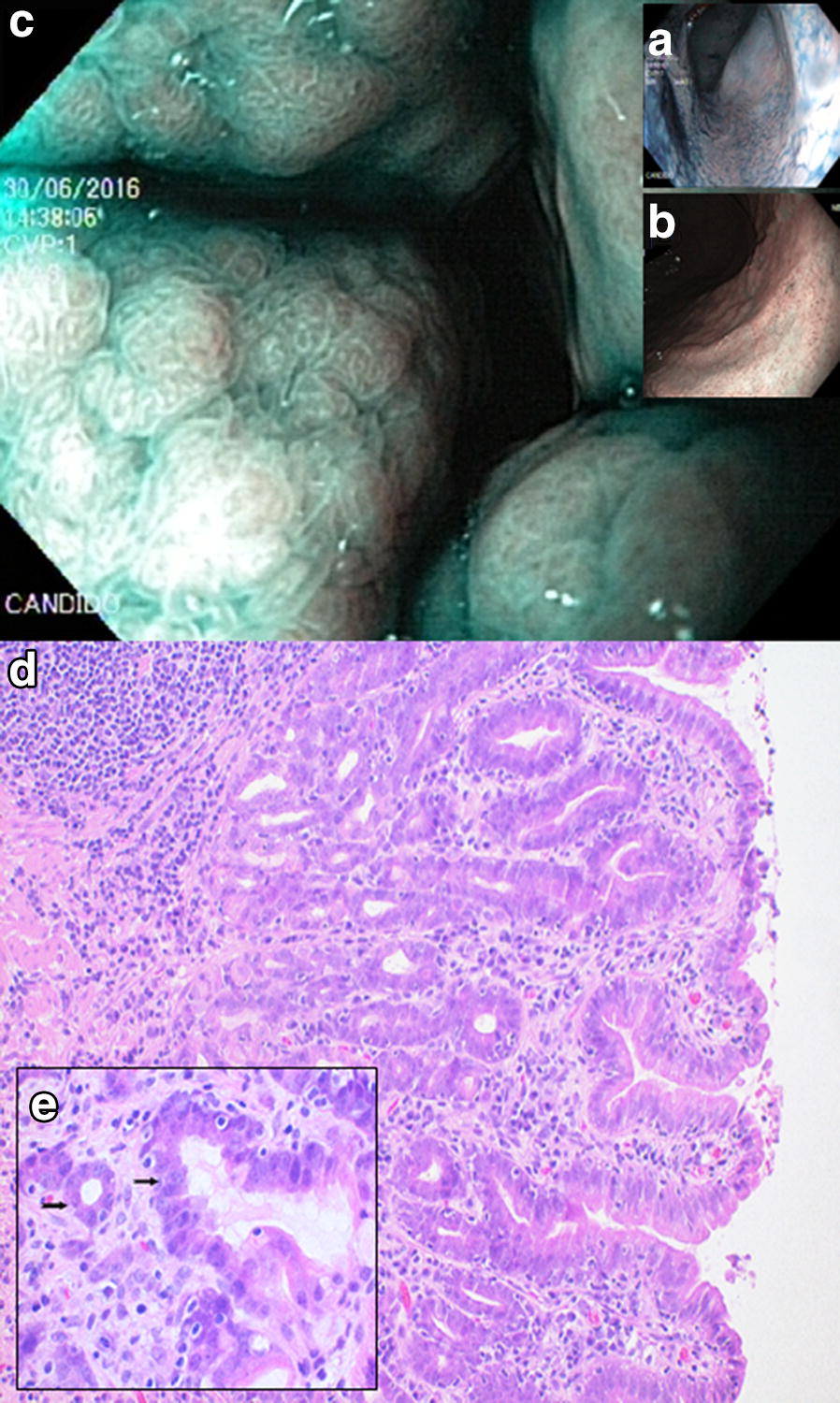
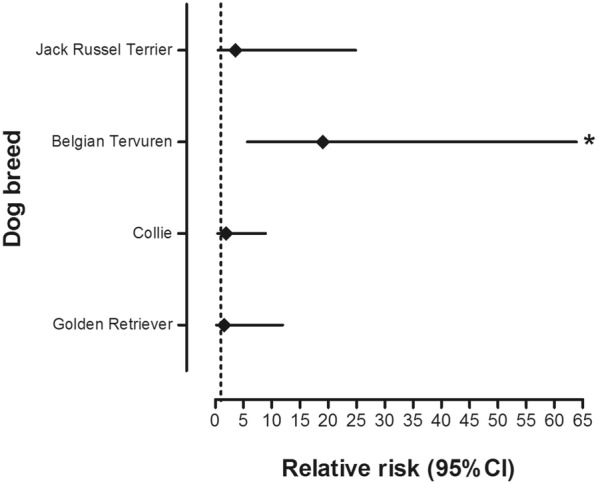
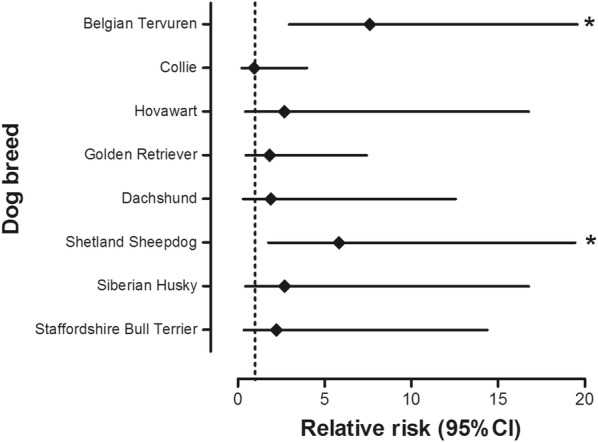
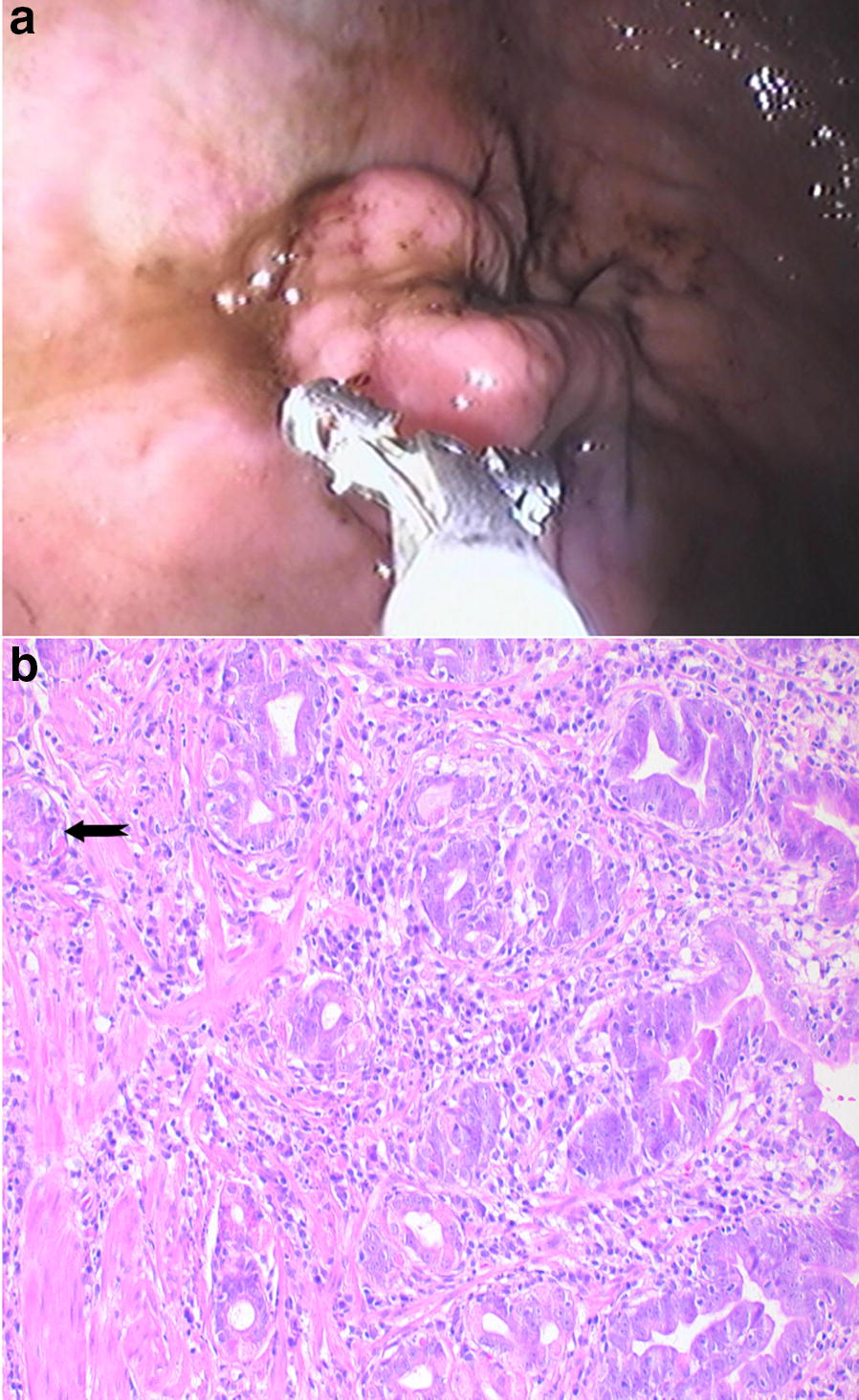
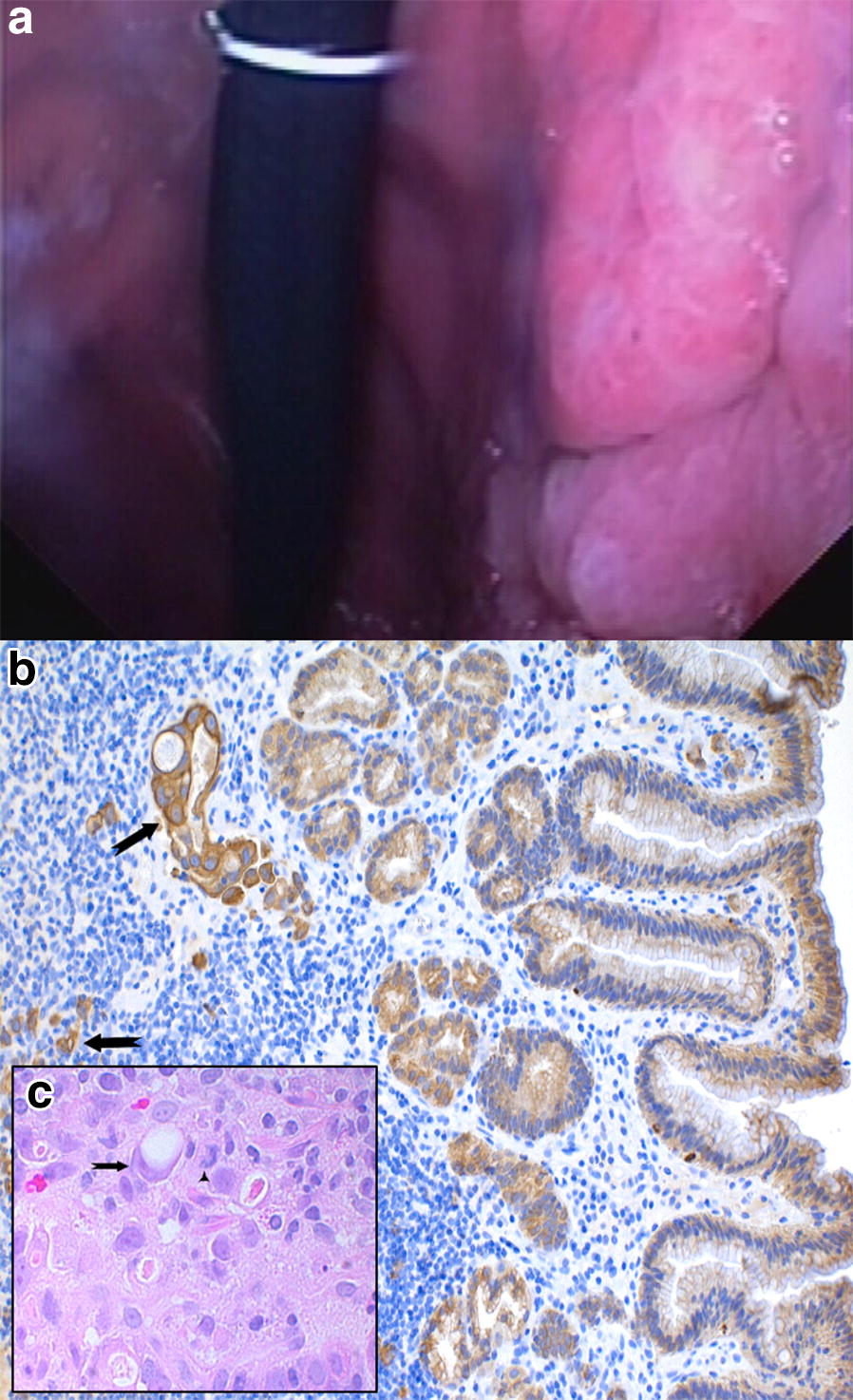
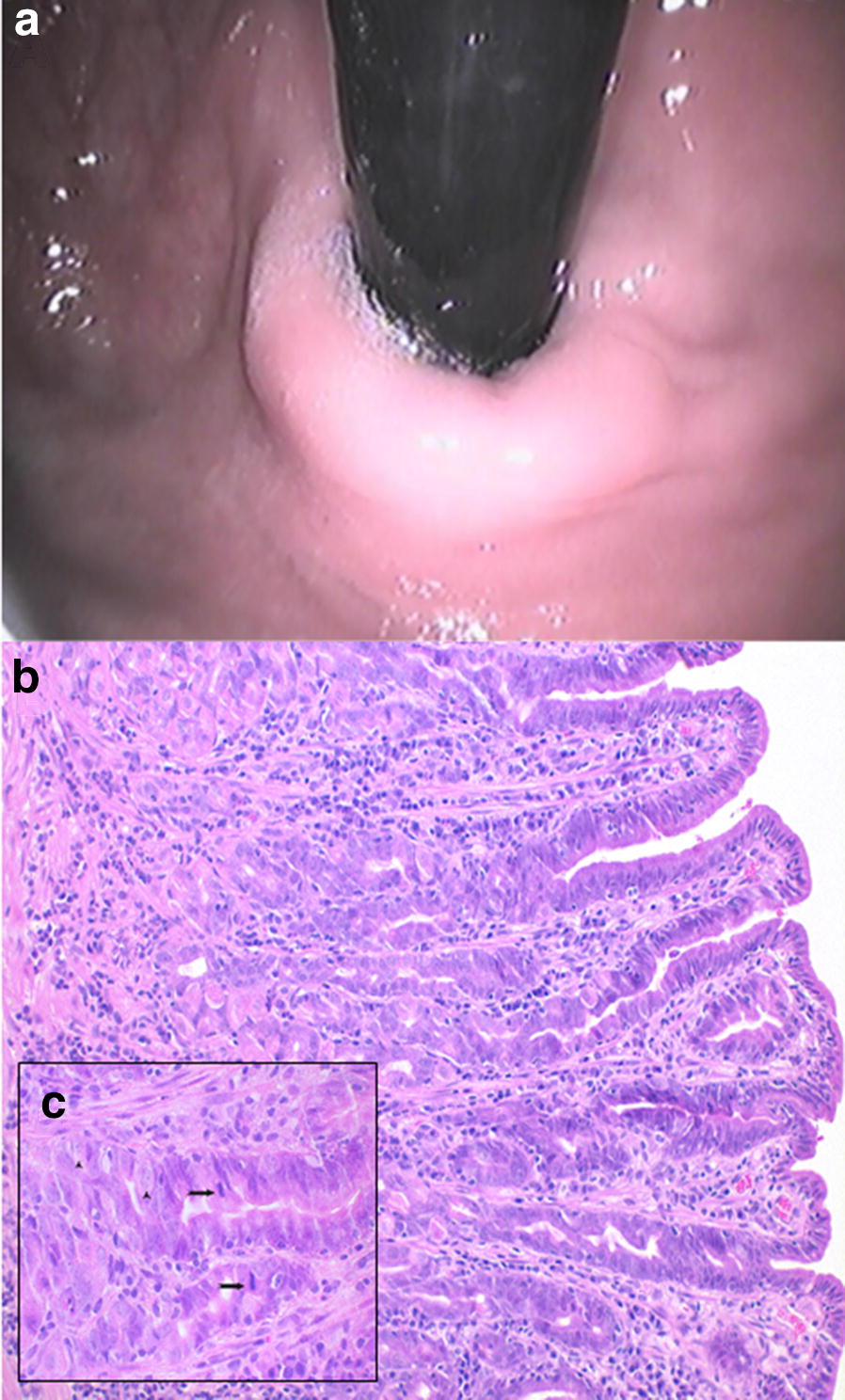
Between 2006 and 2016, from a total of 54945 canine patients presented, 423 dogs underwent GDS. Inclusion criteria were met in 180 dogs of 20 different pure breeds. Eight dogs had GCs (mean age = 9.8 ± 1.7 years): Belgian Tervuren (n = 4), Collie (n = 2), Golden Retriever (n = 1) and Jack Russel Terrier (n = 1). Fourteen dogs of eight breeds had gastric mucosal metaplasia or dysplasia. A log-binomial statistical model revealed that dogs in the following breeds had a significantly higher probability to undergo GDS than the others in the study population: Australian Terrier, Belgian Tervuren, Cairn Terrier, Collie and Siberian Husky. Belgian Tervuren was found at higher risk to be diagnosed with GC [RR = 19 (5.7-63.9; P < 0.0001)], as well as mucosal metaplasia/dysplasia [RR (7.6; 2.95-19.58; P < 0.0001)], as compared to the other breeds included. Shetland Sheepdog had an increased RR (5.83; 1.75-19.45; P = 0.0041) for metaplasia.
The results indicate a very low incidence of GC in dogs. The Belgian Tervuren, however, appears as predisposed. The histopathologic descriptions of mucosal changes such as metaplasia and dysplasia were also rare, but were more frequent in the Belgian Tervuren. Previous reports of these changes in dogs are very scarce, but they might be presumably related to GC in dogs, as they are in humans. Future research should investigate the possible role of metaplasia and dysplasia in the development of GC in dogs, especially those of predisposed breeds.
胃癌(GC)在犬类中是一种相当罕见的病理发现,但某些品种似乎易患此病。犬类的病因发病机制在很大程度上尚不清楚,而在人类中,胃癌通常由胃黏膜化生和发育异常发展而来。本研究调查了某些品种的犬是否更常接受胃十二指肠镜检查(GDS),并被诊断为胃癌、黏膜化生或发育异常。在芬兰赫尔辛基大学兽医学院教学医院进行了一项回顾性临床数据库搜索。应用以下纳入标准来评估化生/发育异常和胃癌的相对风险:来自纯种犬,至少有5只接受了GDS并进行了胃活检组织病理学检查。
2006年至2016年期间,在总共54945例犬类患者中,423只犬接受了GDS。180只来自20个不同纯种犬的犬符合纳入标准。8只犬患有胃癌(平均年龄=9.8±1.7岁):比利时特弗伦犬(n=4)、柯利犬(n=2)、金毛寻回犬(n=1)和杰克罗素梗犬(n=1)。8个品种的14只犬有胃黏膜化生或发育异常。对数二项式统计模型显示,以下品种的犬接受GDS的概率明显高于研究群体中的其他犬:澳大利亚梗犬、比利时特弗伦犬、凯恩梗犬、柯利犬和西伯利亚哈士奇。与其他纳入品种相比,发现比利时特弗伦犬被诊断为胃癌的风险更高[相对风险(RR)=19(5.7-63.9;P<0.0001)],以及黏膜化生/发育异常[RR(7.6;2.95-19.58;P<0.0001)]。设得兰牧羊犬化生的RR增加(5.83;1.75-19.45;P=0.0041)。
结果表明犬类胃癌的发病率非常低。然而,比利时特弗伦犬似乎易患此病。黏膜变化如化生和发育异常的组织病理学描述也很罕见,但在比利时特弗伦犬中更常见。以前关于犬类这些变化的报道非常稀少,但它们可能与犬类胃癌有关,就像在人类中一样。未来的研究应该调查化生和发育异常在犬类胃癌发生中的可能作用,特别是那些易患品种的犬。