Rackov Gorjana, Garcia-Romero Noemi, Esteban-Rubio Susana, Carrión-Navarro Josefa, Belda-Iniesta Cristobal, Ayuso-Sacido Angel
IMDEA Nanoscience Institute, Madrid, Spain.
Fundación de Investigación HM Hospitales, Madrid, Spain.
Front Physiol. 2018 Jun 5;9:651. doi: 10.3389/fphys.2018.00651. eCollection 2018.
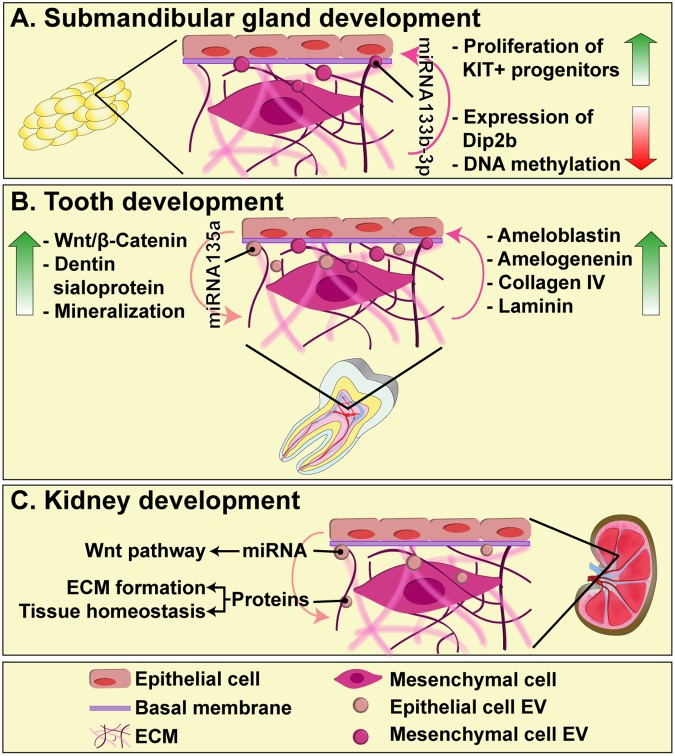
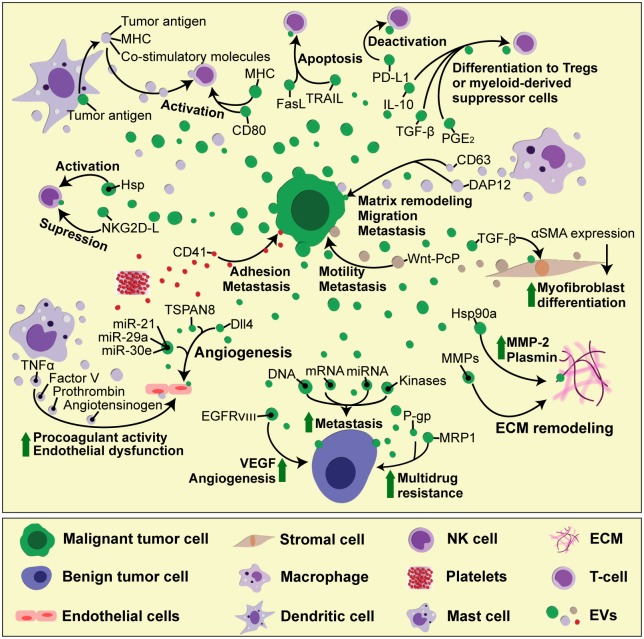
Extracellular vesicles (EVs) - including exosomes, microvesicles and apoptotic bodies - have received much scientific attention last decade as mediators of a newly discovered cell-to-cell communication system, acting at short and long distances. EVs carry biologically active molecules, thus providing signals that influence a spectrum of functions in recipient cells during various physiological and pathological processes. Recent findings point to EVs as very attractive immunomodulatory therapeutic agents, vehicles for drug delivery and diagnostic and prognostic biomarkers in liquid biopsies. In addition, EVs interact with and regulate the synthesis of extracellular matrix (ECM) components, which is crucial for organ development and wound healing, as well as bone and cardiovascular calcification. EVs carrying matrix metalloproteinases (MMPs) are involved in ECM remodeling, thus modifying tumor microenvironment and contributing to premetastatic niche formation and angiogenesis. Here we review the role of EVs in control of cell function, with emphasis on their interaction with ECM and microenvironment in health and disease.
细胞外囊泡(EVs)——包括外泌体、微囊泡和凋亡小体——在过去十年中作为一种新发现的细胞间通讯系统的介质受到了广泛的科学关注,其作用距离有短有长。细胞外囊泡携带生物活性分子,因此在各种生理和病理过程中提供影响受体细胞一系列功能的信号。最近的研究结果表明,细胞外囊泡是非常有吸引力的免疫调节治疗剂、药物递送载体以及液体活检中的诊断和预后生物标志物。此外,细胞外囊泡与细胞外基质(ECM)成分相互作用并调节其合成,这对器官发育、伤口愈合以及骨骼和心血管钙化至关重要。携带基质金属蛋白酶(MMPs)的细胞外囊泡参与细胞外基质重塑,从而改变肿瘤微环境并促进转移前生态位的形成和血管生成。在此,我们综述细胞外囊泡在控制细胞功能中的作用,重点关注它们在健康和疾病状态下与细胞外基质和微环境的相互作用。