Division of Microbiology and Infectious Diseases, Niigata University Graduate School of Medical and Dental Sciences, Niigata, Japan.
Research Center for Advanced Oral Science, Niigata University Graduate School of Medical and Dental Sciences, Niigata, Japan.
Front Immunol. 2018 Apr 25;9:732. doi: 10.3389/fimmu.2018.00732. eCollection 2018.
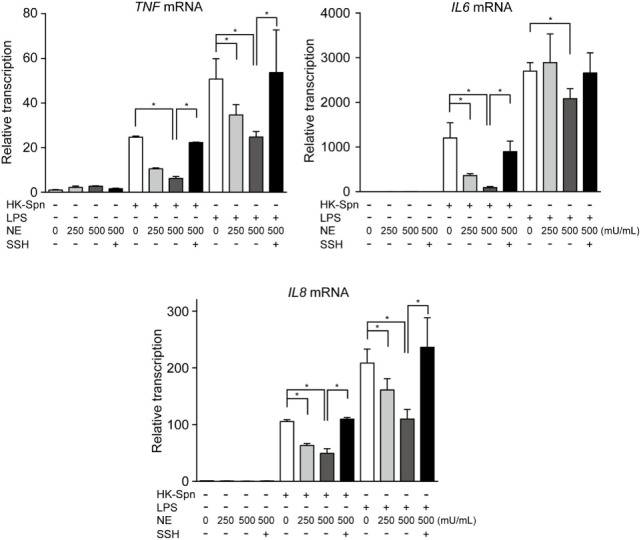
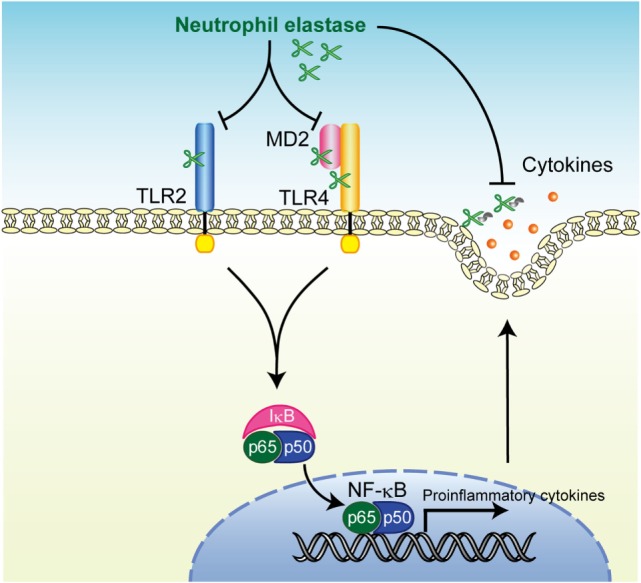
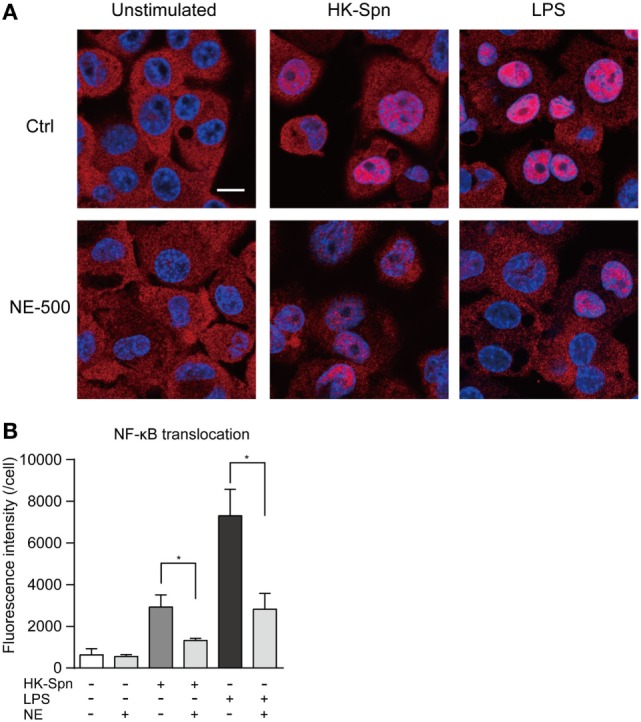
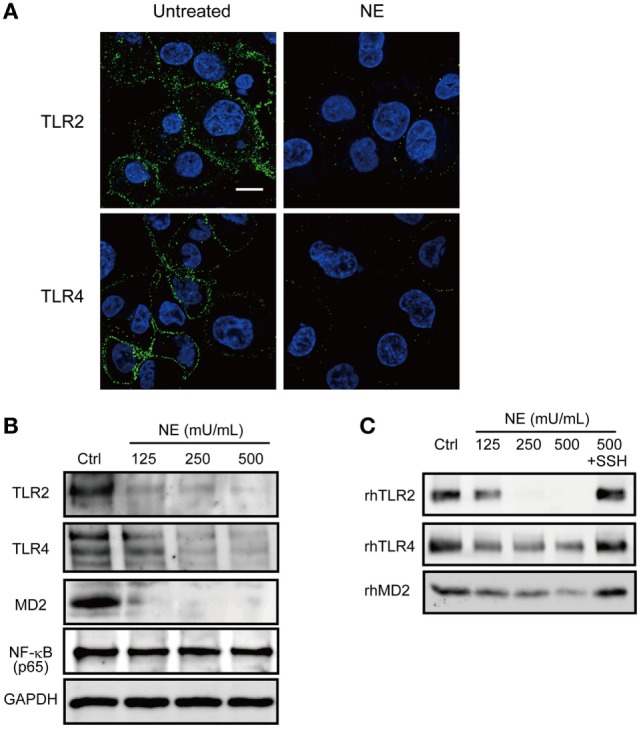
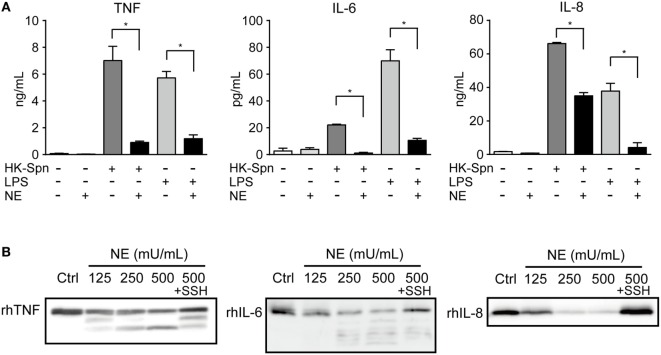
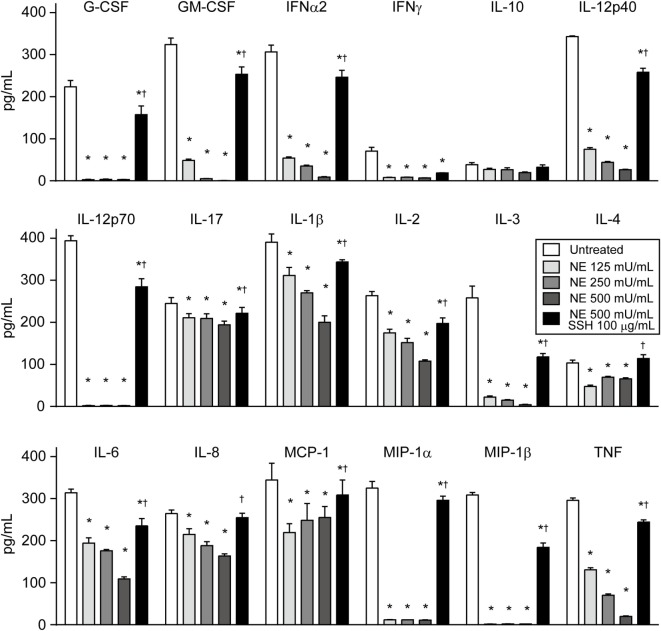
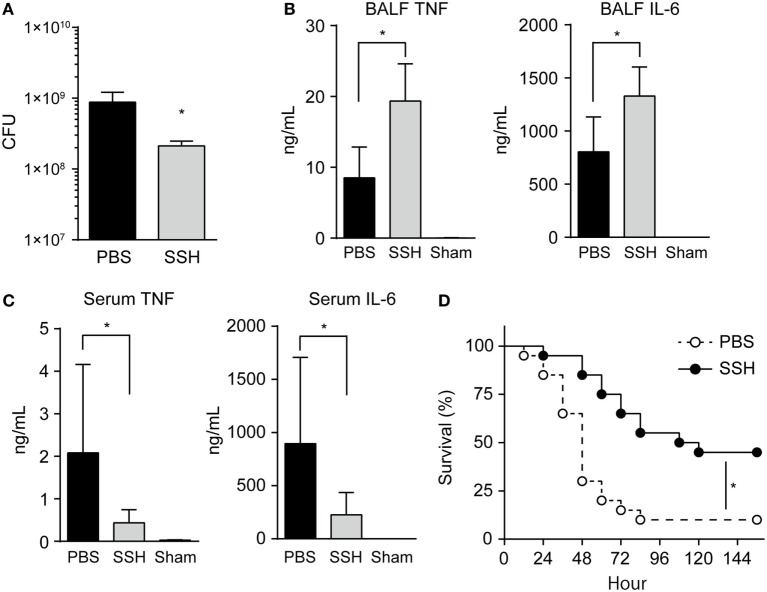
Excessive activation of neutrophils results in the release of neutrophil elastase (NE), which leads to lung injury in severe pneumonia. Previously, we demonstrated a novel immune subversion mechanism involving microbial exploitation of this NE ability, which eventually promotes disruption of the pulmonary epithelial barrier. In the present study, we investigated the effect of NE on host innate immune response. THP-1-derived macrophages were stimulated with heat-killed or lipopolysaccharide in the presence or absence of NE followed by analysis of toll-like receptor (TLR) and cytokine expression. Additionally, the biological significance of NE was confirmed in an mouse intratracheal infection model. NE downregulated the gene transcription of multiple cytokines in THP-1-derived macrophages through the cleavage of TLRs and myeloid differentiation factor 2. Additionally, NE cleaved inflammatory cytokines and chemokines. In a mouse model of intratracheal pneumococcal challenge, administration of an NE inhibitor significantly increased proinflammatory cytokine levels in bronchoalveolar lavage fluid, enhanced bacterial clearance, and improved survival rates. Our work indicates that NE subverts the innate immune response and that inhibition of this enzyme may constitute a novel therapeutic option for the treatment of pneumococcal pneumonia.
中性粒细胞的过度激活会导致中性粒细胞弹性蛋白酶 (NE) 的释放,从而导致严重肺炎中的肺损伤。先前,我们证明了一种新的免疫颠覆机制,涉及微生物利用这种 NE 能力,最终促进肺上皮屏障的破坏。在本研究中,我们研究了 NE 对宿主固有免疫反应的影响。用热灭活的 或脂多糖刺激 THP-1 衍生的巨噬细胞,然后分析 Toll 样受体 (TLR) 和细胞因子的表达。此外,还在 小鼠气管内感染模型中证实了 NE 的生物学意义。NE 通过切割 TLR 和髓样分化因子 2 下调 THP-1 衍生巨噬细胞中多种细胞因子的基因转录。此外,NE 还切割炎症细胞因子和趋化因子。在气管内肺炎球菌挑战的小鼠模型中,给予 NE 抑制剂可显著增加支气管肺泡灌洗液中的促炎细胞因子水平,增强细菌清除率并提高生存率。我们的工作表明,NE 颠覆了固有免疫反应,抑制这种酶可能成为治疗肺炎球菌性肺炎的一种新的治疗选择。