Halani Sheliza, Foster F Stuart, Breslavets Maksym, Shear Neil H
Faculty of Medicine, University of Toronto, Toronto, ON, Canada.
Medical Biophysics, Sunnybrook Health Sciences Centre, Toronto, ON, Canada.
Front Med (Lausanne). 2018 Apr 25;5:115. doi: 10.3389/fmed.2018.00115. eCollection 2018.
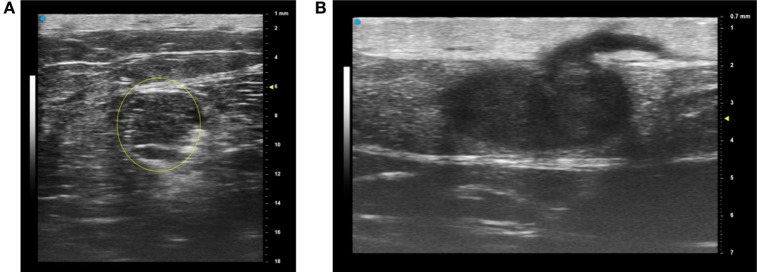
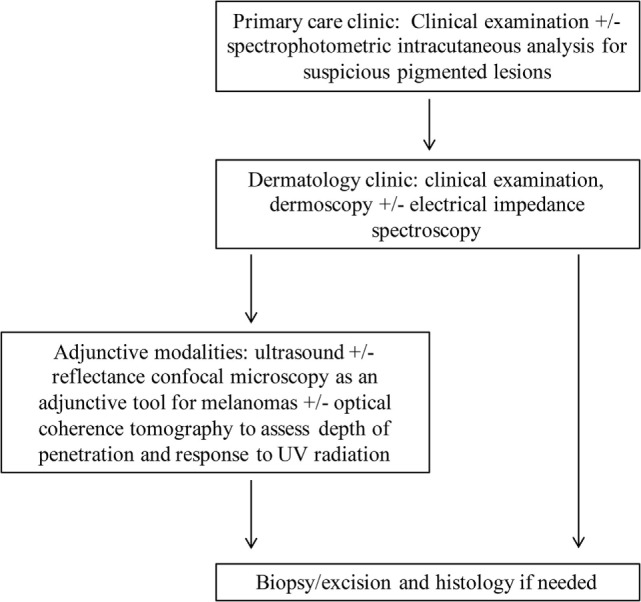
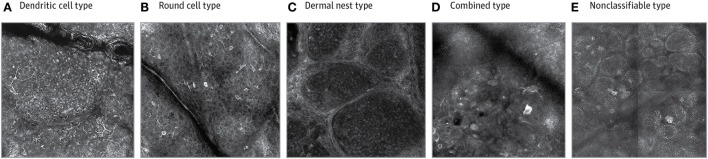
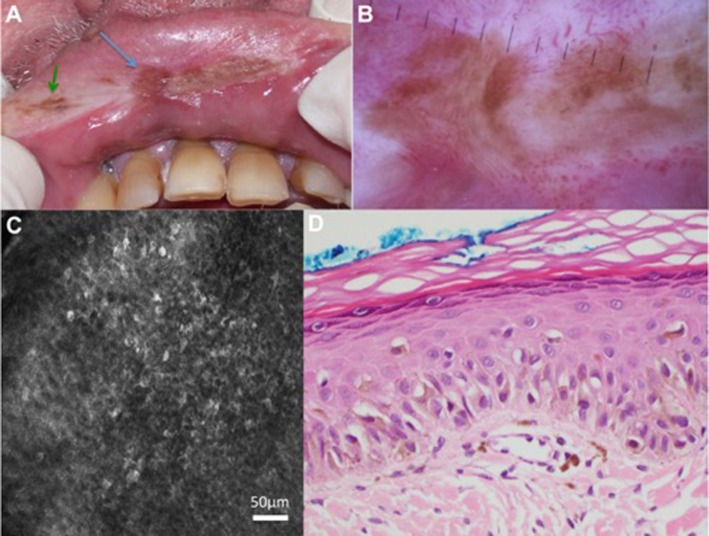
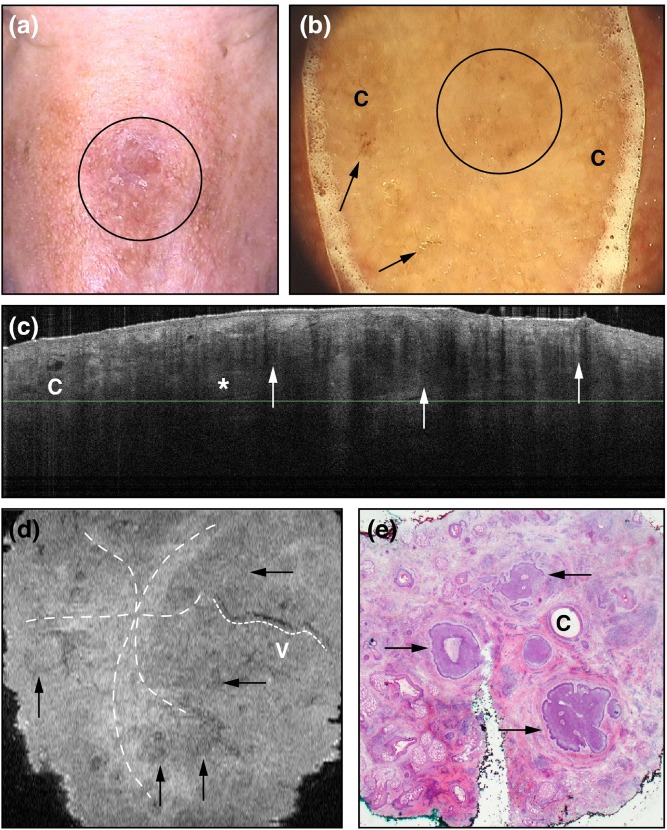
Non-invasive bedside imaging tools are becoming more prevalent for assessing cutaneous lesions. Ultrasound used at specific frequencies allows us to assess margins of lesions to minimize the extent of the biopsy that is performed and improve cosmetic outcomes. Vascularity, seen on Doppler ultrasound and contrast-enhanced ultrasound, and stiffness, assessed on tissue elastography, can help differentiate between benign and malignant lesions for clinicians to be more judicious in deciding whether to biopsy. Moreover, research has shown the efficacy in using ultrasound in monitoring flares of hidradenitis suppurativa, a disease affecting apocrine gland-rich areas of the body, for which the current gold standard involves examining and scoring inflammatory lesions with the naked eye. Infrared-based modalities have also been on the uptrend to aid in clinical decision-making regarding suspiciousness of lesions. Reflectance confocal microscopy has lateral resolution that is comparable to histopathology and it has been shown to be an appropriate adjunctive tool to dermoscopy, specifically when evaluating melanomas. Optical coherence tomography has utility in determining lesion thickness because of its depth penetration, and spectrophotometric intracutaneous analysis is becoming more popular as a tool that can be used by general practitioners to know when to refer to dermatology regarding worrisome pigmented lesions. Strides have been made to incorporate electrical impedance spectroscopy alongside dermoscopy in decision-making regarding excision, although the evidence for its use in the clincial setting remains inconclusive. This paper reviews the efficacy and drawbacks of these techniques in the field of dermatology and suggests future directions.
用于评估皮肤病变的非侵入性床边成像工具正变得越来越普遍。特定频率下使用的超声使我们能够评估病变边缘,以尽量减少活检范围并改善美容效果。通过多普勒超声和对比增强超声观察到的血管情况,以及通过组织弹性成像评估的硬度,有助于临床医生区分良性和恶性病变,从而更明智地决定是否进行活检。此外,研究表明超声在监测化脓性汗腺炎发作方面具有有效性,化脓性汗腺炎是一种影响身体富含顶泌汗腺区域的疾病,目前的金标准是用肉眼检查炎性病变并进行评分。基于红外线的方法在辅助关于病变可疑性的临床决策方面也呈上升趋势。反射式共聚焦显微镜的横向分辨率与组织病理学相当,并且已被证明是皮肤镜检查的合适辅助工具,特别是在评估黑色素瘤时。光学相干断层扫描因其深度穿透性而在确定病变厚度方面具有实用性,分光光度法皮内分析作为一种全科医生可用于判断何时将可疑色素沉着病变转诊至皮肤科的工具正变得越来越受欢迎。在关于切除的决策中,已经在将电阻抗光谱与皮肤镜检查结合使用方面取得了进展,尽管其在临床环境中使用的证据仍不明确。本文综述了这些技术在皮肤科领域的有效性和缺点,并提出了未来的发展方向。