Department for Cardiology, Center of Internal Medicine, Medical University Graz, Graz, Austria.
Brandenburg School of Medicine, Center for Internal Medicine I, Department for Angiology, Brandenburg an der Havel, Germany.
Eur J Neurol. 2018 Nov;25(11):1326-1332. doi: 10.1111/ene.13725. Epub 2018 Aug 3.
External counterpulsation improves cerebral perfusion velocity in acute stroke and may stimulate collateral artery growth. However, whether (non-acute) at-risk patients with high-grade carotid artery disease may benefit from counterpulsation needs to be validated.
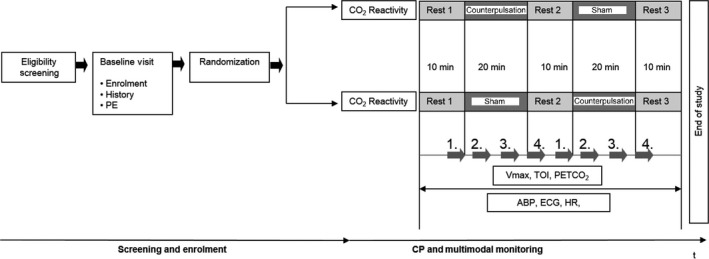
Twenty-eight patients (71 ± 6.5 years, five women) with asymptomatic unilateral chronic severe internal carotid artery stenosis (>70%) or occlusion were randomized to receive 20 min active counterpulsation followed by sham treatment or vice versa. Cerebral blood flow velocity (CBFV) (measured bilaterally by transcranial middle cerebral artery Doppler), tissue oxygenation index (TOI) (measured over the bilateral prefrontal cortex by near-infrared spectroscopy) and cerebral hemodynamic parameters, such as relative pulse slope index (RPSI), were monitored.
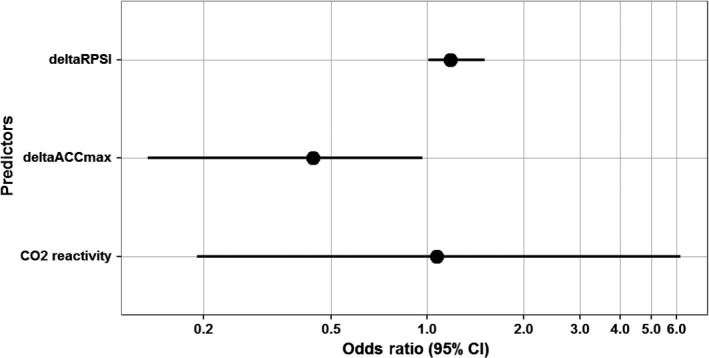
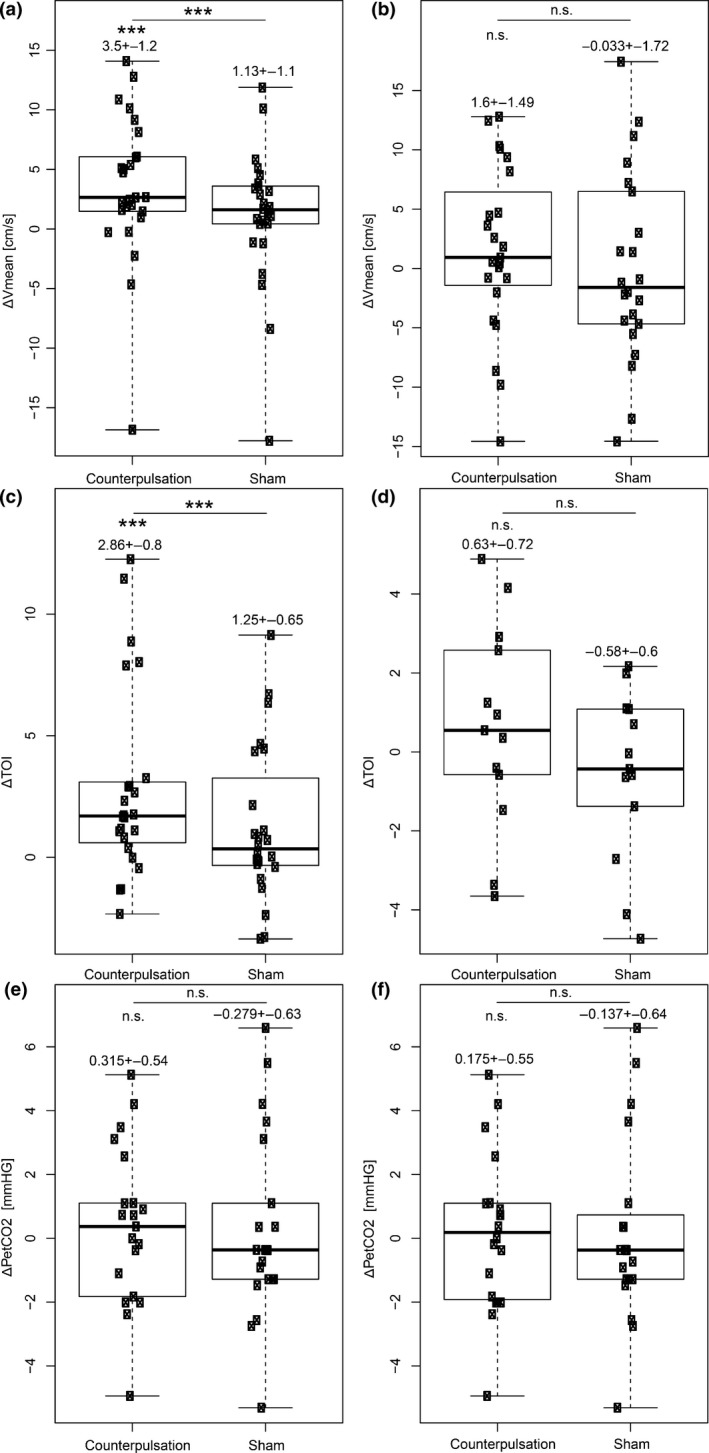
Ipsilateral mean CBFV (ΔV +3.5 ± 1.2 cm/s) and tissue oxygenation (ΔTOI +2.86 ± 0.8) increased significantly during active counterpulsation compared to baseline, whilst the sham had little effect (ΔV +1.13 ± 1.1 cm/s; ΔTOI +1.25 ± 0.65). On contralateral sides, neither counterpulsation nor sham control had any effect on either parameter. During counterpulsation, early dynamic changes in ΔRPSI of the ipsilateral CBFV signal predicted improved tissue oxygenation during counterpulsation (odds ratio 1.179, 95% confidence interval 1.01-1.51), whilst baseline cerebrovascular reactivity to hypercapnia failed to show an association.
In patients with high-grade carotid disease, ipsilateral cerebral oxygenation and blood flow velocity are increased by counterpulsation. This is a necessary condition for the stimulation of regenerative collateral artery growth and thus a therapeutic concept for the prevention of cerebral ischaemia. This study provides a rationale for further clinical investigations on the long-term effects of counterpulsation on cerebral hemodynamics and collateral growth.
体外反搏可改善急性脑卒中患者的脑灌注速度,并可能刺激侧支动脉生长。然而,是否需要验证高危颈动脉疾病(非急性)患者是否受益于反搏治疗,这仍需要进一步验证。
28 例无症状单侧慢性严重颈内动脉狭窄(>70%)或闭塞患者(71±6.5 岁,女性 5 例)随机接受 20 分钟主动反搏治疗后行假治疗或反之。通过经颅大脑中动脉多普勒测量双侧脑血流速度(CBFV),近红外光谱测量双侧前额皮质组织氧合指数(TOI),并监测脑血流动力学参数,如相对脉搏斜率指数(RPSI)。
与基线相比,主动反搏治疗时患侧平均 CBFV(ΔV+3.5±1.2cm/s)和组织氧合(ΔTOI+2.86±0.8)显著增加,而假治疗影响较小(ΔV+1.13±1.1cm/s;ΔTOI+1.25±0.65)。对侧无论反搏治疗还是假治疗均对两个参数均无影响。在反搏治疗期间,患侧 CBFV 信号的ΔRPSI 的早期动态变化可预测反搏治疗期间的组织氧合改善(比值比 1.179,95%置信区间 1.01-1.51),而基础脑血管对高碳酸血症的反应性则无相关性。
在高等级颈动脉疾病患者中,反搏治疗可增加同侧脑氧合和血流速度。这是刺激再生性侧支动脉生长的必要条件,因此也是预防脑缺血的治疗概念。本研究为进一步研究反搏对脑血流动力学和侧支生长的长期影响提供了依据。