Instituto de Investigaciones Biomédicas Alberto Sols (CSIC-UAM), Arturo Duperier 4, Madrid, Spain.
Cardiovascular Proteomics Group, Spanish National Center for Cardiovascular Research (CNIC) and CIBERCV, Melchor Fernández de Almagro 3, Madrid, Spain.
PLoS One. 2018 Jun 20;13(6):e0199472. doi: 10.1371/journal.pone.0199472. eCollection 2018.
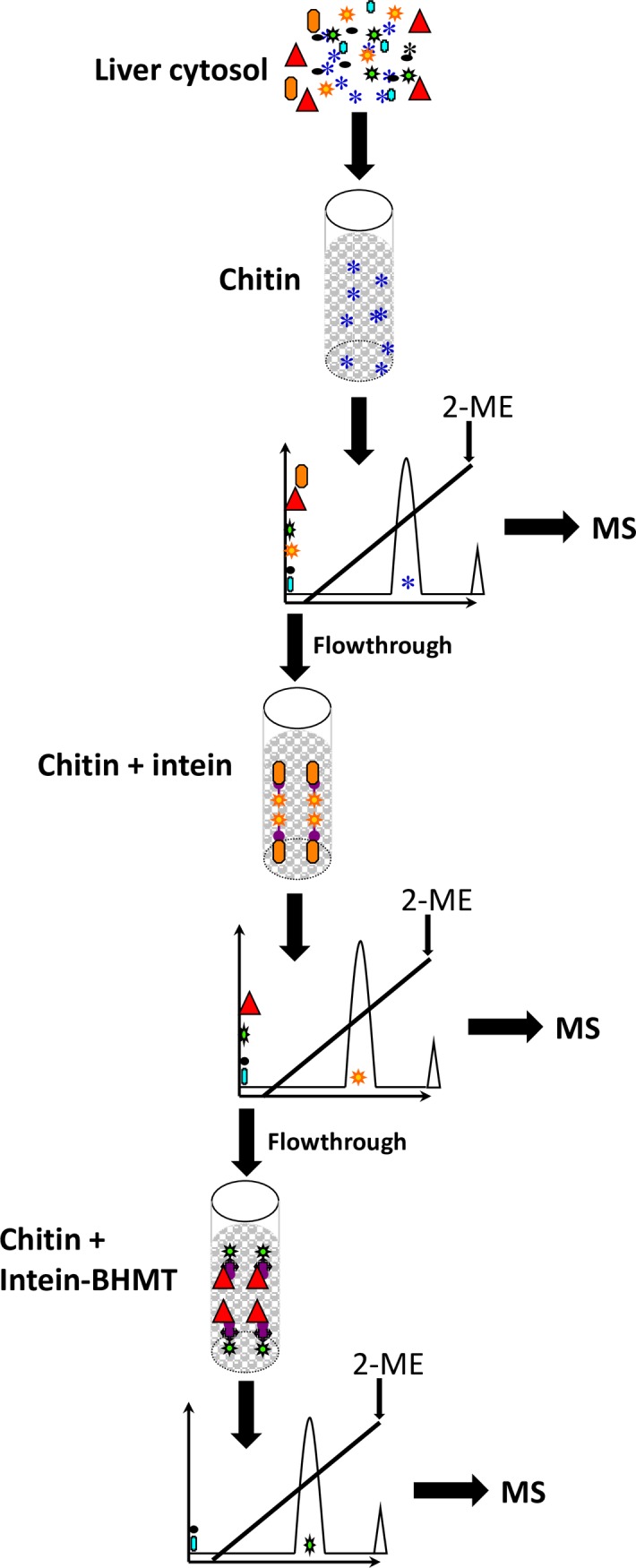
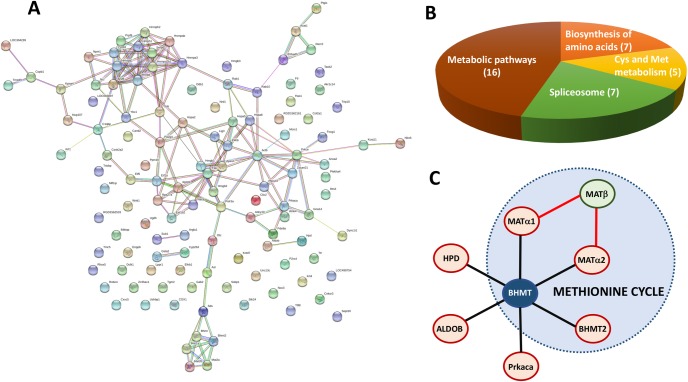
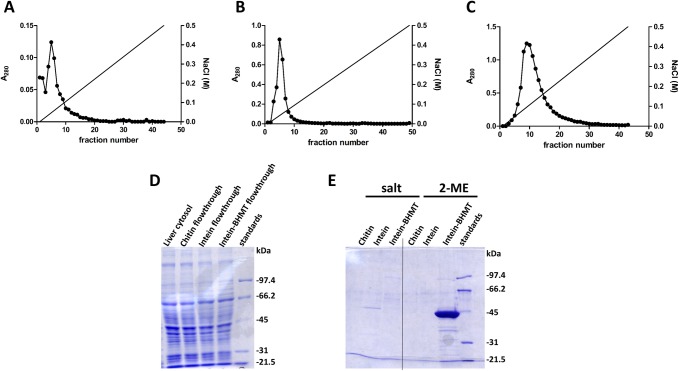
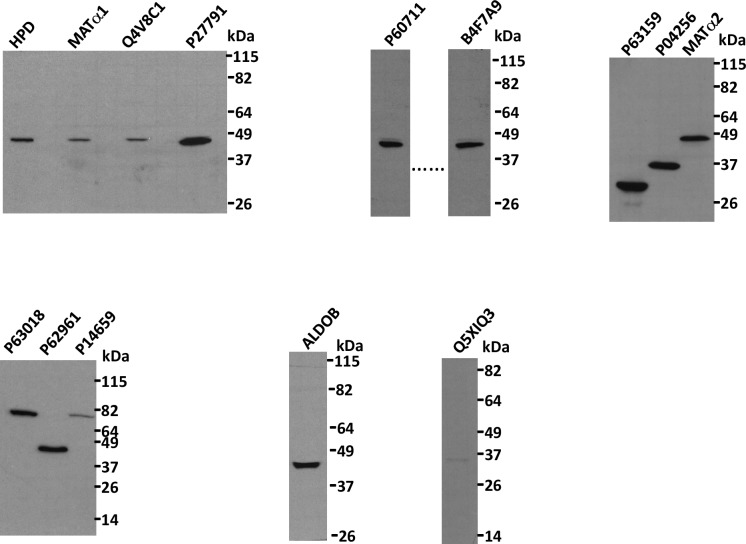
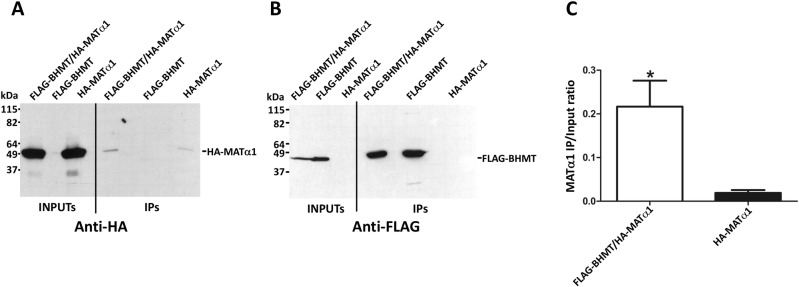
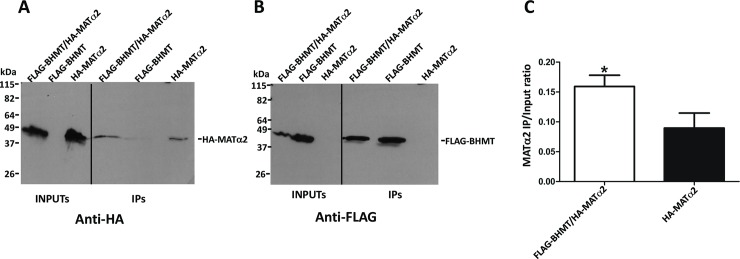
Protein-protein interactions are an important mechanism for the regulation of enzyme function allowing metabolite channeling, crosstalk between pathways or the introduction of post-translational modifications. Therefore, a number of high-throughput studies have been carried out to shed light on the protein networks established under different pathophysiological settings. Surprisingly, this type of information is quite limited for enzymes of intermediary metabolism such as betaine homocysteine S-methyltransferase, despite its high hepatic abundancy and its role in homocysteine metabolism. Here, we have taken advantage of two approaches, affinity purification combined with mass spectrometry and yeast two-hybrid, to further uncover the array of interactions of betaine homocysteine S-methyltransferase in normal liver of Rattus norvegicus. A total of 131 non-redundant putative interaction targets were identified, out of which 20 were selected for further validation by coimmunoprecipitation. Interaction targets validated by two different methods include: S-methylmethionine homocysteine methyltransferase or betaine homocysteine methyltransferase 2, methionine adenosyltransferases α1 and α2, cAMP-dependent protein kinase catalytic subunit alpha, 4-hydroxyphenylpyruvic acid dioxygenase and aldolase b. Network analysis identified 122 nodes and 165 edges, as well as a limited number of KEGG pathways that comprise: the biosynthesis of amino acids, cysteine and methionine metabolism, the spliceosome and metabolic pathways. These results further expand the connections within the hepatic methionine cycle and suggest putative cross-talks with additional metabolic pathways that deserve additional research.
蛋白质-蛋白质相互作用是调节酶功能的一种重要机制,允许代谢物通道化、途径间的串扰或引入翻译后修饰。因此,已经进行了许多高通量研究,以阐明在不同病理生理环境下建立的蛋白质网络。令人惊讶的是,这种类型的信息对于中间代谢酶如甜菜碱同型半胱氨酸 S-甲基转移酶来说相当有限,尽管它在肝脏中的丰度很高,并且在同型半胱氨酸代谢中发挥作用。在这里,我们利用两种方法,亲和纯化结合质谱和酵母双杂交,进一步揭示甜菜碱同型半胱氨酸 S-甲基转移酶在正常大鼠肝脏中的相互作用网络。总共鉴定出 131 个非冗余的假定相互作用靶标,其中 20 个被选择用于进一步通过共免疫沉淀进行验证。通过两种不同方法验证的相互作用靶标包括:S-甲基甲硫氨酸同型半胱氨酸甲基转移酶或甜菜碱同型半胱氨酸甲基转移酶 2、蛋氨酸腺苷转移酶 α1 和 α2、cAMP 依赖性蛋白激酶催化亚基 α、4-羟苯丙酮酸双加氧酶和醛缩酶 b。网络分析确定了 122 个节点和 165 个边,以及数量有限的 KEGG 途径,包括:氨基酸、半胱氨酸和蛋氨酸代谢的生物合成、剪接体和代谢途径。这些结果进一步扩展了肝蛋氨酸循环中的连接,并表明与其他代谢途径的潜在串扰值得进一步研究。