Department of Oncology and Metabolism, Medical School, University of Sheffield, Sheffield, United Kingdom.
Mellanby Centre for Bone Research, Medical School, University of Sheffield, Sheffield, United Kingdom.
PLoS One. 2018 Jun 20;13(6):e0199517. doi: 10.1371/journal.pone.0199517. eCollection 2018.
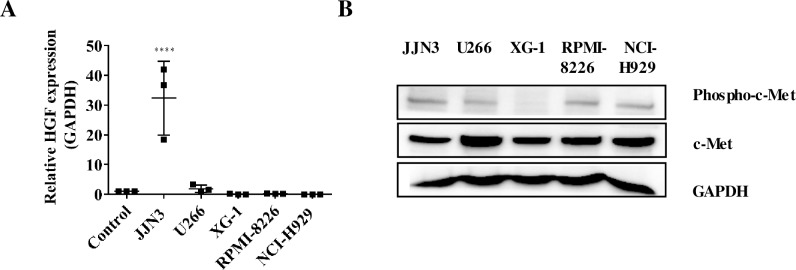
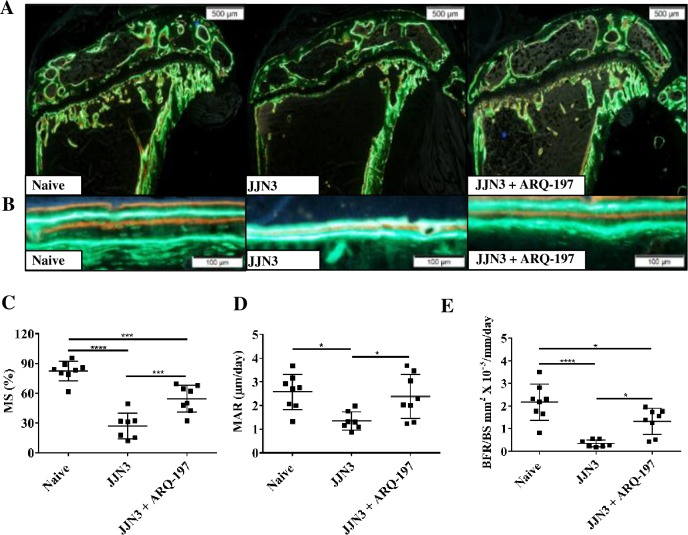
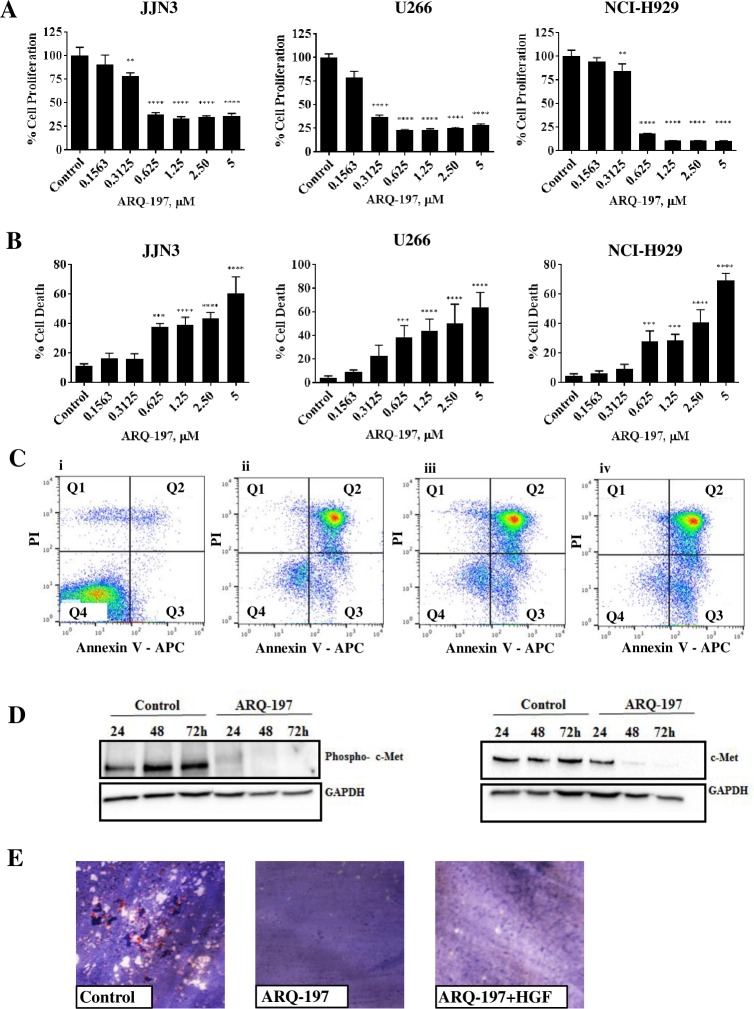
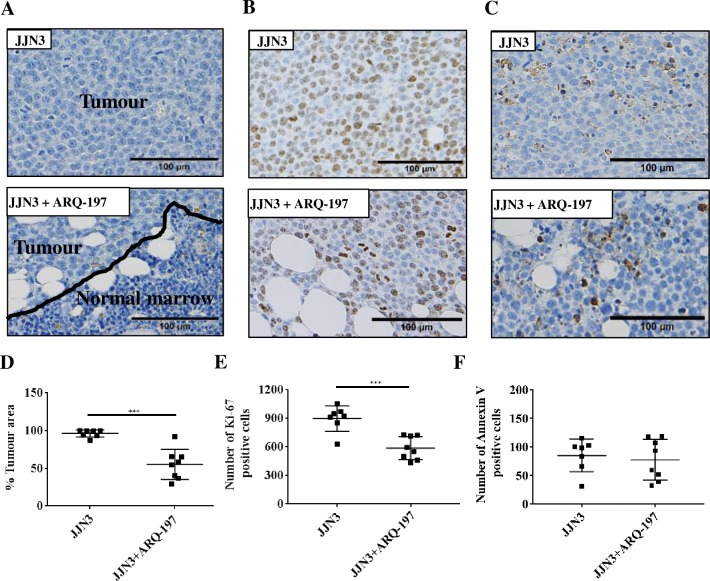
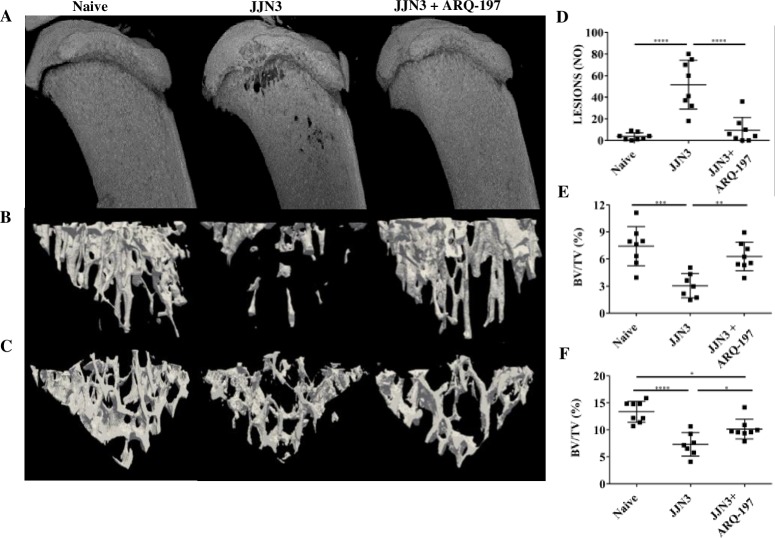
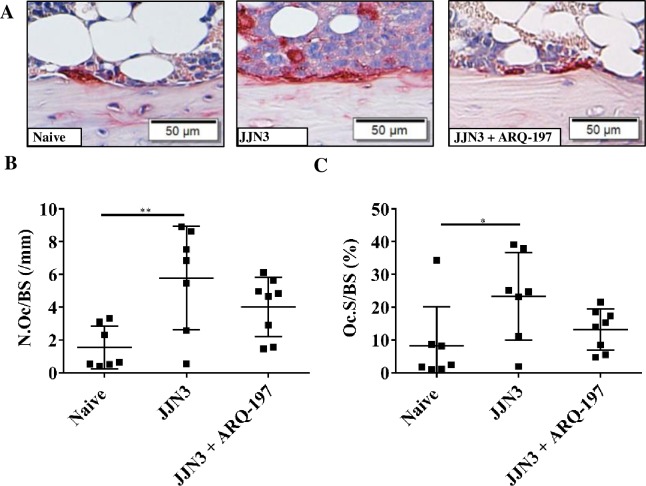
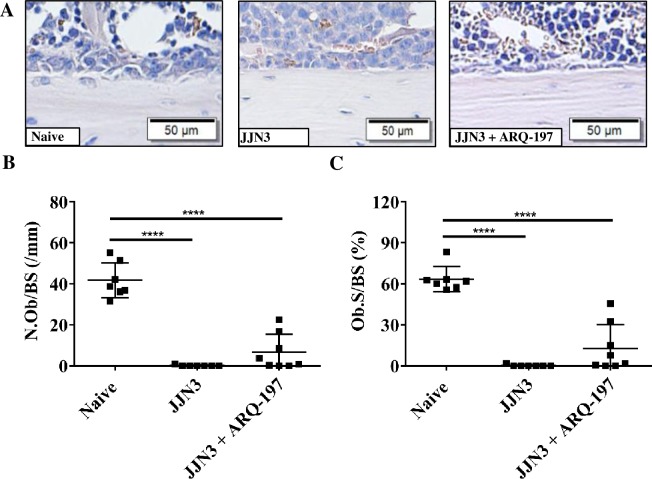
The receptor tyrosine kinase c-Met, its ligand HGF, and components of the downstream signalling pathway, have all been implicated in the pathogenesis of myeloma, both as modulators of plasma cell proliferation and as agents driving osteoclast differentiation and osteoblast inhibition thus, all these contribute substantially to the bone destruction typically caused by myeloma. Patients with elevated levels of HGF have a poor prognosis, therefore, targeting these entities in such patients may be of substantial benefit. We hypothesized that ARQ-197 (Tivantinib), a small molecule c-Met inhibitor, would reduce myeloma cell growth and prevent myeloma-associated bone disease in a murine model. In vitro we assessed the effects of ARQ-197 on myeloma cell proliferation, cytotoxicity and c-Met protein expression in human myeloma cell lines. In vivo we injected NOD/SCID-γ mice with PBS (non-tumour bearing) or JJN3 cells and treated them with either ARQ-197 or vehicle. In vitro exposure of JJN3, U266 or NCI-H929 cells to ARQ-197 resulted in a significant inhibition of cell proliferation and an induction of cell death by necrosis, probably caused by significantly reduced levels of phosphorylated c-Met. In vivo ARQ-197 treatment of JJN3 tumour-bearing mice resulted in a significant reduction in tumour burden, tumour cell proliferation, bone lesion number, trabecular bone loss and prevented significant decreases in the bone formation rate on the cortico-endosteal bone surface compared to the vehicle group. However, no significant differences on bone parameters were observed in non-tumour mice treated with ARQ-197 compared to vehicle, implying that in tumour-bearing mice the effects of ARQ-197 on bone cells was indirect. In summary, these res ults suggest that ARQ-197 could be a promising therapeutic in myeloma patients, leading to both a reduction in tumour burden and an inhibition of myeloma-induced bone disease.
受体酪氨酸激酶 c-Met、其配体 HGF 和下游信号通路的组成部分都与骨髓瘤的发病机制有关,它们既是浆细胞增殖的调节剂,又是驱动破骨细胞分化和抑制成骨细胞的因子,因此,所有这些都在很大程度上导致骨髓瘤引起的骨破坏。HGF 水平升高的患者预后不良,因此,在这些患者中靶向这些实体可能会带来实质性的益处。我们假设,小分子 c-Met 抑制剂 ARQ-197(Tivantinib)可减少骨髓瘤细胞的生长并预防骨髓瘤相关的骨疾病在小鼠模型中。我们在体外评估了 ARQ-197 对骨髓瘤细胞增殖、细胞毒性和人骨髓瘤细胞系中 c-Met 蛋白表达的影响。我们在体内用 PBS(非肿瘤携带)或 JJN3 细胞注射 NOD/SCID-γ 小鼠,并对它们进行 ARQ-197 或载体治疗。体外暴露于 JJN3、U266 或 NCI-H929 细胞的 ARQ-197 导致细胞增殖明显抑制,并通过坏死诱导细胞死亡,这可能是由于磷酸化 c-Met 的水平显著降低所致。体内 ARQ-197 治疗 JJN3 荷瘤小鼠导致肿瘤负担、肿瘤细胞增殖、骨病变数量、小梁骨丢失明显减少,并防止皮质骨表面的骨形成率显著降低与载体组相比。然而,与载体相比,用 ARQ-197 治疗非肿瘤小鼠的骨参数没有观察到显著差异,这表明在荷瘤小鼠中,ARQ-197 对骨细胞的作用是间接的。总之,这些结果表明 ARQ-197 可能是骨髓瘤患者有前途的治疗方法,可降低肿瘤负担并抑制骨髓瘤引起的骨疾病。