Department of Immunobiology, School of Immunology, Infection and Inflammatory Disease, Faculty of Life Sciences and Medicine, King's College London, London, United Kingdom.
Division of Diabetes and Nutrition, Faculty of Life Sciences and Medicine, King's College London, United Kingdom.
PLoS One. 2018 Jun 20;13(6):e0199323. doi: 10.1371/journal.pone.0199323. eCollection 2018.
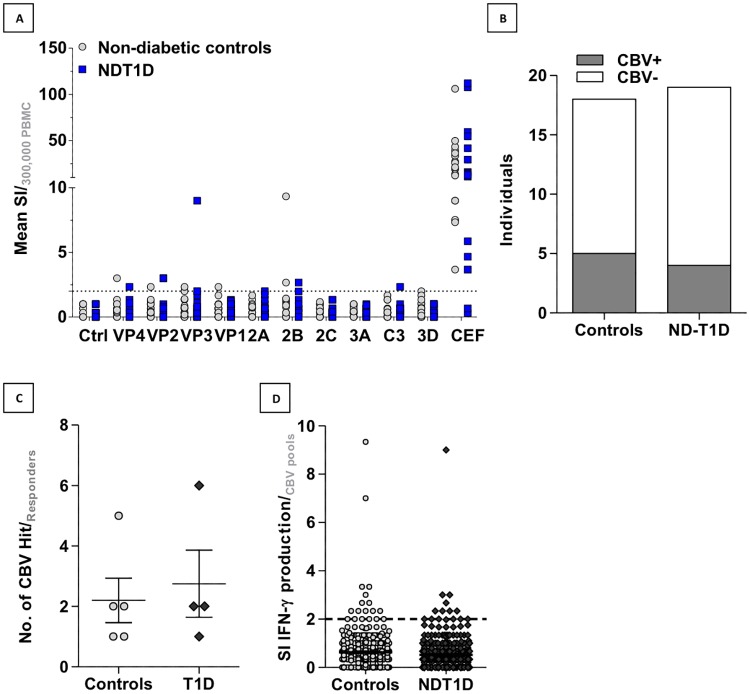
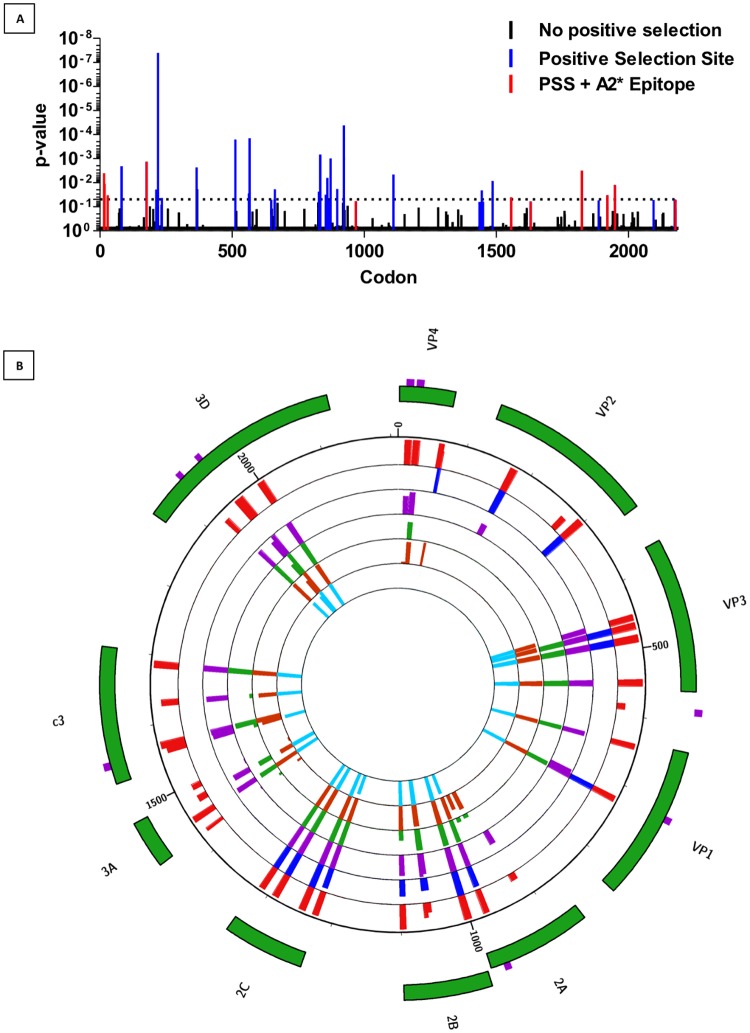
Coxsackie B Virus (CBV) infection has been linked to the aetiology of type 1 diabetes (T1D) and vaccination has been proposed as prophylaxis for disease prevention. Serum neutralising antibodies and the presence of viral protein and RNA in tissues have been common tools to examine this potential disease relationship, whilst the role of anti-CBV cytotoxic T cell responses and their targets have not been studied. To address this knowledge gap, we augmented conventional HLA-binding predictive algorithm-based epitope discovery by cross-referencing epitopes with sites of positive natural selection within the CBV3 viral genome, identified using mixed effects models of evolution. Eight epitopes for the common MHC class I allele HLA-A*0201 occur at sites that appear to be positively selected. Furthermore, such epitopes span the viral genome, indicating that effective anti-viral responses may not be restricted to the capsid region. To assess the spectrum of IFNy responses in non-diabetic subjects and recently diagnosed type 1 diabetes (T1D) patients, we stimulated PBMC ex vivo with pools of synthetic peptides based on component-restricted sequences identified in silico. We found responders were more likely to recognize multiple rather than a single CBV peptide pool, indicating that the natural course of infection results in multiple targets for effector memory responses, rather than immunodominant epitopes or viral components. The finding that anti-CBV CD8 T cell immunity is broadly targeted has implications for vaccination strategies and studies on the pathogenesis of CBV-linked diseases.
柯萨奇 B 病毒 (CBV) 感染与 1 型糖尿病 (T1D) 的病因有关,疫苗接种已被提议作为疾病预防的措施。血清中和抗体以及组织中病毒蛋白和 RNA 的存在一直是研究这种潜在疾病关系的常用工具,而抗 CBV 细胞毒性 T 细胞反应及其靶标作用尚未得到研究。为了解决这一知识空白,我们通过交叉引用与 CBV3 病毒基因组中阳性自然选择位点相关的表位,对基于常规 HLA 结合预测算法的表位发现进行了扩充,这些表位是使用进化的混合效应模型确定的。八个常见 MHC 类 I 等位基因 HLA-A*0201 的表位出现在似乎被正向选择的位点。此外,这些表位跨越病毒基因组,表明有效的抗病毒反应可能不限于衣壳区域。为了评估非糖尿病患者和新近诊断的 1 型糖尿病 (T1D) 患者中 IFNy 反应的范围,我们使用基于计算机鉴定的组分限制性序列的合成肽池体外刺激 PBMC。我们发现应答者更有可能识别多个而不是单个 CBV 肽池,这表明感染的自然过程导致效应记忆反应的多个靶标,而不是免疫优势表位或病毒成分。抗 CBV CD8 T 细胞免疫广泛靶向的发现对疫苗接种策略和 CBV 相关疾病发病机制的研究具有重要意义。