Netzer Florian, Herschbach Cornelia, Oikawa Akira, Okazaki Yozo, Dubbert David, Saito Kazuki, Rennenberg Heinz
Chair of Tree Physiology, Institute of Forest Sciences, Albert-Ludwigs-University Freiburg, Freiburg, Germany.
Ecosystem Physiology, Institute of Forest Sciences, Albert-Ludwigs-University Freiburg, Freiburg, Germany.
Front Plant Sci. 2018 Jun 6;9:723. doi: 10.3389/fpls.2018.00723. eCollection 2018.
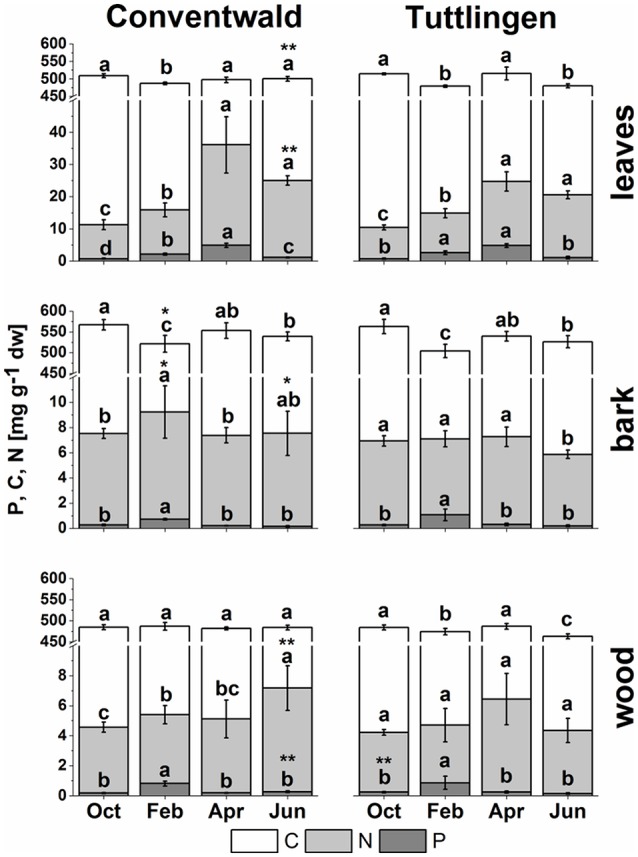
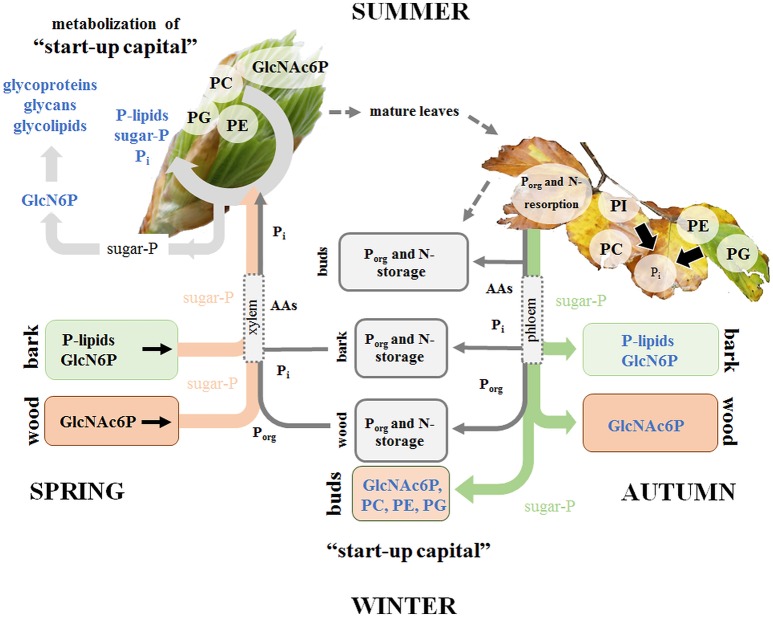
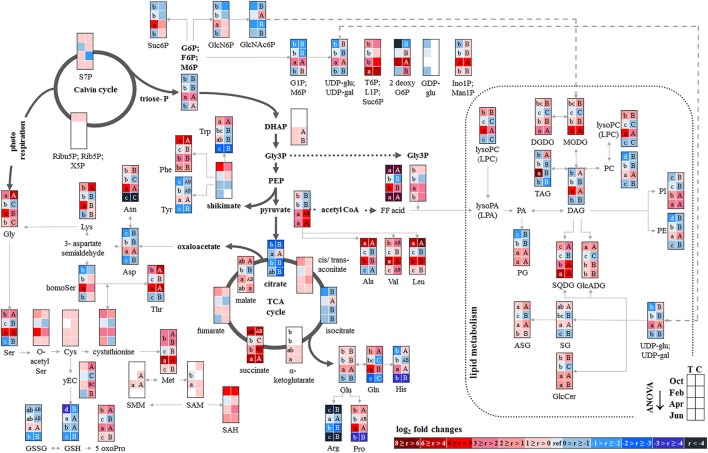
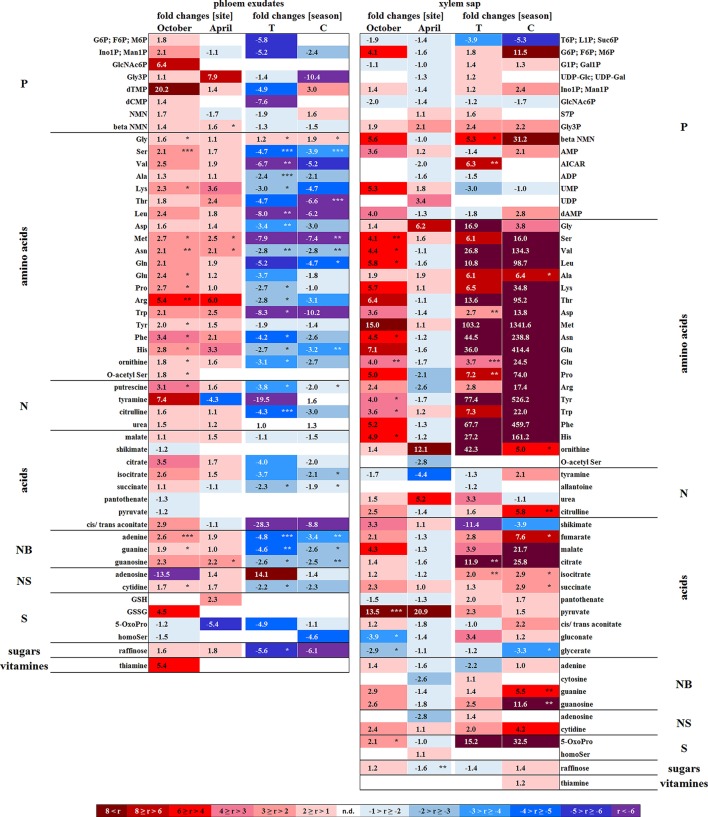
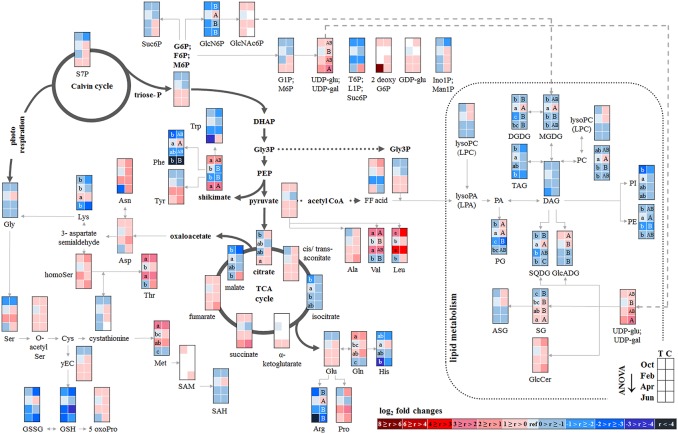
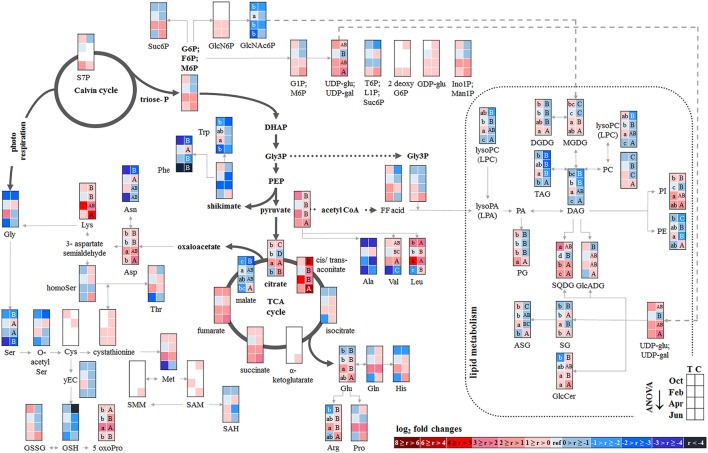
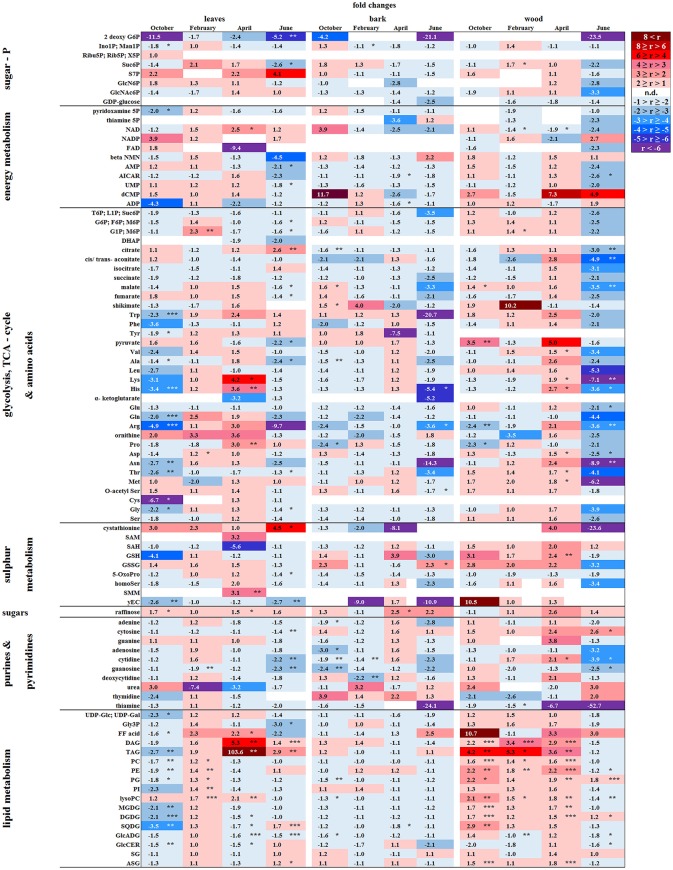
Phosphorus (P) is one of the most important macronutrients limiting plant growth and development, particularly in forest ecosystems such as temperate beech () forests in Central Europe. Efficient tree internal P cycling during annual growth is an important strategy of beech trees to adapt to low soil-P. Organic P (P) is thought to play a decisive role in P cycling, but the significance of individual compounds and processes has not been elucidated. To identify processes and metabolites involved in P cycling of beech trees, polar-metabolome and lipidome profiling was performed during annual growth with twig tissues from a sufficient (Conventwald, Con) and a low-soil-P (Tuttlingen, Tut) forest. Autumnal phospholipid degradation in leaves and P export from senescent leaves, accumulation of phospholipids and glucosamine-6-phosphate (GlcN6P) in the bark, storage of N-acetyl-D-glucosamine-6-phosphate (GlcNAc6P) in the wood, and establishing of a phospholipid "start-up capital" in buds constitute main processes involved in P cycling that were enhanced in beech trees on low-P soil of the Tut forest. In spring, mobilization of P from storage pools in the bark contributed to an effective P cycling. Due to the higher phospholipid "start-up capital" in buds of Tut beeches, the P metabolite profile in developing leaves in spring was similar in beech trees of both forests. During summer, leaves of Tut beeches meet their phosphate (P) needs by replacing phospholipids by galacto- and sulfolipids. Thus, several processes contribute to adequate P supply on P impoverished soil thereby mediating similar growth of beech at low and sufficient soil-P availability.
磷(P)是限制植物生长发育的最重要的大量营养素之一,尤其是在中欧的温带山毛榉()森林等森林生态系统中。山毛榉树在年度生长过程中高效的内部磷循环是其适应低土壤磷的重要策略。有机磷(P)被认为在磷循环中起决定性作用,但单个化合物和过程的重要性尚未阐明。为了确定参与山毛榉树磷循环的过程和代谢物,在年度生长期间,使用来自充足磷(Conventwald,Con)和低土壤磷(Tuttlingen,Tut)森林的嫩枝组织进行了极性代谢组和脂质组分析。秋季叶片中的磷脂降解和衰老叶片中的磷输出、树皮中磷脂和6-磷酸葡萄糖胺(GlcN6P)的积累、木材中N-乙酰-D-葡萄糖胺-6-磷酸(GlcNAc6P)的储存以及芽中磷脂“启动资本”的建立是参与磷循环的主要过程,这些过程在Tut森林低磷土壤上的山毛榉树中得到增强。在春季,树皮中储存库中磷的动员有助于有效的磷循环。由于Tut山毛榉芽中磷脂“启动资本”较高,两个森林中山毛榉树春季发育叶片中的磷代谢物谱相似。在夏季,Tut山毛榉的叶片通过用半乳糖脂和硫脂替代磷脂来满足其磷需求。因此,几个过程有助于在贫磷土壤上提供充足的磷,从而在低磷和充足磷供应条件下山毛榉的生长相似。